






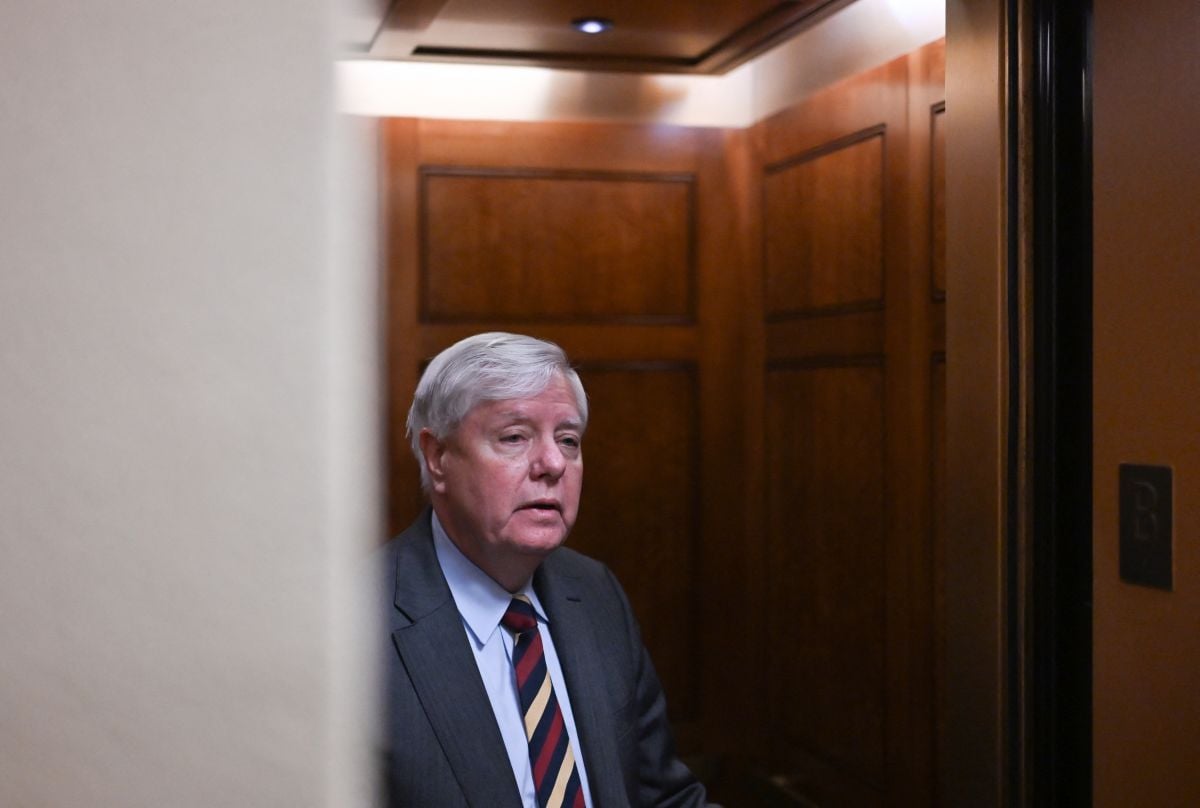
U.S. Senator Lindsey Graham at the United States Capitol in Washington, Jan. 30, 2026. (Credit: Alex Wroblewski/AFP)






BEIRUT — Many figures in Lebanon have come out in support of Lebanese Army Chief Rodolph Haykal after his meeting with Senator Lindsey Graham in Washington was cut short because of comments made about Hezbollah.
Following their brief encounter, during Haykal's three-day visit to the United States, Graham wrote in a post on X that he ended a brief meeting with Haykal after asking him directly whether he considered Hezbollah a terrorist organization. According to Graham, Haykal replied: “No, not in the context of Lebanon.” The firm position drew the ire of many in Washington, but the praise of many back home.
Graham reiterated Washington’s long-standing position on Hezbollah, calling the party "clearly a terrorist organization" with "American blood on its hands," referencing the 1983 bombing of the U.S. Marine barracks in Beirut. Hezbollah, he added, has been "designated a foreign terrorist organization by both Republican and Democratic administrations since 1997 — for good reason."
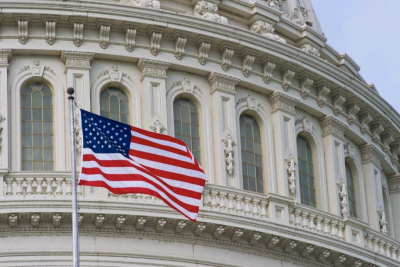
"As long as this attitude persists within the Lebanese Armed Forces [Lebanese Army], I don't think we have a reliable partner in them," Graham added, lamenting the "double talk in the Middle East." "Too much is at stake," he concluded.
Graham is a staunch supporter of Israel and appeared publicly three weeks ago alongside Mossad chief David Barnea.
Pro-Hezbollah figures welcome Haykal’s stance
Haykal’s position was praised both by allies and critics of Hezbollah.
Part supporter and journalist Hassan Dorr hailed what he described as a “national stance in the face of the Zionist Graham.” “This is a lesson for all Lebanese on how to act with national responsibility when someone seeks to target your partner within the homeland,” he wrote on X.
Activist Ahmad M. Yassine, also close to Hezbollah, paid tribute to “the army commander … keen on civil peace and the unity of the army.”
“The deranged Lindsey Graham imagines we are an American colony and that the army is merely an employee under his command. What Haykal did deserves the respect of every honorable citizen,” he added.
Bassil, Joumblatt back army unity
Free Patriotic Movement leader Gebran Bassil, a former ally of Hezbollah, said “our responsibility is to rally around the army to preserve its unity and protect this institution, as it is the bulwark of this country.”
Speaking on MTV, he said “the army commander alone assesses what he can do” and warned against pushing him “toward division or internal conflict.”
The Batroun MP recalled that his own “personal refusal to classify Hezbollah as a terrorist organization led to the imposition of [U.S.] sanctions” against him in November 2020.
Former Progressive Socialist Party chief Walid Joumblatt, a critic of the party, wrote on X that “preserving national unity and institutions is more important than arbitrary diktats from the United States and Israel,” without explicitly referring to the incident.
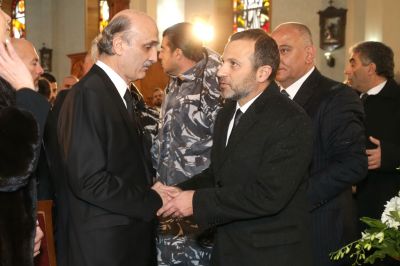
Former March 14 figure Fares Souhaid also defended Haykal. “Zero reproach for the army commander, who refused to label Hezbollah a terrorist organization in the United States as long as the Lebanese government does not classify it as such,” he wrote on X.
He added: “Personally, I have considered it terrorist since the wave of assassinations that followed March 14, 2005, but from the government’s standpoint, it is a Lebanese component.”
A controversial general’s presence
Lebanese American lobbyist Tom Harb, close to President Donald Trump, offered a critical reading of what he described as the “failure” of Haykal’s visit. In a message in Arabic on X, he said “the American side refrained from sharing any information with the Lebanese delegation, limiting itself to listening to Haykal’s presentation, without any real exchange.”
Harb also criticized the presence of Souheil Bahij Harb, head of the Lebanese Army’s intelligence division in south Lebanon, who accompanied Haykal. The Israeli army had accused him of attempting to cooperate with Hezbollah to “cover up” the 2022 killing of Irish peacekeeper Sean Rooney in south Lebanon.
Harb noted that Rep. Greg Steube had included his name in the draft “Pager Act,” a bill seeking to suspend U.S. military aid to the Lebanese Army and impose sanctions on him.
On Friday morning, President Joseph Aoun and U.S. Ambassador to Lebanon Michel Issa discussed “the results of Haykal’s visit” and “his meetings with U.S. officials as part of ongoing cooperation between the American and Lebanese armies,” according to a statement posted by the Lebanese presidency on X. No further details were provided.
Arriving in Washington on Monday for a three-day visit, Haykal has held a series of meetings with U.S. officials and lawmakers. The agenda included developments in Lebanon’s security situation and in the region, as well as operational updates on progress made by the Lebanese Army under the Hezbollah disarmament plan approved by the government of Nawaf Salam.
The visit came amid heightened tensions. In February, Haykal is expected to present his vision for implementing the second phase of the plan to establish a monopoly on weapons, as Hezbollah maintains its refusal to disarm north of the Litani River.
Initially scheduled for November, the visit had been postponed due to U.S. dissatisfaction with the Lebanese Army’s approach to Hezbollah’s disarmament, which Washington viewed as overly accommodating.
According to L’Orient-Le Jour’s information, while Haykal’s discussions with U.S. Central Command were relatively positive, his meetings with members of Congress were far more difficult, particularly over the timeline imposed on the army to implement the second phase of Hezbollah’s disarmament.
The 'seriousness of the army'
For its part, the military institution referred to Haykal's visit in a statement released on Friday. "This visit is part of the strengthening of military and security relations between Lebanon and the United States, as well as the continuation of dialogue between the commands of the two armies," it said.
According to the statement, Haykal held a series of high-level meetings with White House advisers, officials from the Departments of Defense and State, as well as members of Congress and the National Security Council. Discussions focused on "ways to strengthen military cooperation and support the capabilities of the Lebanese Army," as well as regional security developments, "the challenges facing Lebanon," and the army's role in "preserving security and stability, protecting national sovereignty and territorial integrity, and maintaining civil peace in a particularly sensitive domestic context."
In Washington, the commander-in-chief of the army met with the U.S. Joint Chiefs of Staff, General Dan Caine, with whom he discussed the general situation in Lebanon and the region, as well as ways to "develop cooperation between the Lebanese and U.S. armies."
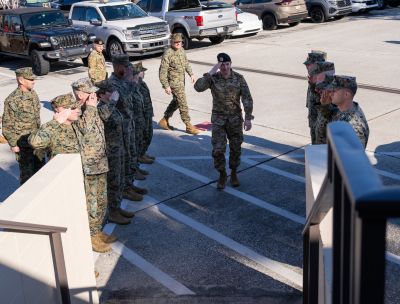
The visit began in Tampa, at the headquarters of the U.S. Central Command (Centcom), where he met with its commander, Charles B. Cooper, and the chairman of the cease-fire monitoring mechanism in Lebanon, Joseph Clearfield.
Discussions focused on "coordination frameworks in response to the threats facing Lebanon, security developments on the southern border, and mechanisms to support the army in order to strengthen its capabilities in the coming phase."
According to our information, while the army chief's discussions with Centcom were relatively positive, his meetings with parliamentarians were much less so, particularly with regard to the timetable imposed on the troops for the implementation of the second phase of Hezbollah's disarmament.
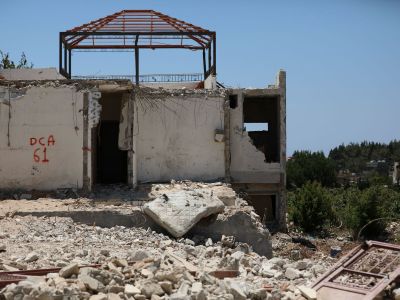
According to the military institution, U.S. officials welcomed the visit and "praised the army's seriousness in applying international resolutions and implementing its plan south of the Litani River," considering it "the institution that guarantees security and stability in Lebanon."
They also reaffirmed their commitment to "continue their support for the army and to provide the necessary means for it to carry out its missions throughout Lebanese territory."
Finally, the statement said that Haykal met with members of the Lebanese community in the United States at the Lebanese Embassy in Washington, reminding them that "Lebanon's recovery can only be achieved through the mobilization of everyone's efforts, especially those of the Lebanese diaspora," while assuring them that the army "is working with determination to build a promising future."
This trip took place in a particularly tense context. In February, the army chief is expected to present his vision for the implementation of the second phase of the plan on the state's monopoly on weapons, while Hezbollah remains adamant in its refusal to disarm and even claims that it could intervene alongside Iran if the Iranian regime were attacked.
Originally scheduled for November, his visit to Washington was postponed due to U.S. dissatisfaction with the Lebanese Army's approach to disarming Hezbollah, deemed too conciliatory.

