


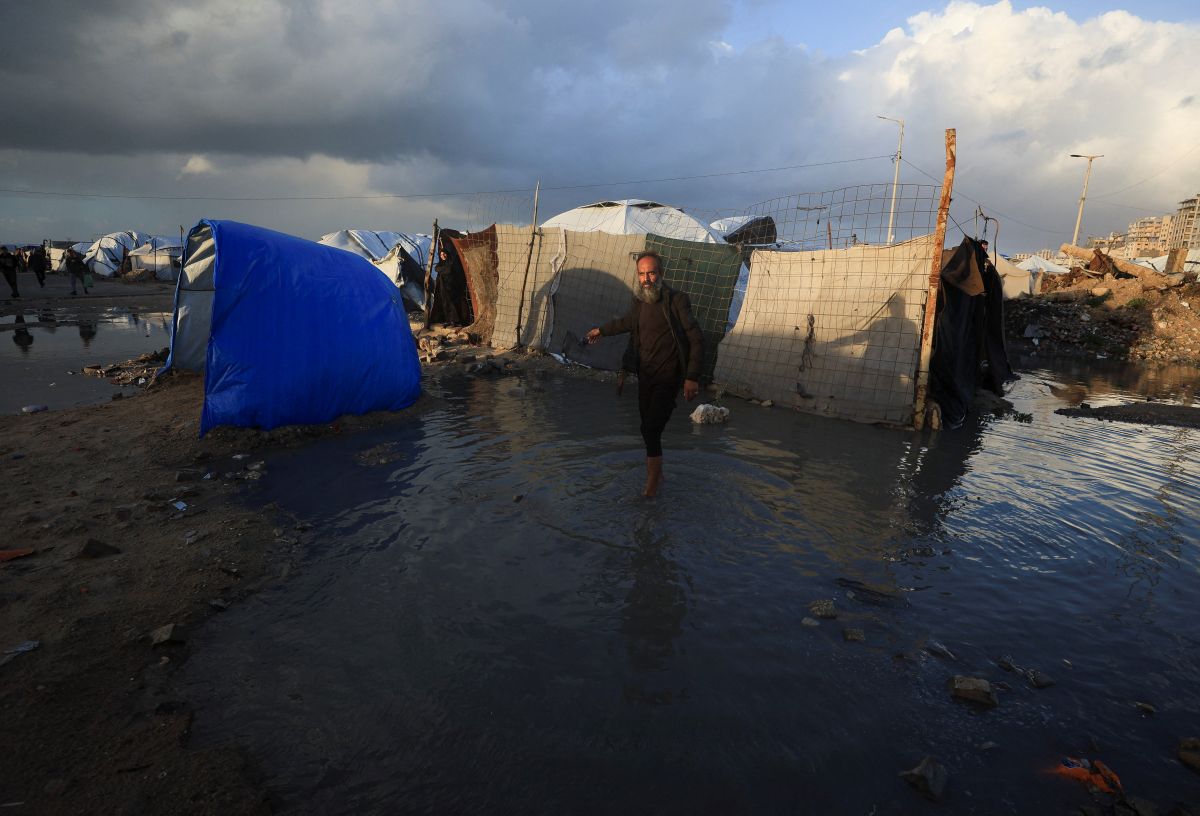
A displaced Palestinian stands near tents flooded by rain on Jan. 9, 2026. (Credit: Dawoud Abu Alkas/Reuters)






Noor al-Yacoubi is a 27-year-old translator and writer. She hasn't left the Gaza Strip since the war began on Oct. 7, 2023, and has been sharing reflections on her life with L'Orient Today since the beginning of the war.
Since the beginning of winter, each storm has proven to be harsher than the one before it, without mercy. Although we live in the same city, a devastated Gaza City, each one of us suffers differently, bearing the consequences of a two-year genocidal war that stripped Gaza of every basic means of safety, peace and even warmth.
Homes are gone. Shelters are fragile. Infrastructure is shattered.
My own house, damaged by intense Israeli attacks, leaks rainwater through the kitchen ceiling with every weather change. Strong winds tear at the windows, which I have covered with nylon sheets in a desperate attempt to keep the cold out ever since Israeli strikes destroyed the glass.
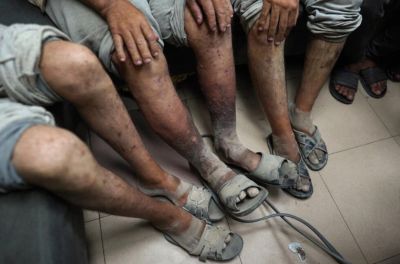
Even while freezing and wanting to speak about our misery, I cannot bring myself to complain in front of Abeer, a dear friend whose suffering is far greater than mine.
No matter how much rain leaks into my house or how strong the wind is, I can still place a bucket under the leak, move to another room, wear another jacket or find some kind of solution. But for Abeer, there is no escape.
How does one escape rain when it floods a tent?
Since the beginning of the war, Abeer was displaced from her home in Beit Hanoun — an area within the so-called yellow line and close to the Israeli border — and has kept moving from place to place.
She eventually ended up in a makeshift tent in the al-Zawaydeh area in central Gaza, where she now lives with her husband and four children.
Her tent is considered “high quality.” It is a Qatari tent, the kind many displaced families wish they had. But fabric is still fabric. No tent, no matter how well made, can shield a family from the brutality of winter.
With each storm, water invades her life. Within minutes, everything is soaked — clothes, food, mattresses, pillows. Nothing is spared.
Al-Zawaydeh has muddy soil that does not absorb water easily. It’s perfect for agriculture, not for people's homes. With the infrastructure destroyed, the situation becomes unbearable. Rainwater takes hours to drain, and if the sun does not appear, days pass before anything dries.
I often call Abeer during these harsh days to check on her. Although she is one of the strongest people I know, I almost always find her crying or completely drained.
She mourns her life, her drowning tent and her inability to protect her children from the cold. She also mourns her four martyred siblings, two brothers and two sisters, believing their presence would have eased her pain during these unbearable times.
I never know what to say. I usually remain silent, because no words can soften a pain like hers. And her suffering is not hers alone. It reflects the reality of thousands of families living in tents across Gaza.
I often imagine myself in her place. What would I do? I think I would collapse.
Before the cease-fire was declared in mid-October 2025, I spent only three weeks in a makeshift tent after being displaced to central Gaza. Even in that short time, my greatest fear was spending the winter there. The thought haunted me.
Thankfully, I was among the few who had a home to return to after the cease-fire. Still, I am constantly cold. This winter is unlike any Gaza has known in years. It is colder, harsher and relentless.
Since the beginning of winter, four children have already died from severe cold in makeshift tents.
And I cannot stop thinking about my friends and relatives who live in tents. If I am freezing inside concrete walls, how do they endure it? How do their children survive the cold?
 Israeli army carries out demolition at Jabal Amel School in Houla as strikes continue