






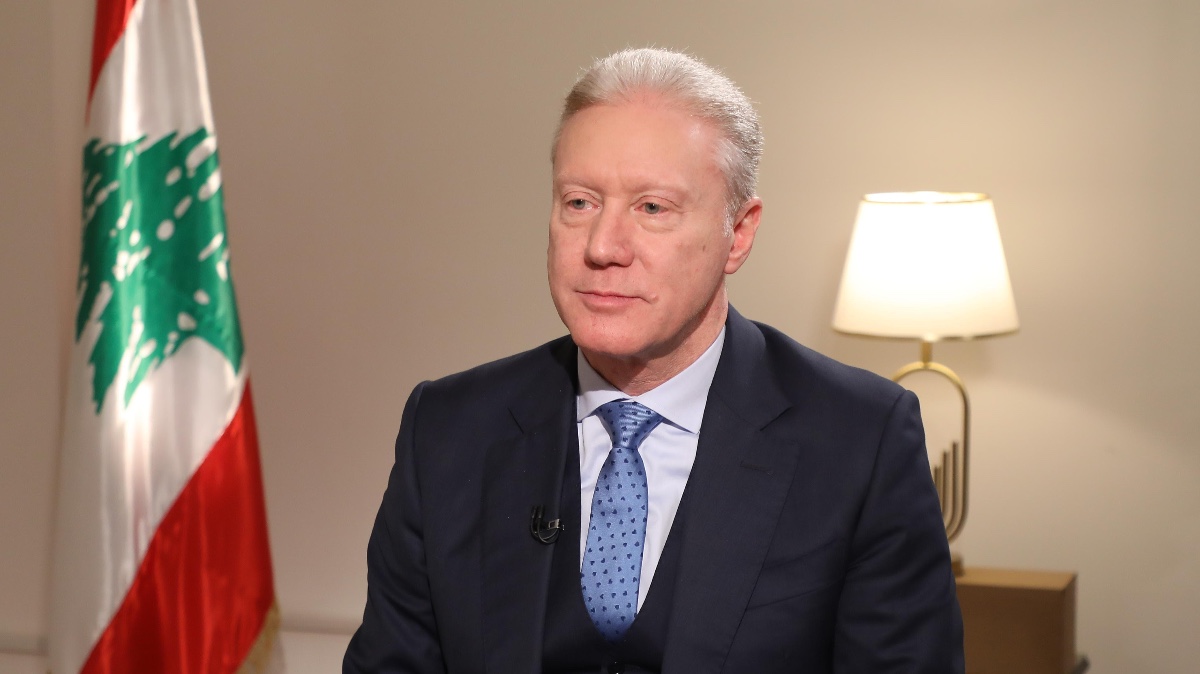
Lebanese Foreign Minister Joe Rajji in an undated photo. (Credit: NNA)






BEIRUT — Foreign Minister Joe Rajji denounced Hezbollah's remaining arsenal on Tuesday, calling it "a burden for the Shiite community," during an interview with Emirati channel Sky News Arabia.
His remarks, including that "as long as weapons are not fully monopolized by the state, Israel unfortunately retains the right to continue its attacks in accordance with this agreement," were met with anger by the party and its Amal Movement ally as well as many Lebanese who criticized Rajji online for justifying Israeli aggression against Lebanon.
Since the ostensible cease-fire came into place in November 2024, Israel has killed around 400 people in Lebanon in a near-constant stream of drone strikes, bombings and incursions.
Rajji admitted that the cease-fire agreement "favored Israel," but argued that "as long as weapons are not fully monopolized by the state, Israel unfortunately retains the right to continue its attacks in accordance with this agreement."
The truce agreement included the establishment of a cease-fire monitoring committee through which all parties were supposed to deal with alleged cease-fire violations, however Israel has been acting unilaterally, attacking even the U.N. peacekeeping force that has been assisting the Lebanese Army in southern Lebanon to dismantle Hezbollah's military infrastructure there.
"The Shiite community is an essential component of [Lebanon], and we are all citizens of this country," Rajji said. "Your weapons can no longer protect you or Lebanon, and have become a burden for the Shiite community. Only the state protects all Lebanese."
"No one is seeking to restrict the rights of the Shiite community," he added. "On the contrary, we want to build a normal state, characterized by freedom and prosperity. We must resolve the weapons issue, and you must rejoin the state," he said, addressing Hezbollah.
Rajji's comments echoed those of President Joseph Aoun, who toughened his stance on Hezbollah's weapons on Sunday and calling on the party to be "reasonable" about its disarmament.

"The state seeks to monopolize weapons for the good of the Lebanese people and to restore its sovereignty over its entire territory," Rajji said, "because everything depends on it: aid, economic recovery, reconstruction, and investments."
He recalled that countries who have pledged financial support for Lebanon — which remains in the grip of an economic crisis and the devastation left by Israel's war with Hezbollah — demand that the government establish a monopoly on weapons before the money comes through.
"The restoration of investors’ confidence and the smooth functioning of the political and economic system cannot be assured as long as weapons remain outside of state control," he said.
'Cannot be justified'
MP Qassem Hashem of the Amal Movement released a statement following the airing of Rajji's interview calling the foreign minister's remarks "an attack on national dignity" that went "beyond the limits of insolence, and even more, amount to justifying Israeli aggression against Lebanon."
"If we lived in a fully sovereign and dignified state, his dismissal would be imperative,' Hashem said. "What was said cannot be justified under any pretext, not even freedom of expression. How long will this ostrich policy persist? It is time to call things as they are."
MP Ali Ammar also weighed in, saying the minister’s statements "constitute a resounding political, national, and moral failure."
"Instead of condemning Israeli aggression and defending Lebanese sovereignty, the minister justifies the Zionist crime and murder that claim the lives of the children of his own country," Ammar criticized, calling for "a clear and decisive stance from the president and the prime minister" in response to Rajji's position and statements.
On social media, many Lebanese also expressed their anger, criticizing the minister for appearing to justify Israel's attacks.
The meeting with Araghchi
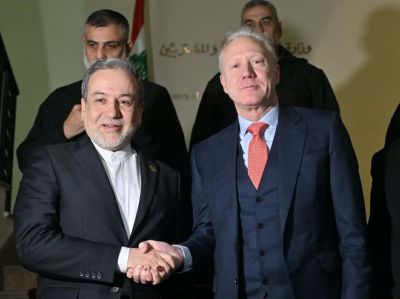
Rajji also spoke of his meeting last week with Iranian Foreign Minister Abbas Araghchi, which he described "frank, clear, calm and courteous."
However he confirmed that the conversation involved "disagreements on several points, notably concerning Tehran’s direct interference in Lebanese affairs."
"The Iranians claim not to interfere in Lebanese affairs, but they exercise direct financial, military, and political interference," Rajji said. "They are open to dialogue and to hearing our ideas. They say they support Hezbollah but do not interfere in its internal decisions."
Rajji had asked his Iranian counterpart to "stop making statements interfering in Lebanese affairs and criticizing government decisions."
He also pointed out that "the difference between Iran and the United States is that the latter supports the Lebanese state and provides arms to the army, while Tehran arms an organization that escapes Lebanese legitimacy."