


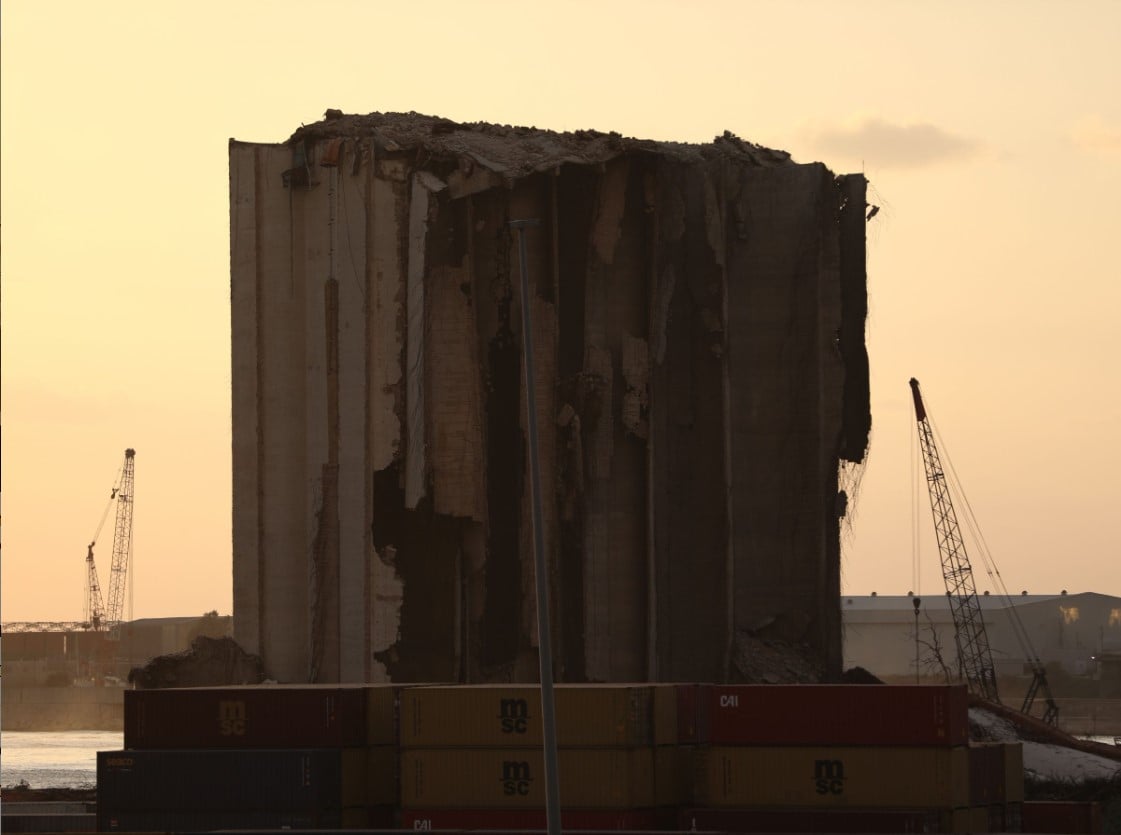
Beirut Port silos on Aug. 17, 2025. (Credit: Matthieu Karam/L'Orient-Le Jour)






BEIRUT — Cabinet began its scheduled meeting late Thursday at 3 p.m. at the Grand Serail, with an agenda unrelated to the state’s monopoly on arms. The Lebanese Army is not expected to submit its next report on the matter until next week, amid Israeli pressure for Hezbollah’s disarmament.
Information Minister Paul Morcos said after the session that the Cabinet approved "most" of its 20-item agenda.
Environment Minister Tamara Elzein outlined findings from a National Council for Scientific Research commission on the “topographical and environmental study of the Beirut port silos.”
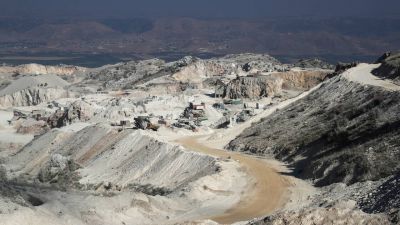
According to Morcos, the report found “continuous emission of heat and smoke due to grain fermentation inside the silos.” He said environmental and structural risks were assessed and that a ministerial committee was formed to propose necessary measures.
Cabinet also approved new appointments to the Culture Ministry's General Council of Museums, the body overseeing public museums and heritage collections.
Ghada al-Atrash was named vice president. Other appointed members are Fadel Dagher, Youmna Ziade, Raghida Ghandour, Oussama al-Rifai and Hanan al-Sayyed. Anne-Marie Afeish remains board president and director general.
Madrid Protocol
Ministers approved a memorandum of understanding between the Lebanese and Hungarian defense ministries on military cooperation, Morcos confirmed.
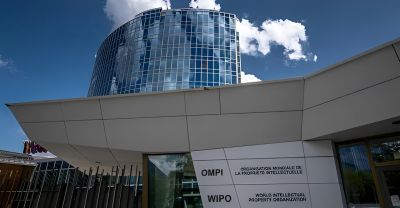
They also approved the implementation decree for the Madrid Protocol, which will create an international trademark registration mechanism in Lebanon administered by the World Intellectual Property Organization. Parliament authorized the government to sign the protocol in July, and the decree is a step forward.
Cabinet extended by one month the deadline for the consortium of TotalEnergies, Qatar Energy and Eni to submit offshore exploration and production agreements for Block 8 in Lebanon’s Exclusive Economic Zone. The new deadline is Dec. 27 to allow time for the consortium to supply the required documents and guarantees.
Ministers were also set to give an advisory opinion on a proposed law on repatriating Syrian refugees and migrants in Lebanon, many of whom arrived before or after the fall of Bashar al-Assad on Dec. 8, 2024.
The Cabinet rejected the bill for several reasons detailed in the minutes. It did, however, approve conditions for a unified employment contract for Ethiopian migrant workers, an issue overseen by Labor Minister Mohamad Haidar.

Papal visit
Prime Minister Nawaf Salam also discussed Pope Leo XIV's visit to Lebanon on Sunday, following his stop in Turkey.
“The visit is primarily religious, but it also concerns all of Lebanon, in solidarity with the people’s suffering, aspirations and right to security and peace, which has become the central theme of the visit,” Salam said, according to the Grand Serail’s account on X. He said the visit should have a “positive impact” on the country during its tense moment.
Salam also noted the first anniversary of the cease-fire that took effect on Nov. 27, 2024, between Israel and Hezbollah, which only partially ended more than a year of war. He said Israel had not honored its commitments and continues to occupy several sites in the South, “violating [Lebanon’s] sovereignty.”
He added that any perceived delay in reasserting the state’s monopoly on arms — including the disarmament of militias — was not due to a lack of political will but to the limited capabilities of the Lebanese Army.
“That is why Lebanon has asked its Arab brothers and international friends for help in organizing a conference to bolster the army in personnel, equipment and salary support,” he said, according to Morcos’ statement.
 Israeli army carries out demolition at Jabal Amel School in Houla as strikes continue