






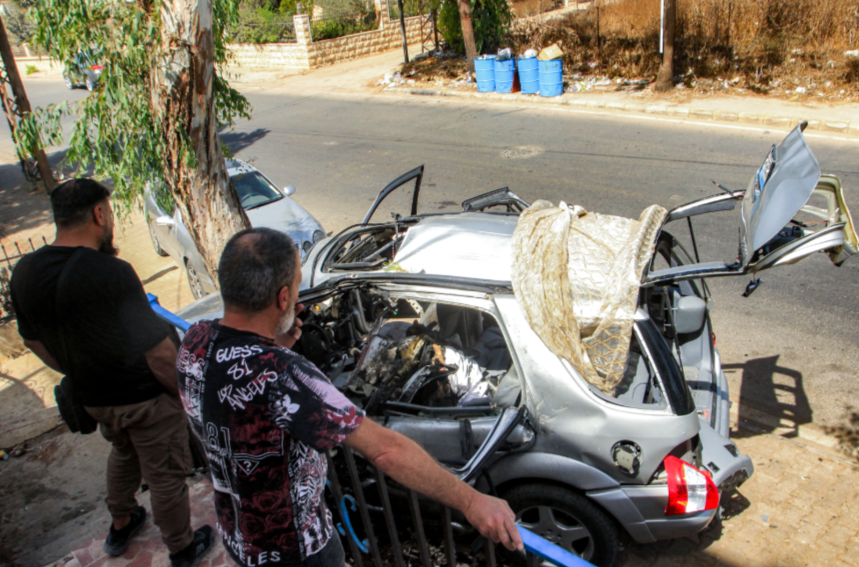
A photograph shows the wreckage of a car struck the previous day in an Israeli strike in Bint Jbeil, in southern Lebanon, on Sept. 22, 2025. The attack devastated a family, killing the father and three children and leaving the mother and one daughter gravely wounded and mourning the sudden loss of their loved ones. (Credit: Mahmoud Zayyat/AFP)






Tom Barrack, the U. S. ambassador to Turkey and special envoy to Lebanon and Syria until about a month ago, told the New York Times that if Israel senses any threat, “They’re going to respond anytime, anywhere,” according to a report published in the newspaper on the first anniversary of the ostensible cease-fire in Lebanon.
“When the Israelis find these guys, they just take them out, so you have two or three a week that are whacked,” he said of Israel's ongoing bombardment of the country in violation of the truce it agreed to last November. Israel has killed more than 350 people in Lebanon since then. According to the U.N., 127 of them were civilians and at least 15 were children.
Israel attacks target southern Lebanon, the Bekaa, and on Sunday, even Beirut's densely populated southern suburbs, while Hezbollah has, throughout these months of unabated attacks, refrained from any retaliation.
Barrack acknowledged that the obstacles to Hezbollah's disarmament, outlined as part of the cease-fire agreement, are formidable. Hezbollah is an established political party in the country and has significant Shia support. Before its war with Israel last year, it was considered one of the most powerful non-state actors in the world.
“If you’re a soldier in the Lebanese Army earning $300 a month, you have to have three jobs," Barrack pointed out. "You’re an Uber driver, a barista and a soldier.”
“So you go knock on a Shia door on Mondays and say, ‘I’m sorry, man, can I go into your basement and take out the AK-47s?’ And you’re risking your life.” Still, he added, “We’ve got to have just one army” in Lebanon.
Barrack told the NYT reporter that he is trying to convince Lebanese authorities that disarming Hezbollah will “bring in the Saudis and the Qataris, who have been burned in Lebanon because they tried and the money went to corruption.”
Prime Minister Nawaf Salam told NYT that Barrack had suggested to him that simultaneous steps be taken by both Israel and Hezbollah.
“Hezbollah hands over some weapons and vacates part of the country, Israel withdraws from two of the five points, and so on,” Salam said, describing Barrack's plan. “It was an excellent idea of his, but nothing,” Salam said after a silence.