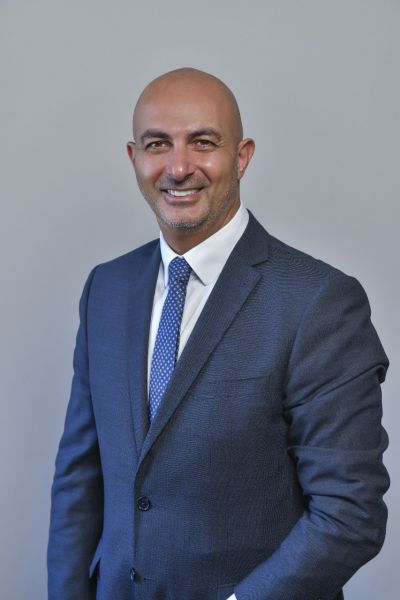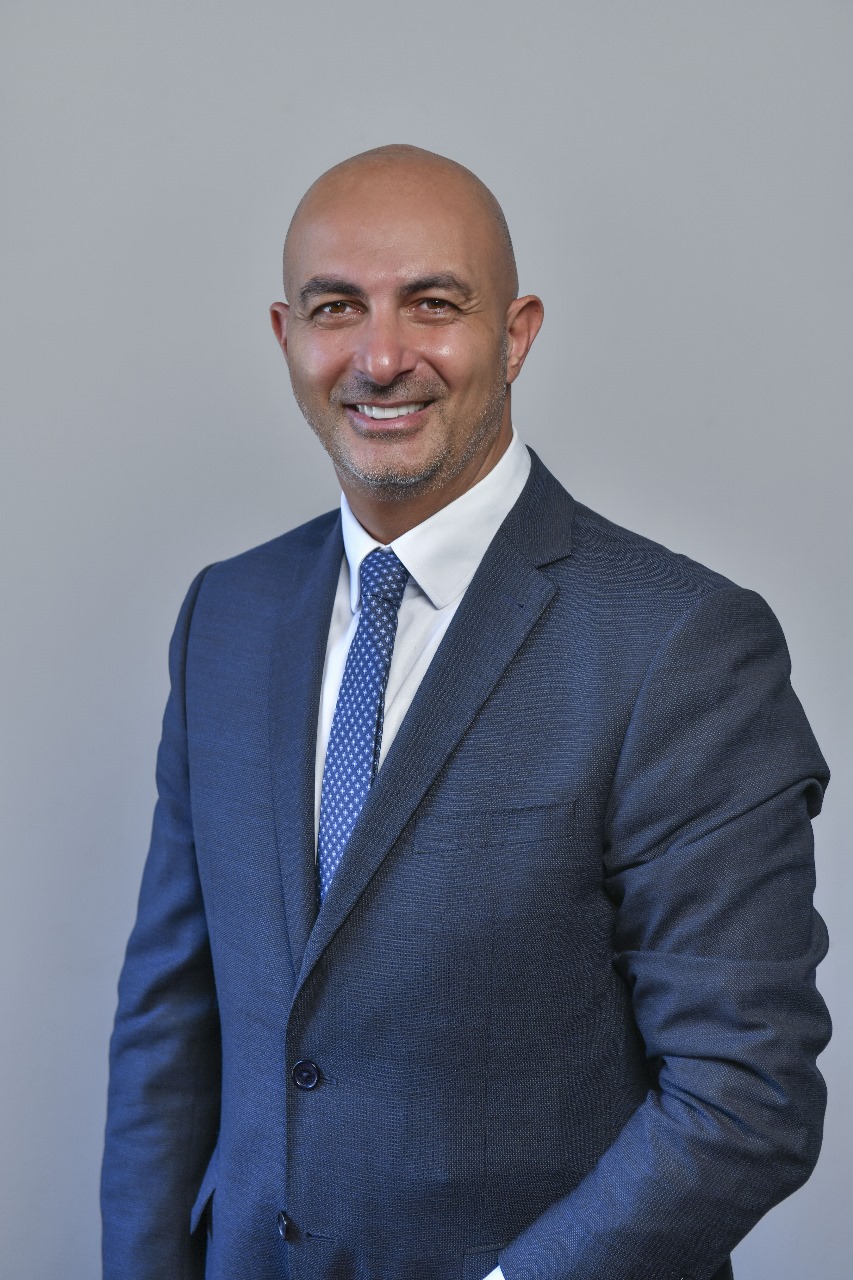
Professor Walid Hleihel, Vice-Rector for Research at USEK. (Credit: Toni Bassil, USEK)






In a constantly changing world, marked by successive crises and global challenges, academic research is the foundation that enables societies to find answers to complex problems and strengthen their resilience, as Professor Walid Hleihel, vice president of research at Saint Joseph University of Kaslik (USEK), points out.
Heading research at USEK since 2022, this doctor of physiology and pharmacology, for whom "a university is not simply an educational institution" but "a living space where knowledge is built, questioned, and updated," believes that "research is what distinguishes a university, what nourishes its academic excellence, and what grounds its legitimacy."
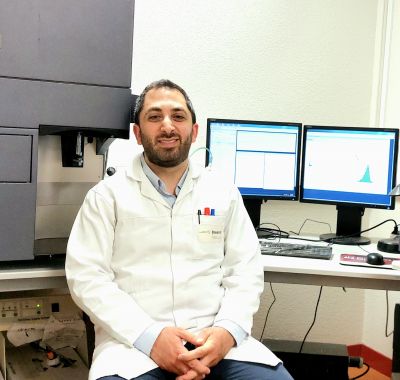
"Academic research," he asserts, "is not theoretical or abstract: it responds to real and concrete needs, in health, education, energy, environment, society. It informs public policies, guides decisions, and proposes solutions adapted to local realities." Emphasizing the importance of the societal impact of research, especially regarding sustainable development issues, Professor Hleihel considers that research only makes sense if it leaves the laboratories to be translated into daily life.
"That is the role of action research: building projects with and for society, in constant interaction with those in the field. This is how it produces concrete, measurable, and useful responses for citizens," he explains, recalling in passing that the Covid-19 pandemic revealed a fundamental truth: in times of crisis, when facing the unexpected, research provides answers and builds trust.
Pointing out the pedagogical challenge research poses to universities, the academic manager and researcher explains that USEK today relies on an expertise-driven but humble approach, involving students in funded projects, publications, and international collaborations.
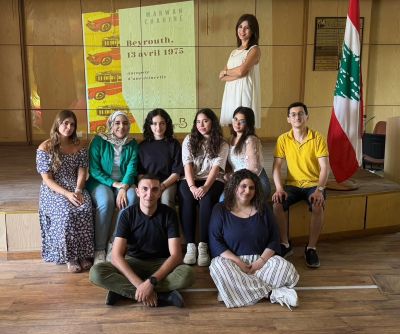
"Students must not remain spectators but should become participants in the production of knowledge and take part in projects that develop their critical thinking, creativity, sense of responsibility, as well as international exchange, the acquisition of know-how, implementation, and above all the transmission of this knowledge," he specifies. And he adds: "This is not a prestige exercise but a conviction that involving youth in research is the best way to prepare them to become competent professionals—above all, responsible and open to the world."
Multidisciplinary and collaborative research
"Research is built today in networks," says the academic researcher.
"No institution can move forward alone. Partnerships between universities, research centers, and local or international institutions are essential to raise scientific quality, give worldwide visibility to researchers, and at the same time allow them to join international networks committed to a more sustainable future," he continues, before reminding: "What matters is not the number of collaborations or the accumulation of articles. What is important are real, sustainable, impact-oriented projects, built in a team spirit and complementarity of expertise."
According to USEK's vice president of research, research must be "multidisciplinary" to tackle major contemporary challenges. "Complex problems cannot be addressed in silos," he states, underlining the primacy of collaborative research and the need "to cross perspectives to better understand reality, and therefore to provide more complete, more innovative, and better-adapted solutions according to society's needs."
"Lebanon is a small country and cannot afford to scatter its means and energies in isolated efforts," he remarks. To optimize and professionalize research, to make it even more relevant, and above all to avoid fragmentation, universities, especially leading ones, should in his view "collaborate, join forces, and work together on national and international large-scale projects, recognized and shared, and which benefit everyone."

Advocating "another way of conducting research," "it is by pooling efforts that we will maximize its impact," he insisted, commending the strategies led by the National Center for Scientific Research (CNRS), the Agence universitaire de la francophonie (AUF), and certain embassies, which in his opinion, "play a determining role in supporting, coordinating, and bringing together all initiatives."
A long-term vision
Faithful to its image and conscious of the place research holds within a higher education institution, USEK, after reassessing the situation, has identified its research priorities, including environment, health, heritage, AI, and ethics.
Favoring ethics, scientific rigor, and quality as foundations, the university also advocates a "collective, open, and progressive" approach that allows it to advance steadily and situate all its projects in a sustainable vision. "We all work together — researchers, students, and support structures — in collaboration with the public and private sectors to develop projects in a spirit of complementarity," says Professor Hleihel, while clarifying that the various units of the vice presidency for research support researchers and students so that their results translate into concrete applications, whether through the Technology Transfer Office, the ACIE (Asher Center for Innovation and Entrepreneurship), or through support for publications and collaborative projects.
"Our approach is pragmatic and humble: to contribute, step by step, to real and lasting progress, ensuring that innovation directly benefits society," he added.
This approach, adopted over the past four years, benefits from the university's constant support, particularly from new president Father Joseph Moukarzel, who encourages and actively supports research.
"This institutional support is an essential lever for turning our ambitions into tangible achievements," he specifies, before continuing: "For research to fully play its role, a long-term vision is needed: adequate funding, modern infrastructure, a culture of excellence, and collaboration."
"We say this with humility, not as an achieved goal, and with determination to keep going. That is how a university becomes an engine of development, innovation, and influence for its country," he continued.
"Ultimately, academic research is not a luxury, assures Professor Hleihel. It is a national priority and a strategic tool for training youth, strengthening society, responding to crises, innovating, and opening up to the world.
But it must never lose sight of its purpose: to remain human, ethical, and humble, guided by quality, open to multidisciplinarity, driven by collaboration and connected to society through action research. This is how it can truly transform societies."