


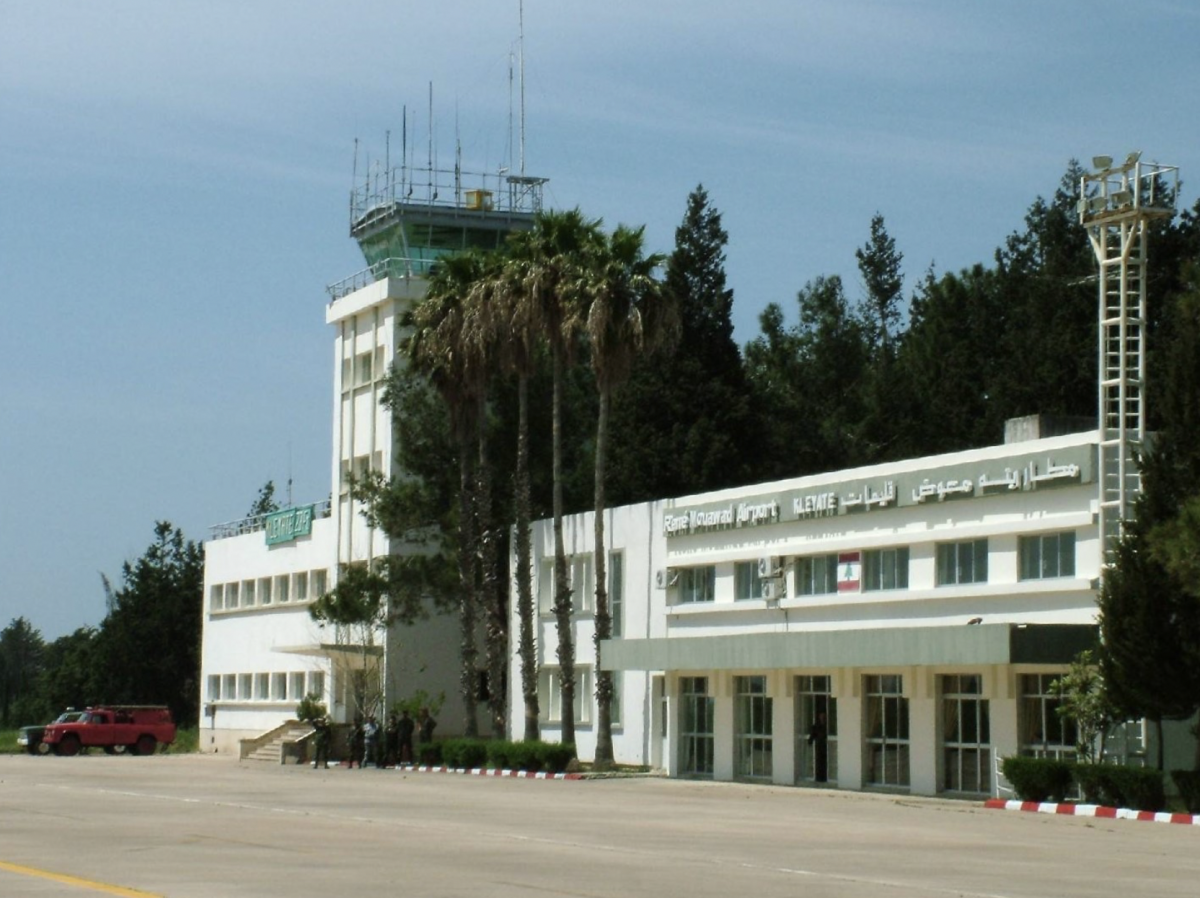
Qleiaat Airport, in northern Lebanon. (Credit: Michel Hallak/L’Orient-Le Jour)






Public Works and Transport Minister Fayez Rasamny praised on Thursday, in an interview with RT Arabic, the “strong interest from major international companies in partnering in the operation of Qleiaat airport (Rene Moawad)” in northern Lebanon, stating that “there is real economic profitability in putting it into service.”
Last September, Rasamny announced that the contract for the airport’s rehabilitation would be awarded “within the first three months of next year.” Earlier this week, President Joseph Aoun said that the airport “will undergo development and rehabilitation work in the coming months in preparation for the launch of its operations.”
The question of opening a second civilian airport in Lebanon has been debated for many years, particularly when the security of Beirut airport, which has been long accused of being under Hezbollah influence, is threatened. The rehabilitation of Qleiaat airport is primarily supported by parties opposed to the Shiite bloc, notably the National Moderation bloc (mostly Sunni MPs from Akkar). It is also seen as a way to support economic development in the Akkar region, considered the poorest in Lebanon. The rehabilitation was mentioned in Prime Minister Nawaf Salam’s ministerial statement in February.
Fayez Rasamny also noted that “the ministry is working on development projects for the Port of Beirut,” adding that “security at Beirut airport is fully ensured and work is ongoing to modernize and equip the site with advanced equipment.” Israel has regularly accused Hezbollah in recent years of using Lebanon’s sole airport to receive weapons and funds from Iran.
According to the minister, “delays in holding international support conferences [for Lebanon and the Lebanese Army] are explained by political reasons and imposed conditions,” without providing further details. The international support conference for the army is expected to take place by the end of 2025. He also criticized Israel for targeting “civilian equipment used in reconstruction work,” reminding that the Lebanese state is expecting a $250 million loan from the World Bank (WB). “This amount is not sufficient, but it provides a basis to launch the reconstruction process,” he added. The total cost of rebuilding areas destroyed in Lebanon during the last Hezbollah-Israel war is estimated at $11 billion, according to a WB report published in March.
On another note, Fayez Rasamny said that Beirut is “ready to delineate its borders with Syria, pending completion of preparations by the Syrian side,” specifying that “the ministry is working in cooperation with the United Nations on the rehabilitation of border posts between the two countries.”
Since Lebanon and Syria gained independence from the French mandate, in 1943 and 1946 respectively, the border between the two countries has remained porous. Its delimitation was never finalized under the Assad regime, from 1970 to 2024. The rise to power of a Saudi-aligned Islamist coalition, as well as the weakening of Hezbollah, has changed the situation. Talks are currently underway between the Lebanese state and the new Syrian authorities to demarcate the border.

 7 p.m. recap: 1 person killed near border with Lebanon; 200 kilos of explosives carried by mules; Riyadh shuts its airspace