

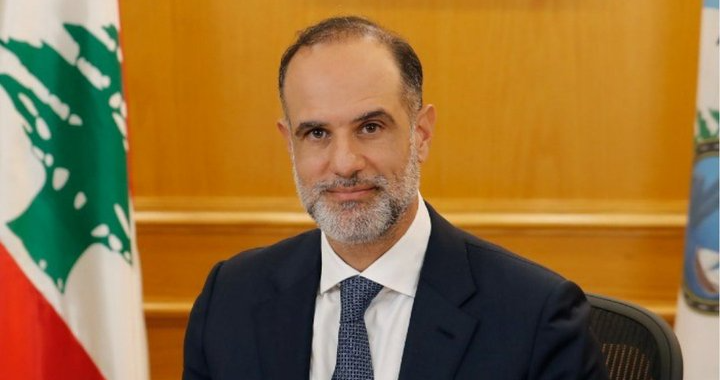
Public Works and Transport Minister Fayez Rasamni. (Credit: NNA)






Public Works and Transport Minister Fayez Rasamny announced that the process of awarding construction contracts for Qleiaat Airport will begin in early 2026, reaffirming the government’s commitment to reviving the northern facility as a key driver of economic development in the region, the state-run National News Agency (NNA) reported Saturday.
Rasamny made the announcement during a tour of the airport, accompanied by a delegation from the Economic Bodies of the North, led by former Minister Mohammad Choucair, NNA added.
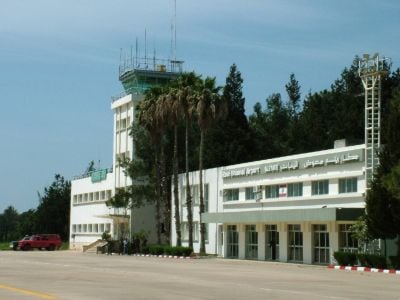
Speaking from the airport’s runway, Rasamny stated: “The awarding of the construction works at the airport will begin at the start of 2026,” emphasizing that “since the beginning of this term, there has been strong determination from the President of the Republic and the Prime Minister to operate and activate the airport, given its importance to the North and to Lebanon’s economy as a whole.”
He added: “Today’s visit came at the initiative and kind invitation of the economic bodies. I’ve visited the airport several times, and with each visit, my conviction deepens regarding the importance of this facility and the urgent need to put it into operation to serve the North and Lebanon.”
In late August, Rasamny announced from Tripoli that “the economic feasibility study for Qleiaat Airport – in Akkar – has been completed” and that “the project is awaiting executive steps for its reactivation.”
Reactivation of Qleiaat airport a priority for Salam
Included in the ministerial declaration, the rehabilitation and reactivation of Qleiaat Airport are considered a priority by Prime Minister Nawaf Salam’s government. This initiative reflects the executive branch’s intent to equip Lebanon with infrastructure that complements Beirut airport to ease congestion. Designed to accommodate six million passengers, Rafik Hariri International Airport (RHIA) regularly operates over capacity, leading to severe congestion during peak seasons when many Lebanese expatriates return to and leave the country.
The reactivation of this second airport could also help revive economic activity in northern Lebanon, particularly in Akkar, one of the most rural and poorest regions in the country. Located on the Syrian border and near Tripoli, Lebanon’s second-largest city, the region could thus benefit from a strategic development boost.
Developed by the French army in 1938, Qleiaat Airport was placed under the control of the Lebanese Army in 1966, which modernized it into a military base. It was renamed Rene Moawad Airport in 1989 in tribute to the president who was elected — and then assassinated — on the very site.
The question of opening a second airport in Lebanon has been debated for many years. Successive wars, which led to the bombing of southern Beirut (where the current airport is located), have driven many to call for the establishment of a second airport.
 7 p.m. recap: 1 person killed near border with Lebanon; 200 kilos of explosives carried by mules; Riyadh shuts its airspace