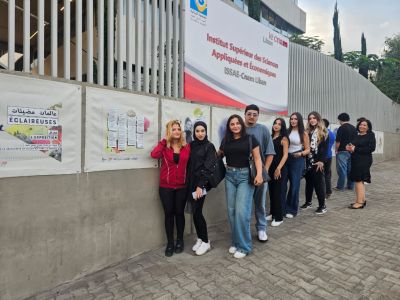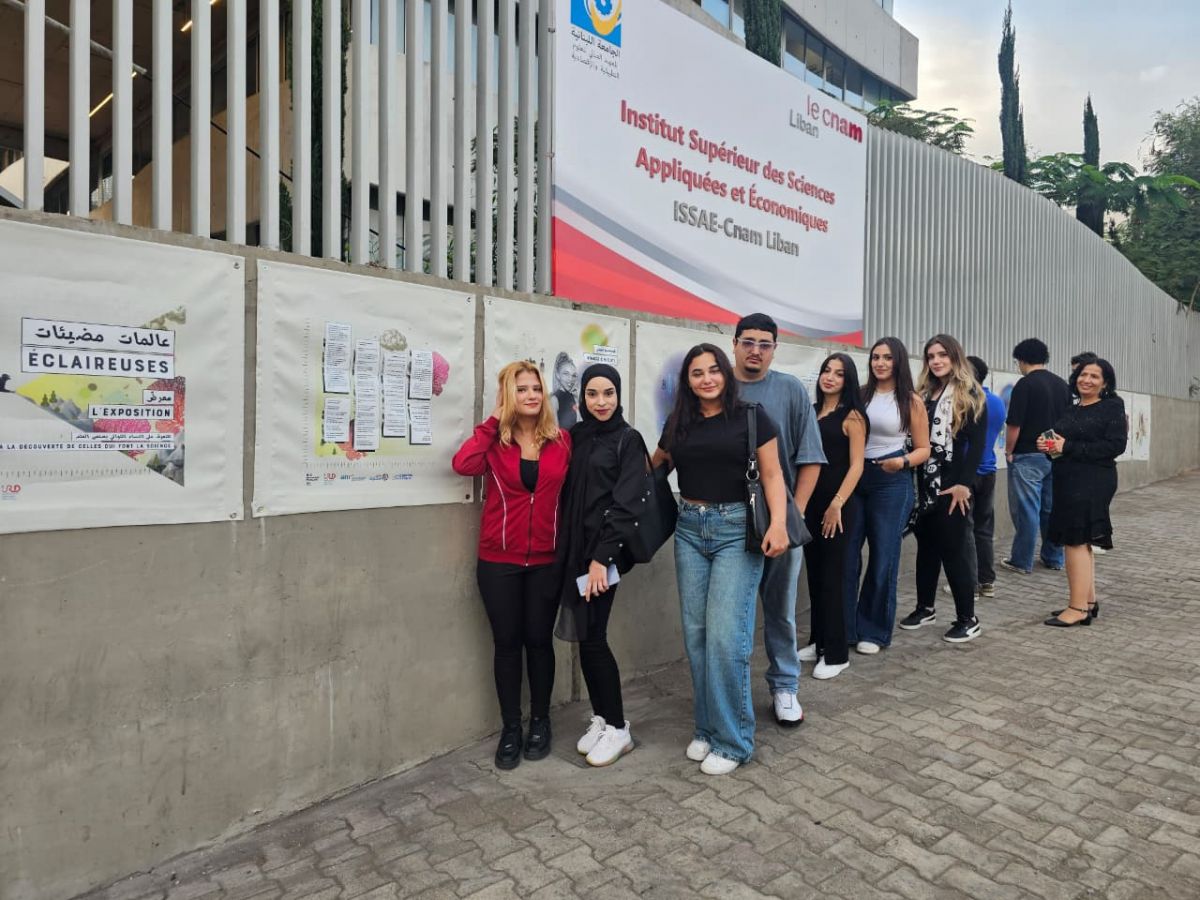
From economics to genetics, the honored women researchers are each contributing in their own way to major scientific advances in addressing the challenges of today’s world. (Credit: CNAM Lebanon)






Through "Éclaireuses [Pioneers]: The Exhibition," visitors can discover twelve graphic portraits of women in science at the Conservatoire national des arts et métiers (CNAM), a center associated with CNAM Paris, located in Bikfaya, Baalbeck, and Beirut.
"This exhibition highlights inspiring women — role models capable of raising awareness among youth, and especially young women, to claim their place in laboratories, universities, businesses, and innovation centers," says Cendrella Abou Fayad, director of the Institut supérieur des sciences appliquées et économiques (ISSAE)-CNAM Lebanon.
This exhibition is the result of a partnership between the National Research Institute for Sustainable Development (IRD) and ISSAE-CNAM Lebanon. "There is real alignment in our missions," between these entities, both of which seek to put science at the service of society, aiming for equal opportunities.
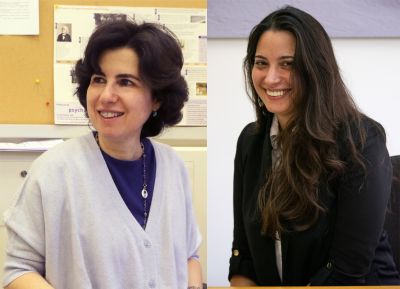
"This partnership strengthens our efforts to foster scientific engagement with school, university, and general audiences. It also helps consolidate the territorial and francophone roots of our institutions and promote a regional dynamic for gender equality in the sciences," continues the ISSAE-CNAM Lebanon director.
A public French scientific and technological institution under the joint supervision of the French ministries of Higher Education and Research and Foreign Affairs, the IRD wanted to showcase in this exhibition the work of female researchers at the IRD or its partner institutions. "Through the Questions of Equality project led by the IRD, a committed cultural program creates a dialogue between science, culture, and civic engagement to promote gender equality. The "'Éclaireuses' exhibition is part of this drive," notes Myriam Benlmouaz, project coordinator for Questions of Equality at IRD.
Hailing from the southern shores of the Mediterranean, Africa, Latin America, and Asia, these women scientists represent a group often relegated to the shadows, despite the answers their research brings to the planet's and society’s most urgent challenges.
"To this day, gender stereotypes continue to keep many women scientists invisible. By placing these women at the heart of the exhibition, IRD reaffirms its commitment to science-society dialogue, for inclusive and equitable research, mindful of gender stereotypes and global inequalities," she adds. Meanwhile, the project coordinator explains that the second goal of the exhibition is "to inspire vocations and encourage girls and women to pursue scientific careers by illustrating the diversity of professions and possible career paths."

Concrete solutions for populations
Whether economist, political scientist, geneticist, virologist, ecologist, hydrologist or geographer, these scientists are advancing knowledge in their respective fields and responding to today's global challenges.
Among the 12 portraits of "éclaireuses," the work of Molly Akello, a specialist in genetic selection, is improving crop productivity in Kenya, despite droughts caused by climate change, offering sustainable solutions for the country’s vulnerable populations. Likewise, Mounia Tahiri, a geomatics researcher, studies Morocco’s groundwater. By analyzing changes through mathematics and artificial intelligence, her work helps forecast droughts and, consequently, strengthens food security.
The exhibition also features Minh-Phuong Le, an economist studying the labor market in the Middle East and North Africa. She makes policy recommendations for education based on the skills sought by employers and needs arising from technological change. Specialist in international migration, Nelly Robin, whose work focuses on the evolution of migrant projects, aims to dispel prejudices about migration and question Western perspectives on it.
Although specific to their context, the research presented by the scientists featured in the exhibition provides answers to some of the challenges faced by many countries, including Lebanon.
Moreover, "Éclaireuses: The Exhibition" takes on special meaning in Lebanon, given the limited space given to research in general and to women scientists in particular. "The country has gone through successive crises that have deeply affected many sectors, including research. In such a context, science and research become essential tools: they illuminate and chart the way to a better future," remarks Fayad, urging young Lebanese women to remember that their "intelligence," "curiosity" and "perseverance" are "the driving forces of the change Lebanon so desperately needs."
After CNAM, "Éclaireuses: The Exhibition" will travel to partner institutions of the IRD, as well as to schools around the world, with Morocco as its next stop.