





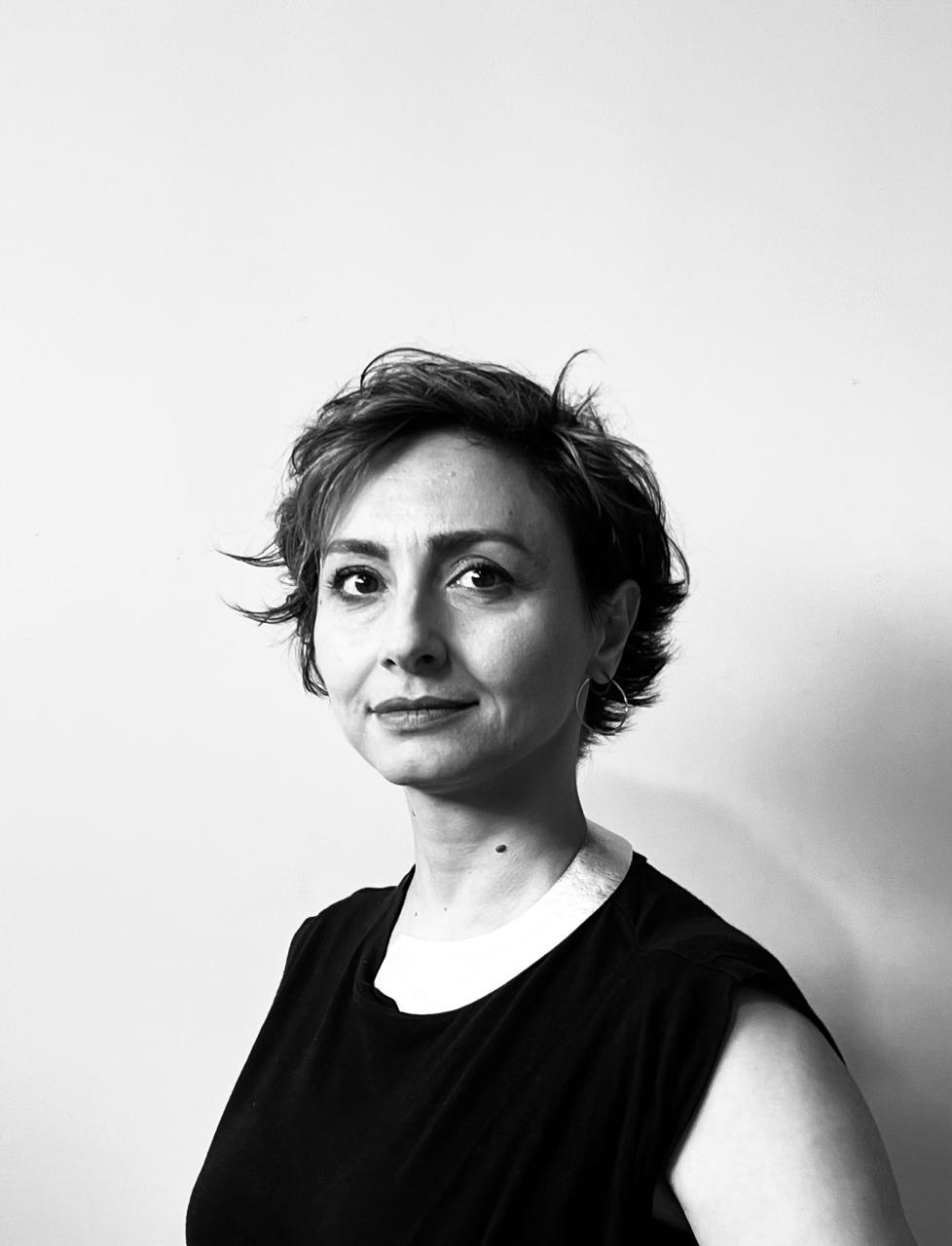
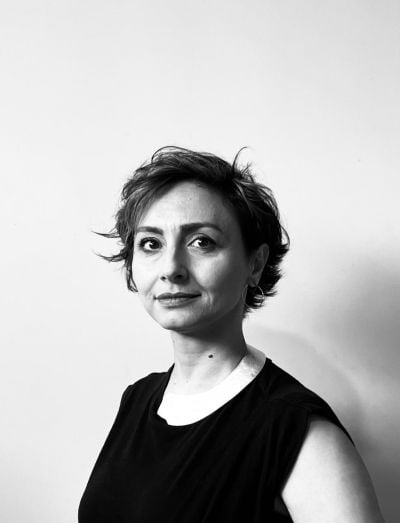
Janine Akl, director of the School of Decorative Arts and the Interior Architecture Department at ALBA. (Credit: DR)






As an educational partner for this major national cultural event, the Lebanese Academy of Fine Arts (ALBA) at the University of Balamand will host the "Educational Hub of We Design Beirut 2025," an event the university is renewing after the success of the first edition last year.
By organizing this event on its campus, ALBA is responding to the need to create spaces for discussion and build bridges between the academic and professional worlds.
"The main objective is to break down the bubbles that exist and try to find bridges, to encourage dialogue between students, professionals, artisans, industry, and the wider public. Today, these spaces coexist without truly interacting. Our goal is to create a common platform for knowledge exchange, critical discussion, and imagination," says Janine Akl, director of the School of Decorative Arts and the interior architecture section at ALBA.
Centered on "The Renaissance of Lebanon," the theme of the second edition of "We Design Beirut 2025," the university will organize a series of activities over five days. "Our goal is to explore the role of design in Lebanon's reconstruction, and to see how we can contribute to building it," she continues.
For the organizers, it is necessary to reflect on Lebanon's complexity, whether in terms of its crises, reconstruction, or the interplay between heritage and innovation.
Sub-themes for design grounded in reality
Through the lens of the training provided by ALBA's nine schools, the event will explore the theme of "We Design Beirut 2025" in five sub-themes, each addressed through lectures, round tables, and workshops.
One segment is dedicated to "Hybrid Intelligences," exploring the impact of nanotechnologies and artificial intelligence on the perception of design, as well as the blurred boundaries between instruments of war and tools of design. "It is about understanding how to use these tools to accompany the evolution of our professions," notes Akl.
The "Identity through Materiality" sub-theme examines the relationship between the materials designers use and the identities they seek to build. "Our choice of materials, objects, or textures will shape our new vision of Lebanon. This choice will be determined by ecological criteria, such as recycling or respect for nature," she adds.
Additionally, "The Future of Our Resources" is another sub-theme of this event. "It is a pressing issue for Lebanon," Akl points out. Drawing inspiration from the past and present, the aim is to imagine a sustainable and ethical future and to redefine the relationship with resources from a cultural and ecological perspective.
Moreover, in a country marked by conflict, the sub-theme "War/Post-war" is a necessity. "It's a theme being deeply explored around the world right now, and we, as Lebanese, are among the best positioned to contribute," she explains.
Beyond reconstruction, this part will propose an evolving design logic based on responsiveness and adaptability to crises. "For us, it’s about identifying what we need to get ahead," she continues.
Finally, the sub-theme "Perceptions of Time and Design" aims to "examine how our understanding of time interacts with the design we create and how temporalities influence our thinking," she specifies.
An exhibition where disciplines dialogue through student works
In parallel with the lectures, round tables, and workshops, a cross-disciplinary exhibition will bring together works by ALBA students from its various schools.
"There will be juxtapositions and dialogues between diverse projects. For example, around the sub-theme 'War/Post-war,' fashion school students' projects will enter into dialogue with those from urban planning, showing how they have responded to the war," explains Akl.
The exhibition will also include film screenings by the film school, reflecting the five sub-themes.
Meanwhile, a documentation project by students from the School of Visual Arts and the product design section, created in collaboration with "We Design Beirut," will highlight the relationship between artisans and designers.
"We want students from different schools to collaborate on the same projects to confront their viewpoints, broaden their horizons and spark dialogue," she continues.
Open to the general public, the "Educational Hub of We Design Beirut 2025" will not only mobilize the ALBA community, but will also welcome speakers and students from other Lebanese universities, as well as international experts.
"We are very curious! We want the public, like us, to ask questions, and for us to try to find the answers together," so that we can "question what is happening around us, not accept a fait accompli," she states.
Hoping, through this event, to "ignite participants' passion" and help them "find their path," the goal is "to show them that many futures are possible and that these futures depend on them" — that they are capable of shaping their surroundings.
"Our mission is to help them find the tools to express themselves and shape their future, especially as the future belongs to creative thinkers. And, originally, everyone is creative. Our role is thus to help spark that creativity," concludes Akl.

 Evening recap: Netanyahu announces West Bank offensive; 7 killed in Jordan church shooting; tents burned in south Lebanon
 US strike on Iran this weekend? ‘Absolutely,’ says Barrack; ‘I have no idea,’ says Trump