


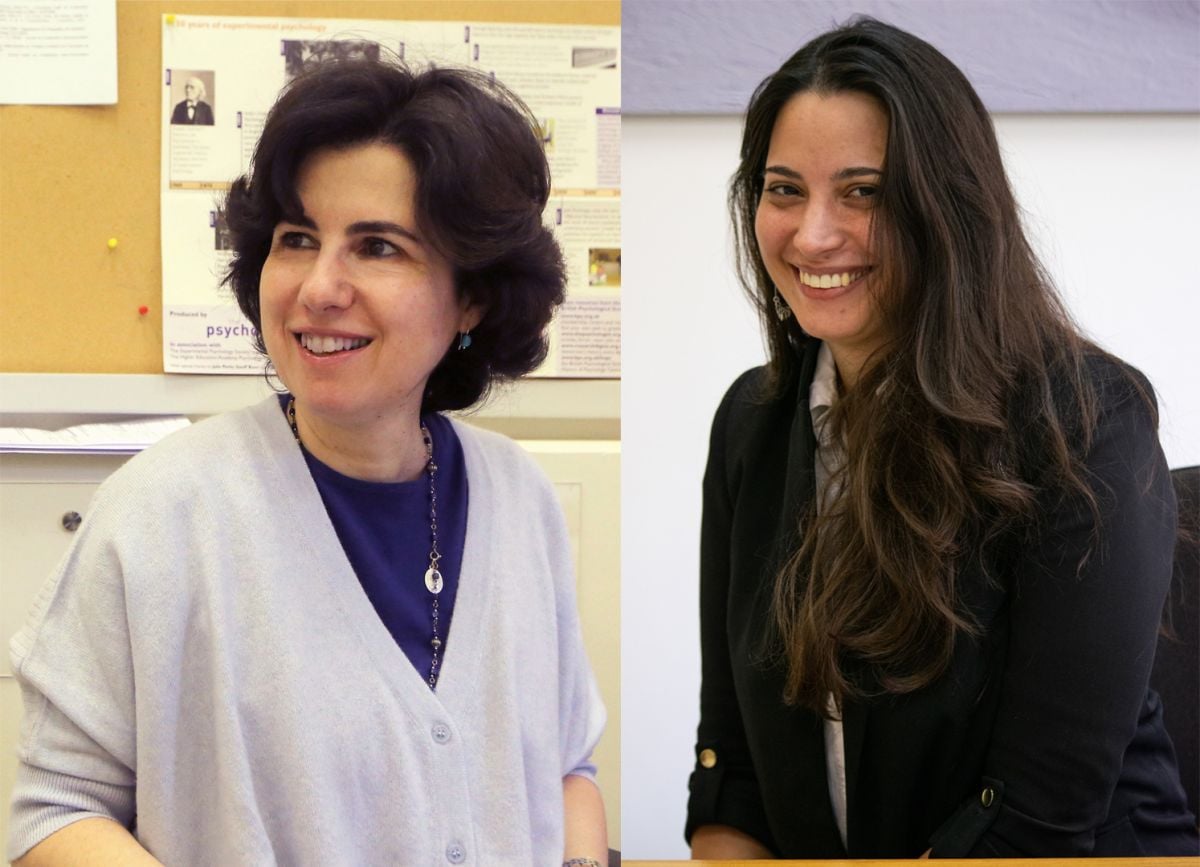
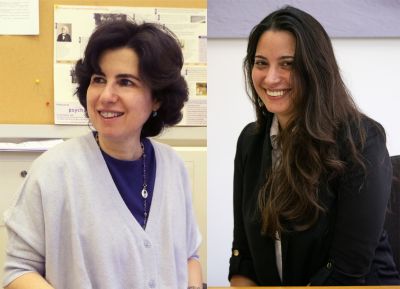
Myrna Gannageh (on the left) and Seéphanie Jabre, co-organizers of the international conference “What Can the Humanities Do?”, on Oct. 22 at USJ. (Credit: Rita Bacha)






In a world upended by artificial intelligence and technological advances, the humanities are struggling to maintain their influence.
“Today, in the face of the emergence of new technologies and the rise of artificial intelligence, which are taking on an increasingly important role in our daily lives, the humanities no longer attract students as they once did,” notes Myrna Gannageh, dean of the Faculty of Letters and Humanities at Saint Joseph University (FLSH).
“This worrisome reality justifies the organization of this symposium, which aims to reaffirm the legitimacy and power of action of the humanities in a world marked by accelerating technological change and a series of multifaceted crises.”
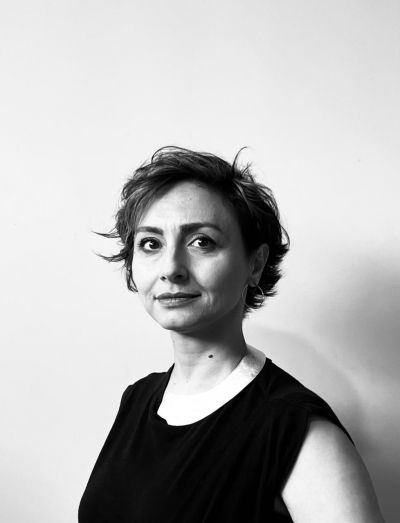
Stephanie Jabre, head of the French literature department and co-organizer of the symposium alongside Pamela Krause, director of the philosophy program, and Gannageh, emphasize that “contemporary societies cannot be reduced to simple algorithmic models.”
“To understand today’s challenges, we must turn to the humanities, as they reveal what lies beyond measurable logic and standardized behaviors. They provide the deeper insight needed to address complex issues like climate change, identity conflicts, and globalization — problems that cannot be solved by technical solutions alone.”
Far from attempting to compete with the precision or rigor of the hard sciences, the humanities play a complementary and fundamental role. “They are based on the ability to ask questions, to give meaning to phenomena, to stimulate reflection, and to guide moral choices,” continues Gannageh.
Gannageh explains, this approach constitutes “the true strength of the humanities: they guide decisions, establish ethical frameworks, and foster shared reflection, allowing not only for action but, most of all, meaningful and informed action.”
The humanities: A response to contemporary challenges
To attract young people to the humanities, it is necessary to convince them “that a society cannot evolve without the humanities,” that “these disciplines can be connected to areas they care about — social, environmental, political issues — and that they can shed light on contemporary problems they encounter every day,” adds Jabre.
The FLSH understands this well. That is why it is bringing together, on Oct. 22 at the Pierre Y. Abou Khater amphitheater, influential academic figures from Lebanon and abroad, invited to jointly reflect on the unique power of the humanities in a world governed by immediate efficiency logics.
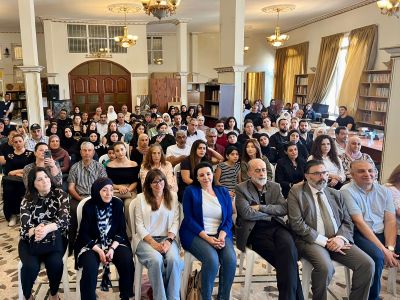
Participants will explore the role of the humanities in understanding and resolving contemporary crises — be they ecological, identity-related, or technological — as well as their contribution to clarifying bioethical issues, critically analyzing changes brought about by artificial intelligence, and constructing and transmitting collective memories.
They will also discuss the ability of the humanities to make experiences of trauma and vulnerability understandable, to analyze the symbolic structures guiding our political and technological choices, and to nurture the ethical thinking indispensable for collective life.
Among the speakers: Stephane Baquey (Aix-Marseille University), who will address the topic of “diction of environments,” between poetry and the humanities; Herve Flanquart (Université du Littoral Côte d’Opale), who will discuss “residents’ acceptability of technologies to address climate change”; Boris Cyrulnik (University of Toulon), who will propose “a new perspective on the psyche”; Pamela Krause (USJ), who will explore “the link between philosophy and care, for a psychiatric epistemology”; Antoine Abi Daoud (USJ), who will question “the obsolescence of the humanities”; Jim Gabaret (Université Paris 1), who will present “the new creative methods and aesthetic effects of generative models”; Nizar Hariri (IFPO), who will reflect on “the role of the humanities in facing environmental crises”; and Yvonne Saaybi (USJ), who will discuss “the power of storytelling in welcoming illness.”
Other speakers, such as Taos Babour (IFPO), Nasri Messarra (USJ), Julie Tegho (USJ), and Nay Soueidy (USJ), will enrich this collective reflection, each according to their specialization, to show that the humanities, far from being an academic luxury, remain an essential lever for understanding, connection, and action in today’s world.
The humanities professions: A vast and growing field
The skills developed through the humanities — analysis, understanding of behaviors, critical thinking, and ethical awareness — are now sought in many sectors.
In media and communication, as well as private companies, psychology and sociology help to better understand group dynamics and optimize team management.
In education, these disciplines help foster responsible citizens while considering social and cultural realities. They are also applied in urban planning and the environment, the book sector, research and higher education, and in national and international NGOs.
“It would be limiting to think that the humanities and advanced technologies exist in separate spheres,” says Gannageh.
“On the contrary, they complement and closely interact: the humanities humanize technology by integrating human needs, behaviors, and values at the heart of innovation.”
She concludes: “This symposium offers an opportunity to reflect on what the humanities can do — this inexhaustible source of thought about humankind and its interactions with the world. Their contribution is essential for navigating the complexity of the contemporary world.
Restoring these disciplines to their rightful place means recognizing their crucial role in understanding societies, questioning values, and fostering fruitful dialogue between the past and present.”

 1 p.m. recap: Salam in Nabatieh; up to 10,000 more US troops heading to Middle East