


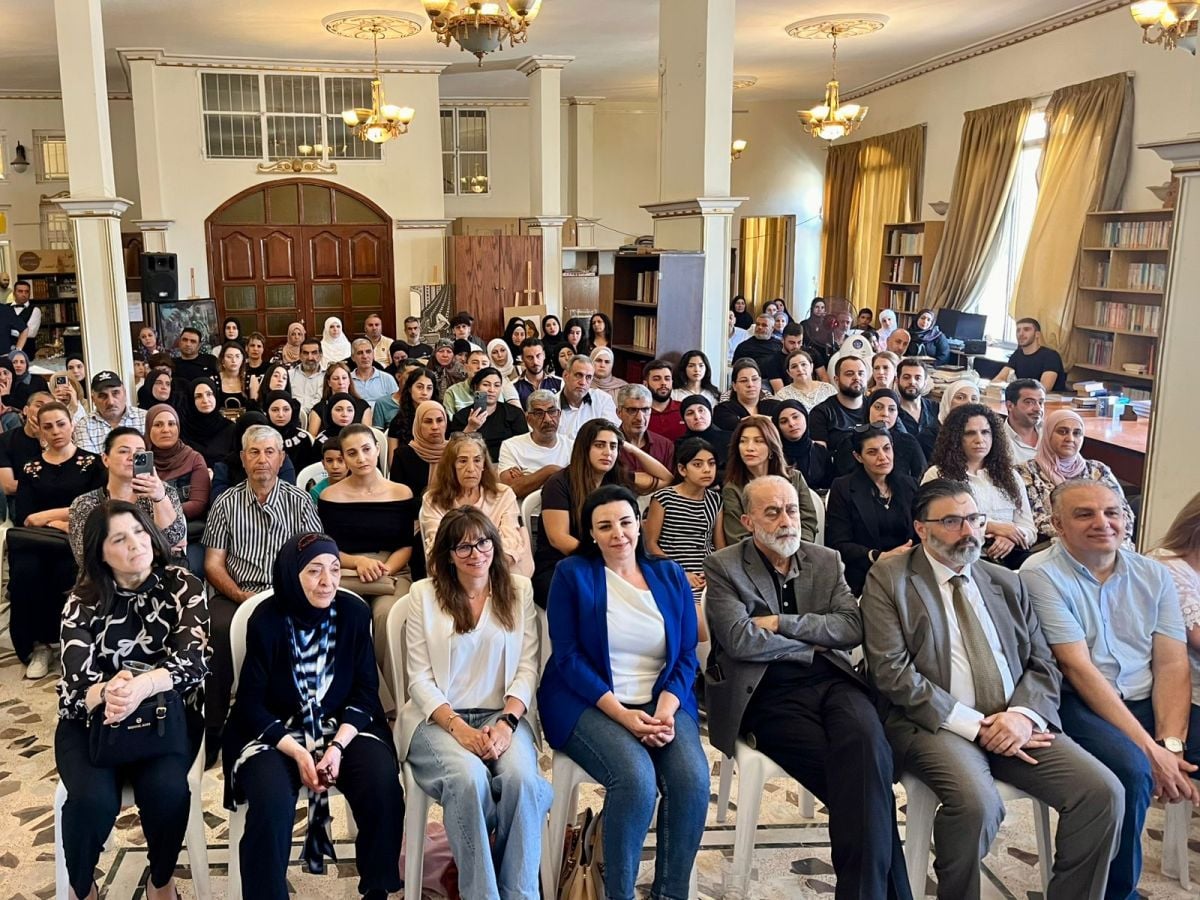
For its first intervention in a rural area in Lebanon, the global COPE program reached students, both girls and boys, from three private schools in Baalbeck, of all religious denominations. (Credit: LAU)






About a hundred teenagers, aged 14 to 17, participated in the seven sessions organized as part of the "COPE for Hope" initiative by Myriam al-Khoury Malhame and Nadine Zeeni, associate professors at the School of Arts and Sciences (SoAS), and Rita Doumit, associate professor at the Alice Ramez Chagoury School of Nursing at the Lebanese American University (LAU).
For this first intervention of its kind in a rural area of Lebanon, girls and boys from the Baalbeck region, of all faiths and from three private schools, benefited from the globally recognized COPE (Creating Opportunities for Personal Empowerment) program.
Based on cognitive behavioral therapy (CBT), its goal is to provide young participants with tools to help them manage their emotions, reduce negative thoughts, and develop healthy behaviors when facing frustrations or stressful situations they may encounter at any point in their lives.
“The idea is to teach participants to regain control over their reactions, based on the interaction between thoughts, emotions, and behaviors, the pillars of CBT. They are also taught how to restructure their thinking to become more positive, despite difficult life experiences,” says Malhame.
More of a prevention program than actual therapy, COPE enables the learning of an empowering and stimulating mindset.
Funded by the President’s Intramural Research Fund at LAU and concluding at the beginning of the summer, the intervention in Baalbeck aimed “to give adolescents living outside urban areas, who do not necessarily have access to these kinds of resources, the tools to thrive and overcome difficulties,” explains Malhame.
The objective of this intervention is twofold. On a personal level, “to learn to manage one’s emotions, whether anxiety or something else, and on a relational level, to learn to communicate in a more positive and peaceful way, whether with their parents, friends, or teachers,” she continues.
Since mental well-being and physical health are interdependent, it was also essential to include in the sessions tools to help them improve their lifestyle, particularly sleep and nutrition.
Putting learned techniques into practice
For the Baalbeck intervention, the LAU professors adapted the COPE program to the cultural context of the region before training local psychologists who led the sessions, using concrete examples drawn from the real-life experiences of the young participants.
“We learn better when working on practical situations from everyday life. We therefore asked each participant to share their emotional trigger and what causes them anxiety. This varies from person to person. So there is no single tool that works for everyone,” says Malhame.
Whether meditation techniques, gratitude practices, or others, each tries out whatever works best for them among the tools taught in the sessions. To encourage the young people to practice these techniques and ensure they use them in their daily lives, therapists asked them to incorporate them into specific times during the day. As morning or evening rituals, before going to school, or even before responding to their parents when emotions run high.
This also included scheduling alarms and reminders on their phones. Likewise, before opening social media, it is vital to repeat a positive affirmation to strengthen self-esteem and better face toxic content. “Thanks to the homework assignments they work on during the week to present in the following session, we carry out an assessment to adjust the techniques and their implementation,” says the associate professor and researcher.
Moreover, the "COPE for Hope" program addresses adolescent needs such as asserting their identity, as well as other challenges of this age, including conflicted relationships with relatives, lack of self-esteem, and bullying.
At the same time, since the sessions took place against a backdrop of ongoing economic and security crises, “it was essential to address techniques for managing traumas that had resurfaced, as well as ongoing anxieties,” notes Malhame.
After the Israeli offensive that targeted civilians, the associate professor notes that some participants had lost loved ones and some, in one-on-one interviews offered at the end of a session, expressed a desire to die.

“This desire is seen not as suicide, but rather as a wish to join their loved ones whom they miss,” she adds, noting that during the sessions, teenagers learned “how to regain meaning in their actions.”
A model of intervention for students to replicate
In terms of needs as well, according to their qualitative evaluation of the intervention, the adolescents reported having found in the sessions a space where they could express themselves freely, “a space they lacked, where they are listened to without judgment and their needs are considered a priority,” reports the associate professor.
She notes that after experiencing multiple crises, they have seen their parents overwhelmed by the burdens of life and as a result, began to consider their own needs as trivial. “When they attended the sessions, they realized they all experienced the same worries, and that these worries are legitimate,” she continues, stating that “this created a sense of solidarity among them.”
In parallel, when the initiators of the "COPE for Hope" intervention assessed its impact, they found “this model is sustainable. Even with a frequency of just one hour per week, we were able to measure the sessions’ positive impact, by comparing levels of anxiety, depression, trauma, and well-being before and after the intervention,” says Malhame. The symptoms of trauma decreased significantly.”
At the outset, the teenagers felt powerless in the face of violence, injustice, or daily worries, but after learning to control their emotions, they managed the harmful effects of their traumas. “It is a model that schools and public institutions can easily apply,” she suggests.
Six months after the end of this intervention, therapists will conduct another evaluation to check whether the results are sustained, by meeting with the participants as well as their families and educators.
Furthermore, the associate professor and researcher reveals that, once the study's results are officially published, the team plans to seek larger funding to establish a permanent system. “This will allow us to train our psychology and education students in the COPE program, so they in turn can offer interventions in schools as part of their required internships,” she says, adding that the initiative is currently under discussion with the Education and Higher Education Ministry, whose role would be to facilitate contact with schools. “
When you couple academic work with practical activity, you can attract funding and channel it to serve communities, instead of carrying out our research locked away in our offices,” Malhame points out.

 1 p.m. recap: Salam in Nabatieh; up to 10,000 more US troops heading to Middle East