


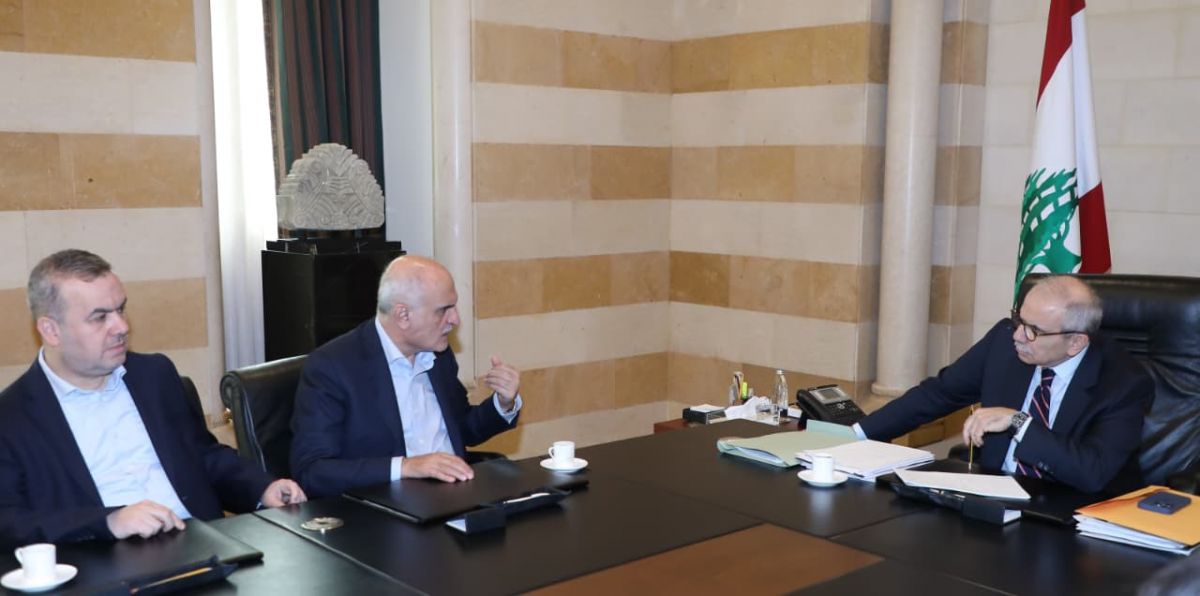
Prime Minister Nawaf Salam (right) discusses with Amal Movement MP Ali Hassan Khalil (to his left), and Hezbollah MP Hassan Fadlallah, at the Grand Serail, on Oct. 28, 2025. (Credit: @grandserail/X)






BEIRUT — Prime Minister Nawaf Salam met Tuesday at the Grand Serail with a Hezbollah and Amal delegation to discuss proposed amendments to the electoral law ahead of the May 2026 elections, the Grand Serail said on X.
The issue of expatriate voting has been a source of tension for several weeks, once again prevented the plenary session from being held in Parliament due to a lack of quorum.
The Shiite MPs, who support maintaining the 2017 law that allocates six seats to the diaspora instead of a vote for all 128 lawmakers, were among the 61 MPs present out of the 64 required to open the session.
"We must find the necessary way out to guarantee that the elections are held on schedule in accordance with the existing law," Amal Movement member and Nabih Berri's right-hand man Ali Hassan Khalil, told the prime minister.
"We reviewed the text aimed at amending the current electoral law. We reaffirmed, as we told the president [Joseph Aoun] yesterday, that there is a law currently in force, and it is up to the government to take the necessary measures to implement it and organize the elections on the scheduled date," he added.
Hezbollah and Amal MPs, accompanied by Dinnieh MP (North Lebanon) Jihad Samad, had warned the head of state the day before about a "major national rift" if the law was amended.
"This is the core of our message: that no arrangement should postpone or hinder the holding of elections as scheduled, nor worsen the current divisions in the country at the expense of the climate of consensus needed for the adoption of the electoral law," he said.
The Amal MP also mentioned the "risks posed by adopting an amendment to the current law, due to the absence of equal opportunity and the voter's freedom to express their opinion."
"We wanted the prime minister to position himself as the guarantor refusing to deepen divisions, and to work on finding the necessary way out to begin steps leading to elections being held within the set deadlines, in accordance with the current law," concluded the MP, who said he was "more committed than ever to ensuring expatriates participate and play their full role in this process."
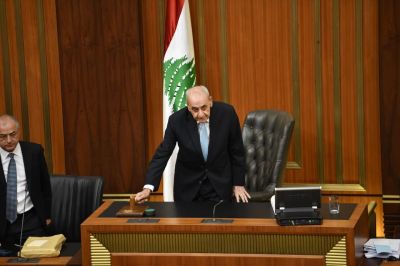
While it seemed that Berri would this time succeed in holding the scheduled plenary session in the chamber, the boycott strategy of the anti-Hezbollah camp led by the Lebanese Forces ultimately succeeded.
Only 61 MPs were present, out of the 64 required to open the session. Critics of the current law are protesting Berri's refusal to include on the agenda an urgent double-procedure bill aimed at amending the electoral law.
