





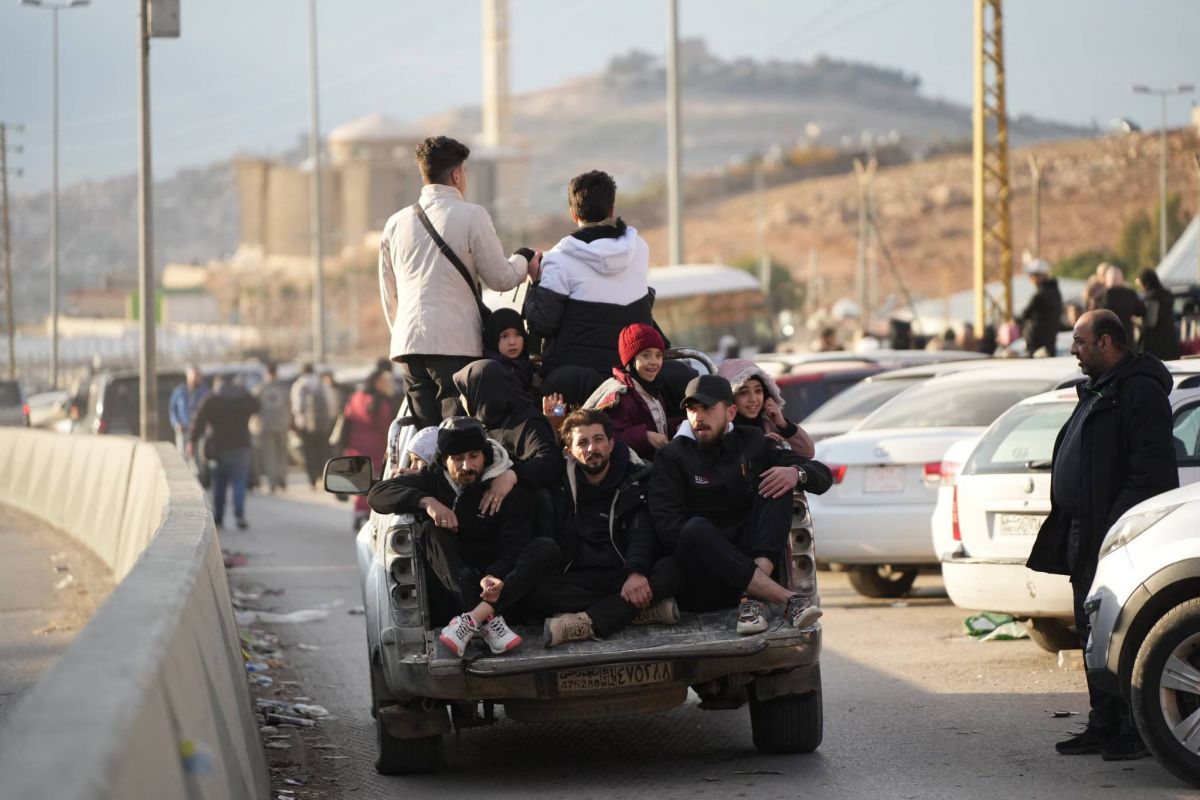
Syrians at the Masnaa border crossing, Dec. 8, 2024, Lebanon, on the border with Syria. (Credit: Mohammad Yassin/L'Orient Today)






BEIRUT — The Litani River basin is facing "serious pollution as a result of the untreated sewage and solid waste discharged from Syrian refugee camps, estimated at more than two million cubic meters annually," the Litani River Authority said in a letter to the United Nations High Commissioner for Refugees (UNHCR) on Tuesday.
This warning was reiterated Wednesday in a statement by the Free Patriotic Movement (FPM), describing the situation as “an escalating environmental and national threat tied to the ongoing presence of informal refugee camps across the country.”
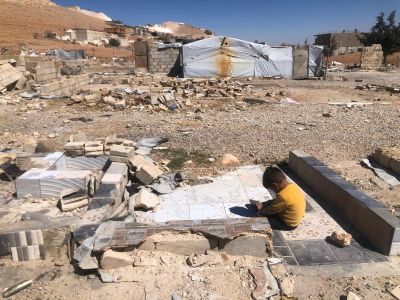
In the letter sent Tuesday to UNHCR, the Litani River Authority called for immediate action to stop what it described as "direct, large-scale pollution of the river basin." The authority said it had "submitted photographic evidence showing extensive contamination from wastewater and solid waste," and warned that "worsening drought conditions and declining water resources would exacerbate the risk to public health."
UNHCR was not responsive to L'Orient Today's request for comment at the time of publication of this article.
'An environmental and humanitarian crime'
The FPM reacted to the authority’s report by calling the pollution “an environmental and humanitarian crime against the Lebanese people,” adding that it reflects the broader consequences of "an unmanaged refugee crisis."
The party said the situation confirms its long-standing position that the refugee issue is not merely humanitarian, but a matter of sovereignty, affecting “water, health, social, and political security.”
It also accused "certain NGOs and political actors of exploiting the refugee crisis for funding and influence, in contradiction to both national interests and humanitarian principles."

“It is time for the state and its international partners to move from the management of the crisis to a phase of actual resolution,” the FPM said, advocating for the gradual return of refugees to Syria, where, it said, relative stability has returned to many areas.
A sixth convoy is planned by General Security for Thursday to facilitate the voluntary return of Syrian refugees to Syria. This convoy is part of an ongoing series coordinated under a plan established by UNHCR. After the fall of the Assad regime on Dec.8, many Syrians in Lebanon expressed their desire to go back to Syria they deemed as now safer.
The Lebanese government is aiming to see 400,000 Syrian refugees return to Syria by the end of the year, according to Social Development Minister Haneen Sayed.
Deputy Prime Minister Tarek Mitri told TeleLiban Wednesday that Lebanon is not seeking to resettle Syrian refugees in Lebanon, but rather to facilitate their return, while retaining those needed by the Lebanese labor market.
Mitri also said that relations between Beirut and Damascus are being renewed “on a clean slate,” with diplomatic exchanges expected soon.
Call on UNHCR to 'review its humanitarian operations'
In its letter, the Litani River Authority urged UNHCR to "review its humanitarian operations in Lebanon through an environmental lens and to implement stronger oversight."
It condemned what it called the role of “organizations and individuals” who have politically or financially benefited from prolonging the refugee crisis.
The FPM, meanwhile, blamed Parliament for failing to pass legislation that would support refugee repatriation, including a recent proposal calling for their return within six months.
The party said “saving Lebanon begins with a courageous decision that restores the balance between human dignity and the nation’s right to survive.”
Since organized returns began, 974 Syrian refugees have voluntarily returned to Syria via convoys departing from Beirut or Tripoli.
While around 114,000 have registered for the program, only a small fraction have participated, most return independently. Between January and October this year, the UNHCR confirmed or presumed that 294,912 Syrians returned to Syria and were removed from its registry in Lebanon.
The actual number of returns is likely higher, as many refugees are unregistered.

 7 p.m. recap: Iran warns Egypt, Israeli soldiers vote in south Lebanon, Haret Hreik responds to Kataeb
