





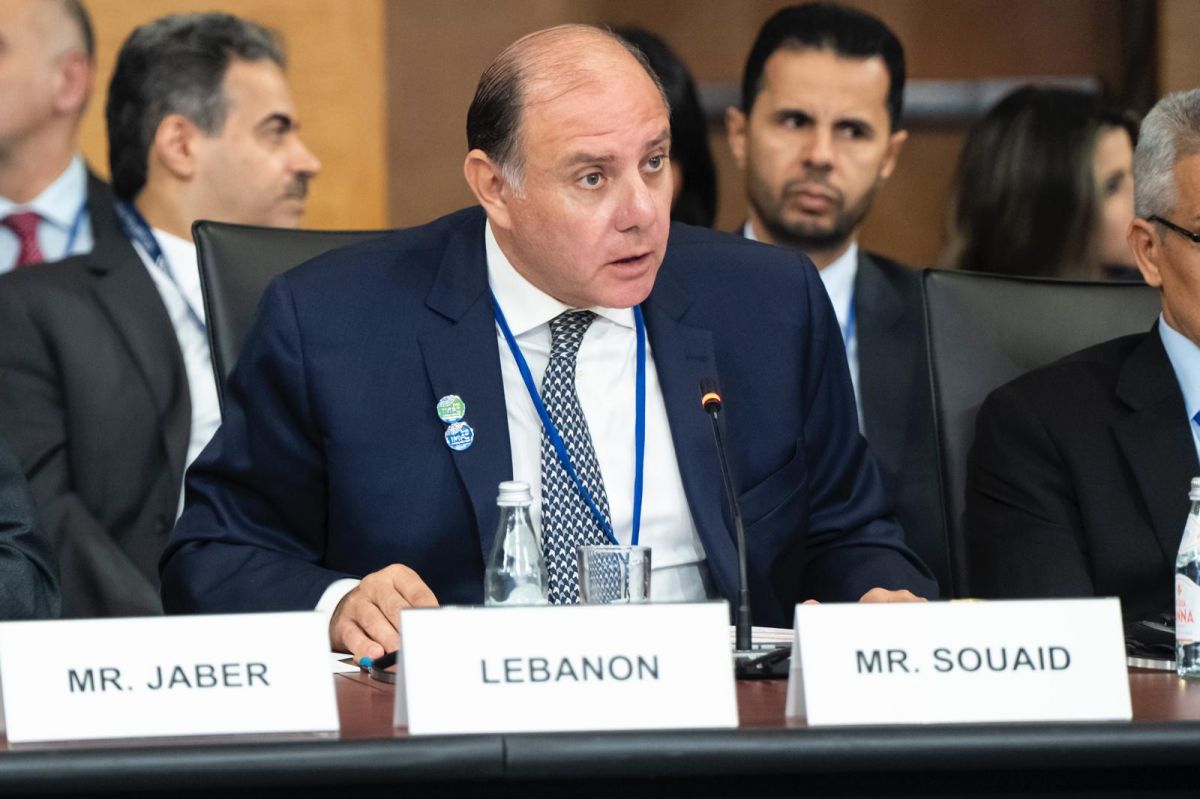
The governor of the Banque du Liban (BDL), Karim Souhaid, during a meeting in Washington, in October 2025. Photo BDL.






BEIRUT — Finance minister and central bank governor sought to reassure international partners this week as they held a series of high-level meetings in Washington on the sidelines of the International Monetary Fund (IMF) and World Bank (WB) annual gatherings — a renewed attempt to revive stalled financial talks and restore confidence in Lebanon’s economic reform plan.
Finance Minister Yassine Jaber and Banque du Liban (BDL, central bank) Governor Karim Souhaid issued separate statements detailing their meetings in Washington, where they were part of the same delegation representing the government and the presidency.
Souhaid, who was accompanied by BDL Deputy Governors Salim Chahine and Gaby Chnouzian, as well as Mazen Soueid, president of the Banking Control Commission, said he met with IMF officials, including the team handling the Lebanese file led by Ernesto Ramirez Rigo; the IMF’s Middle East and Central Asia Director and former Lebanese finance minister Jihad Azour; and the IMF Deputy Managing Director and former Jamaican Minister Nigel Clark.
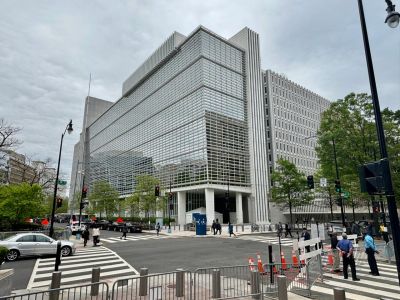
"The discussions focused on the framework proposed by the BDL for restructuring the banking sector, which is part of a comprehensive approach for Lebanon aimed at reducing the central bank's balance sheet deficit and ensuring full and gradual repayment of legitimate deposits according to a precise timetable," read a statement shared by the BDL press office.
Souhaid described the meetings as “constructive and positive,” citing “moderate but satisfactory progress” on the overall framework for bank resolution.
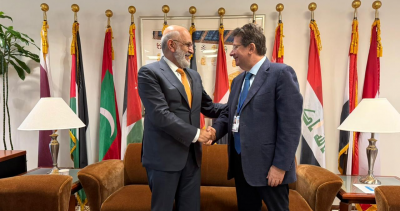
Lebanon has been negotiating with the IMF since 2020 in an effort to secure a financial assistance program conditional on the implementation of reforms. The government of Nawaf Salam, formed earlier this year, has revived the process, which has been progressing slowly for several months. According to our information, the BDL and IMF are not fundamentally in agreement on the question of the hierarchy of responsibility in banking sector restructuring, with the IMF demanding that bank shareholders fully contribute before any potential levies on deposits.
L'Orient-Le Jour learned that the IMF insists that bank shareholders be fully involved in absorbing the losses before any potential levies on depositors, a stance that remains a key point of contention with BDL.
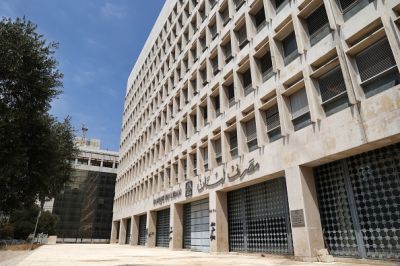
The BDL governor is also expected to meet with several White House economic advisers and an expanded team from the U.S. Treasury Department to discuss issues related to anti–money laundering and counterterrorism financing, the statement added.
Jaber secures Arab fund pledge for Lebanon’s reconstruction efforts
Separately, Minister Jaber announced that the Arab Fund for Economic and Social Development has expressed its readiness to contribute $120 million to the World Bank’s $1 billion reconstruction fund. The fund, recently backed by a $250 million World Bank loan, is intended to help rebuild areas damaged by Israeli bombardment during the last war between Israel and Hezbollah.
The minister also took part in a meeting of Arab finance ministers and central bank officials, attended by IMF Managing Director Kristalina Georgieva and her deputies. He also met with representatives of the International Finance Corporation (IFC), the World Bank's private-sector arm, and then with Norway’s Minister of International Development, Åsmund Grøver Aukrust, who visited Lebanon this year.
Jaber also attended a meeting of Arab finance ministers and central bank governors with IMF Managing Director Kristalina Georgieva and her deputies, as well as separate talks with representatives of the International Finance Corporation (IFC), the World Bank’s private-sector arm.
He later met with Norway’s Minister of International Development, Åsmund Grøver Aukrust, who visited Lebanon earlier this year, and held discussions with officials from the Atlantic Council and the U.S. Treasury Department.
Jaber also participated in sessions organized by the IMF’s Executive Director for the Arab region and the Arab Cooperation Group, which brought together Arab finance ministers, heads of Arab and Islamic funds, and representatives of the Organization of Petroleum Exporting Countries (OPEC).

 7 p.m. recap: Iran warns Egypt, Israeli soldiers vote in south Lebanon, Haret Hreik responds to Kataeb