





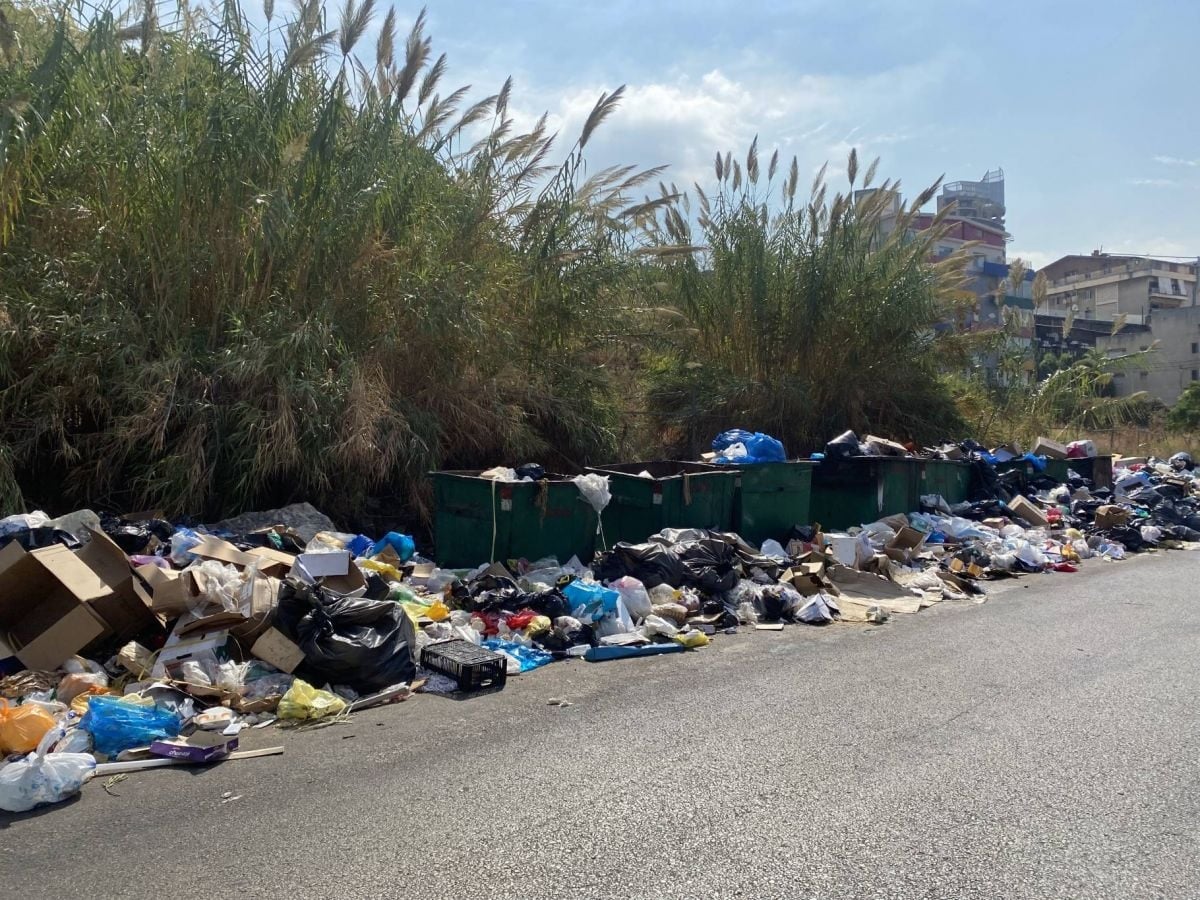
Waste piling up in Zouk, Kesrouan, on Oct. 11, 2024. (Credit: S.B./L'Orient-Le Jour)






BEIRUT — The environmental group Greenpeace Middle East and North Africa, based in Beirut, sharply criticized on Friday the government’s decision to expand the Jdeideh landfill in North Metn.
“Instead of opting for a sustainable solution, the Cabinet yesterday chose yet another temporary fix by expanding the coastal landfill, thereby extending the lifespan of such sites,” the group said in a statement.
Created after the worst waste crisis in Lebanon’s history, the Jdeideh landfill has served North Mount Lebanon and part of Beirut since 2016. It was briefly closed on Tuesday after reaching capacity — the site already stands 37 meters high.
Facing the risk of garbage once again piling up in the streets, the government opted for an emergency measure: keeping the site open and creating a new cell on a 40,000-square-meter plot it had previously ceded to the municipality, granting it all the benefits it had requested, including use of the entire landfill area after its closure and the installation of an electricity production station.
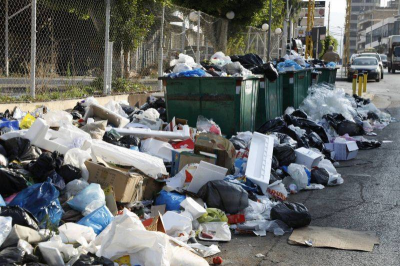
This new cell represents the site’s last possible expansion and will only provide relief until the end of 2026.
“Once again, the government is falling back on stopgap solutions for household waste management instead of committing to a sustainable path based on a clear vision and genuine political will,” said Julien Jreissati, programs director for Greenpeace MENA.
“The problem remains unresolved. There are no miracle solutions or technologies that alone can fix it. What’s needed now are practical, realistic, and applicable short- and long-term measures — ones that include recycling, composting, and treating what remains in an environmentally sound way, far from artificial and dangerous solutions such as incinerators promoted by so-called ‘merchants of death,’” he added.
Environmentalists warn that incinerators pose serious risks in a country like Lebanon, where weak oversight increases the likelihood of pollution from emissions and toxic waste.

A governance crisis
Samar Khalil, an environmental management expert and member of the Civil Coalition for Waste Management, said in the same statement that “the waste crisis in Lebanon is not technical in nature, but rather a crisis of governance and political will.”
“The solutions exist and are outlined in the national waste management strategy — what’s needed is implementation,” she said. The strategy was developed by the previous government but is now under review at the request of the current environment minister, Tamara Elzein.
Khalil recommended several measures consistent with a circular economy: mandating source separation supported by adequate sorting infrastructure; prioritizing composting — given that about 70 percent of Lebanon’s waste is organic — to produce compost and enrich soil; holding producers and importers accountable to reduce packaging waste; and setting clear indicators for transparent monitoring and public reporting.
Both groups also warned against adopting refuse-derived fuel (RDF) technology as a quick fix to the waste crisis, saying that producing RDF from unsorted waste could make it highly polluting and would not promote waste reduction.
RDF technology converts waste into fuel, primarily by shredding it into fine strips. In Lebanon, it could only be used in heavy industries such as cement factories.

 Evening recap: Netanyahu announces West Bank offensive; 7 killed in Jordan church shooting; tents burned in south Lebanon
 US strike on Iran this weekend? ‘Absolutely,’ says Barrack; ‘I have no idea,’ says Trump