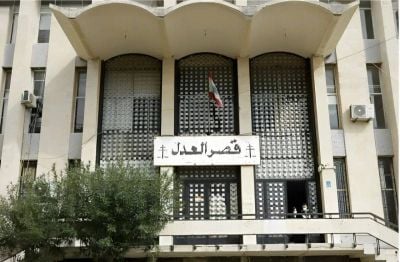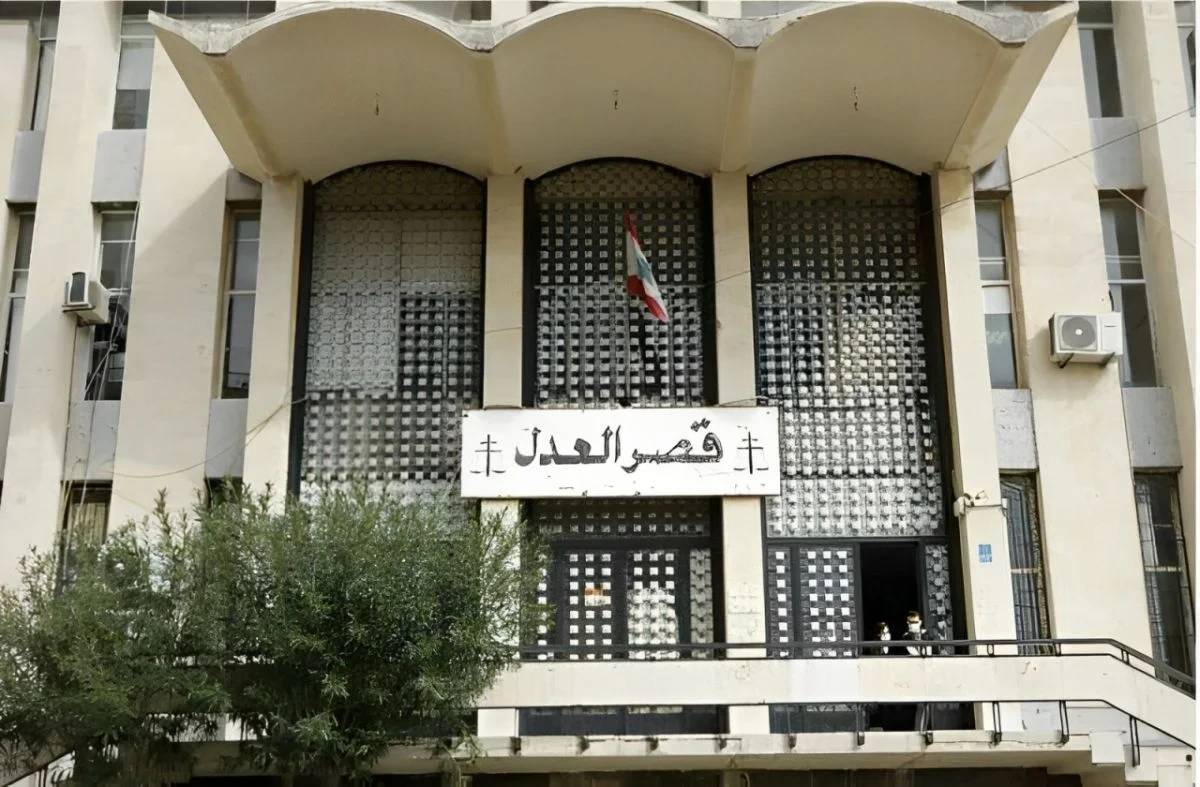
The Baabda Palace of Justice. ANI photo






A year after the Baabda commercial registry building was evacuated due to serious structural deficiencies, no rehabilitation work has yet begun, preventing residents, litigants, and businesses from resuming administrative and legal procedures.
The stakes are particularly high because the vacated building also housed the Labor Arbitration Council (Lebanon’s equivalent of an employment tribunal), the judgment enforcement department, and the courtrooms of four land tribunals.
The evacuation order was issued on June 3, 2025, by Justice Minister Adel Nassar at the request of Public Works Minister Fayez Rasamny. The decision came after two engineering reports had been prepared less than a month earlier. Both concluded that there was no immediate risk of collapse.
The first report, commissioned by Mount Lebanon Court of Appeal President Myrna Bayda, found that the building posed a “moderate” level of structural risk and required preventive maintenance work.
The second, based on a visual inspection, described the building as being in very poor condition and recommended its evacuation pending reinforcement and rehabilitation.
Last August, Rasamny commissioned a further structural stability assessment. According to local media reports, the study did not reach a definitive conclusion.
In light of those uncertainties, Beirut Bar Association President Imad Martinos called last week for independent experts to assess the building's condition and produce a detailed report.
The appeal came during a site visit attended by Nassar and Beirut Order of Engineers President Fadi Hanna. Speaking to L’Orient-Le Jour, Martinos lamented that “to date, no on-site technical inspection has been carried out to determine whether the building faces an imminent risk of collapse or whether rehabilitation work could make it accessible again.”
He added, “If rehabilitation proves feasible, it will then be up to Fayez Rasamny to authorize the start of the works.”
While the municipality of Jdeideh (Metn) has provided premises to house the tens of thousands of files transferred from Baabda, Martinos said the facility remains inadequate because of its limited size.
Electronic archiving
The Higher Judicial Council, for its part, highlighted the efforts undertaken by the judicial administration, led by Bayda and assisted by volunteer judges, to “transfer and organize the tens of thousands of commercial registry files in order to ensure continuity of service and respond to users’ requests to the extent permitted by available resources,” according to a statement issued Monday.
The operation involves digitizing the files and transferring them from the evacuated building to storage containers and premises rented from the municipality of Jdeideh, before ultimately relocating them to the Mount Lebanon Criminal Court’s courtroom.
According to the statement, the work was carried out with the assistance of a civil engineer and a software developer.
The courtroom became available after hearings were transferred back to the Roumieh prison courthouse, which resumed operations in May 2025.
For Martinos, while those efforts are commendable, they remain insufficient because they address the consequences of the building’s closure rather than its root causes. The bar association president argues that the priority should be determining whether the structure can be rehabilitated and brought back into service.
To that end, he is pressing for the Lebanese Order of Engineers and Architects (OEA) expert report to be released “within the next few days at the latest.”
This article was originally published in French in L'Orient-Le Jour and translated by Sahar Ghossoub.