


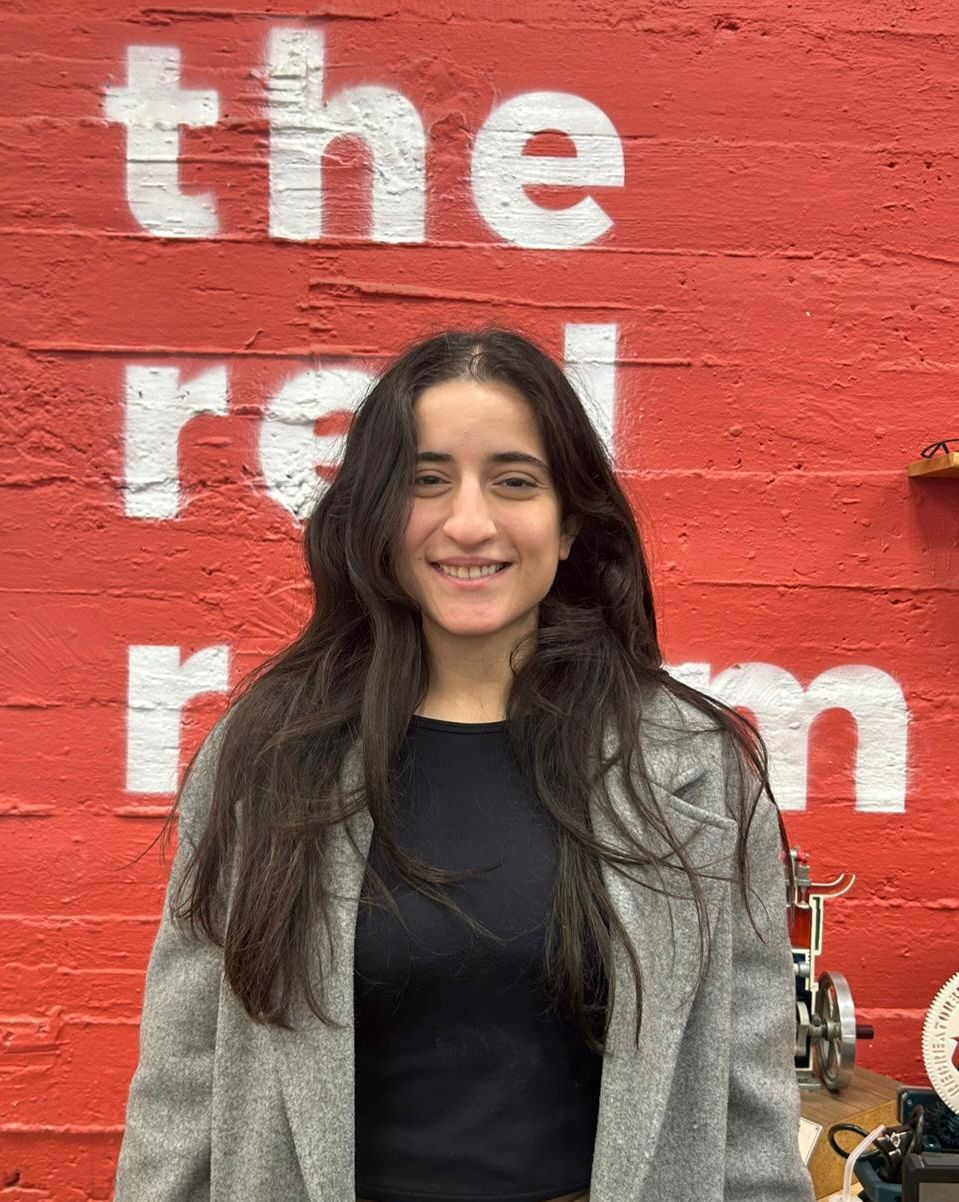
Leya Sharrouf. (Credit: Person photographed)






The topic of "brain drain" in Lebanon is a common one, referring to the brilliant minds who leave the country in search of a more stable future; but some stay, against all odds. These are the rare sparks who, despite economic crises, wars and obstacles, choose to defy the impossible and build their story here, on a battered but beloved land.
Being a student in Lebanon is not an ordinary experience. It's an obstacle course, but there is tremendous willpower. The Lebanese student embodies both ambition, versatility, inner strength and extraordinary resilience. They seize opportunities wherever they see them and strive to shine from within their own country.

How can one balance studying and working in a collapsed economy?
For Reem Abou Harb, 23, a master's student in philosophy at the American University of Beirut (AUB), balance is built through discipline. "I work full-time from 8 a.m. to 5 p.m., but I also manage to continue my studies. My job provides me with financial stability and practical experience, while my master's is something I pursue out of passion and a desire for intellectual growth."
New forms of work, especially remote work, have opened unexpected doors for young Lebanese. "Because I work online, it gives me the flexibility to manage my schedule more efficiently," she adds.
Another master's student, who prefers to remain anonymous, says she chose to work alongside her studies: "I'm someone who works well under pressure. I prefer having a busy schedule; it makes me more productive." For her, the job is not only a means of subsistence but also a parallel school: "Having a job teaches you things that university cannot offer: communication, discipline, time management... These are essential skills, far beyond exams and grades. They will be valuable on my CV and in the job market later on."
This is also the case for Mira Raad, 19, a third-year mechanical engineering student at Saint Joseph University, who chose to work at the beginning of her second year, "not only for financial reasons but to make progress, discover and develop my skills." From her second year, she accepted a position at the university because, according to her, what she learns goes beyond classes: responsibility, communication, teamwork and time management. "All of this, I'm sure, gives me a real advantage in the job market, as it allowed me to gain both practical and human experience in addition to my academic training," she says.

It's the same for Leya Sharrouf, a third-year mechanical engineering student at AUB. The 20-year-old works at the university, covering shifts throughout the semester. This experience has enabled her to apply theory in practice and gain confidence. Juggling studies and work requires effort, especially during exam periods. Ultimately, it's all about time management. For Leya, this double commitment represents not only a small additional income but, above all, a precious lesson in organization and discipline.
The financial crisis has spared no one, and students are no exception. The right to education has become, for many, a privilege. But some retain their energy and humor. Karim, 21, confides: "The month hasn't even started and I already have two jobs, on top of my studies." His statement alone sums up the hardships of daily life for some, but also the vitality that prevents them from giving in. "I do my best to continue my studies. It's not easy, but I have no choice."
A youth that refuses to fade away
In a country where uncertainty has become the only constant, these students refuse to be erased. They juggle multiple jobs, pursue their studies with passion, laugh at difficulties to defy them better and turn their weaknesses into strengths.
They represent the image of a Lebanon that resists. Young people who, despite adversity, cultivate their knowledge and courage, carrying a simple yet powerful truth: a Lebanon that continues to live through them.
This article was translated from L'Orient-Le Jour.

 Israeli army carries out demolition at Jabal Amel School in Houla as strikes continue