






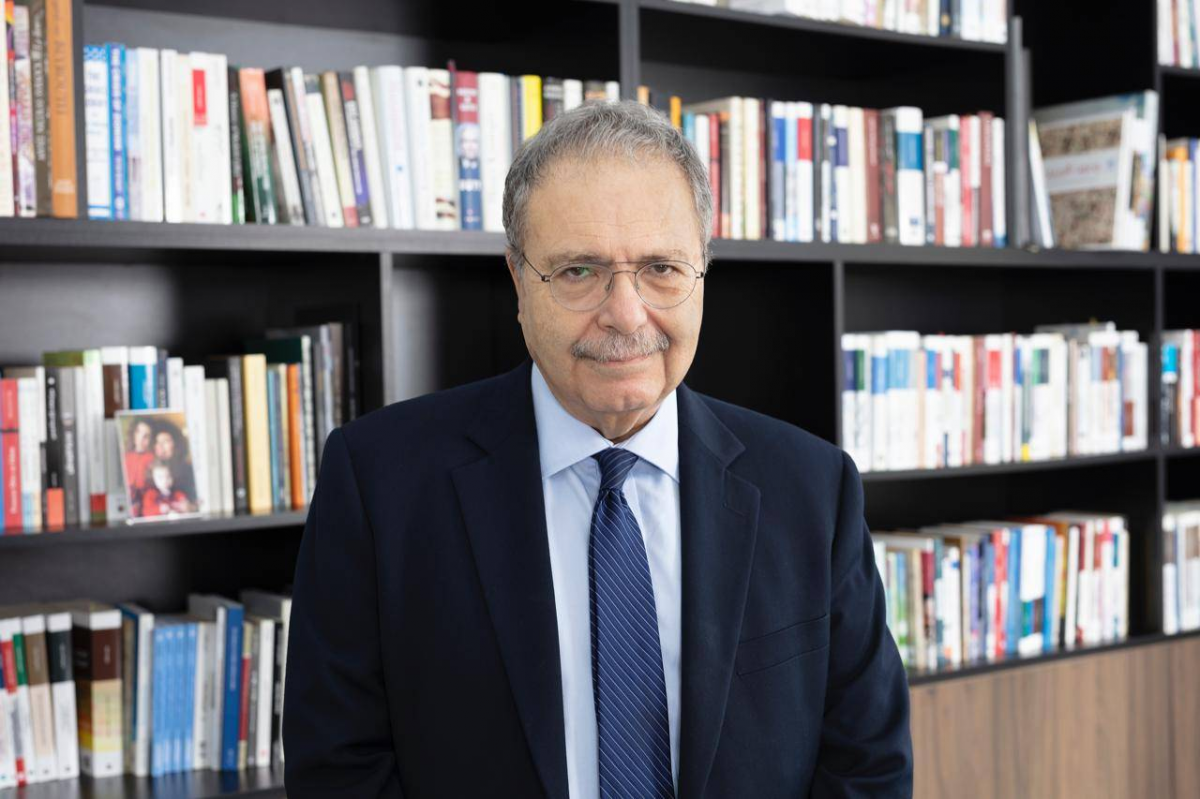
Deputy Prime Minister Tarek Mitri. (Credit: Photo provided by his office.)






BEIRUT — Deputy Prime Minister Tarek Mitri said that the approach favored by the Lebanese government to restore the state's monopoly on arms had prevented the country from being divided, and that the army had no intention of using force against any Lebanese party to achieve this mission.
"What was decided by the Cabinet went against expectations, as it did not cause divisions in the country and does not call for the use of force against any particular group to carry out the assigned mission," the senior official said in an interview with Radio Sputnik, as transcribed by the state-run National News Agency (NNA).
"The government welcomed the army command's plan to extend state control over the entire territory by its own means," he added, referencing the plan put forward to the government last Sept. 5, which was approved by the executive – without the presence of the five Shiite ministers.
Mitri reminded Sputnik that "the objectives of the Tom Barrack plan were approved" by the executive without adopting the plan "in its entirety." "What happened in the session was due to the deep political divide in the country, and the fact that the American initiative and the Lebanese document, partly amended by the Lebanese, alarmed some, while others counted on its success."
He also recalled that the army plan included three stages, with the first lasting three months and including a monthly report from the army, while there is still no timeline for the other two stages.
Syrian dossier
This plan followed two previous Cabinet meetings, on Aug. 5 and 7, 2025 – again without the Shiite ministers, who left the session, except for Finance Minister Yassine Jaber, who was away at the time.
The decision adopted the objectives of an American proposal conveyed by envoy Tom Barrack. The government had originally asked the army to complete the disarmament by the end of the year, which triggered a backlash from the Amal-Hezbollah alliance, considering it a response to Israeli demands. But the plan approved in early September, without a set timetable, somewhat eased internal tensions and likely prevented the government from imploding.
The deputy prime minister also addressed other issues, including the relationship between Syria and Lebanon, which has been reset since the fall of Bashar al-Assad's regime, replaced by a government formed by a coalition of Islamic rebels. "Trust between Lebanon and Syria is strong, and the Syrian visit to Lebanon aims to reinforce this trust. The most recent meetings have helped to reinforce confidence and have paved the way for discussions on how to handle common issues," he said.
Mitri added that the meeting between President Joseph Aoun and his Syrian counterpart Ahmed al-Sharaah in Doha "gives further momentum to joint Lebanese-Syrian work." The two heads of state met at the extraordinary summit hosted by Qatar in response to the Israeli strike on its territory on Sept. 9. The two countries have recently begun a dialogue process aimed at settling several contentious issues, including the border situation, Syrian prisoners held in Lebanese jails, and missing Lebanese in Syria.
"We are working quickly to implement a judicial cooperation agreement, which we hope to adopt in the near future, allowing us to address the situation of Syrian detainees," he said, adding: "There needs to be a distinction between those who opposed the former Syrian regime and those arrested for actions against the Lebanese Army or security forces."
Mitri was eventually asked about the state of Lebanon-Russia relations. "Russia cares about Lebanon and its unity and wants to preserve the integrity of its territory," he said, before asking whether Moscow was ready to "use its influence to pressure Israel to halt its hostile actions and withdraw from Lebanese territory." The Israeli army still occupies six positions in southern Lebanon and continues to shell Lebanese territory almost daily, despite the ceasefire reached with Hezbollah at the end of last November.