


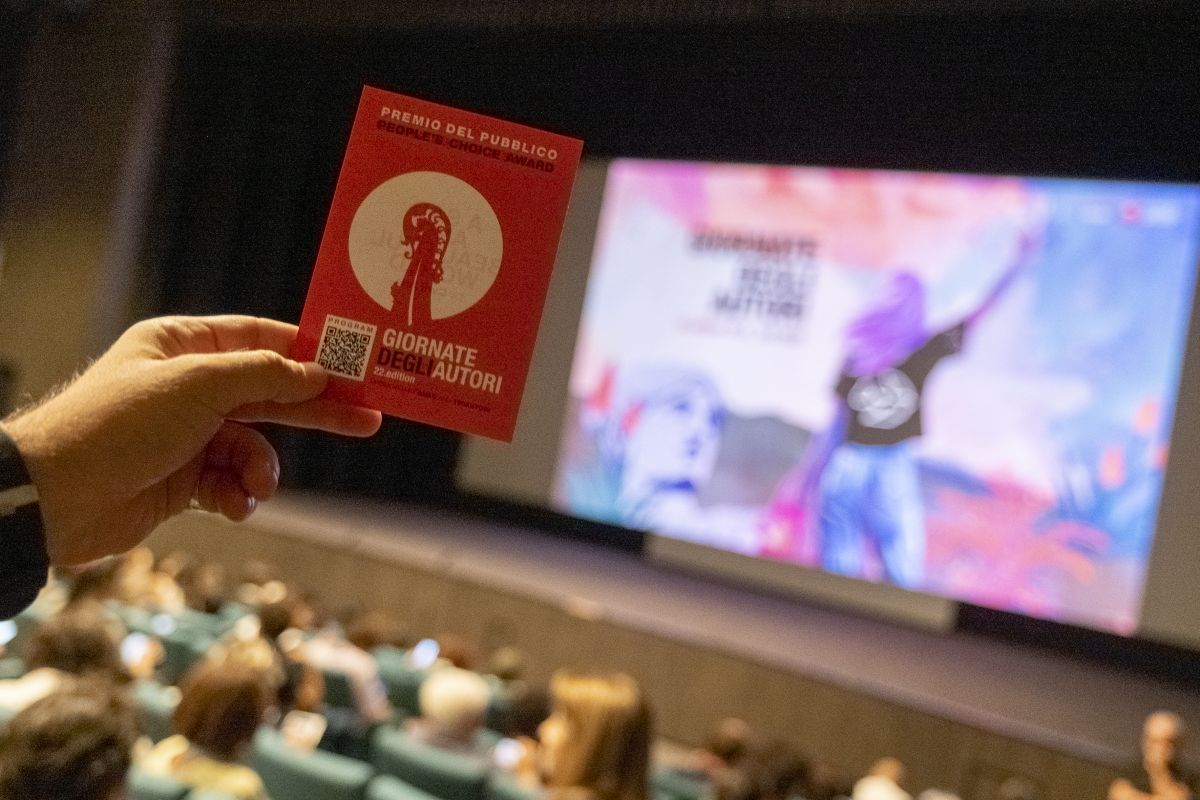
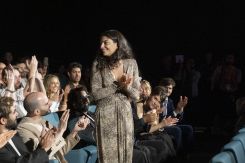
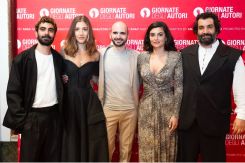
Screening of the film "It's a Sad and Beautiful World" during the Audience Award at Venice. (Credit: Giornate degli autori, Moris Puccio)






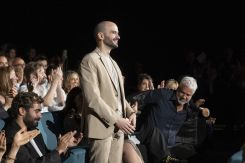
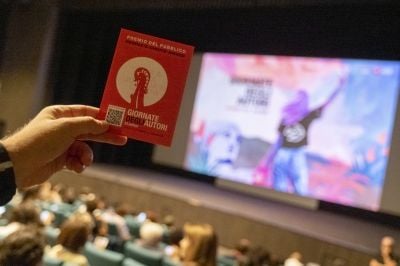
In Venice, the applause lingered long after the screening. Before a standing audience, acclaimed Lebanese director Cyril Aris, known for his sensitive documentaries and intimate approach to cinema, had just won the Audience Award at the Giornate degli Autori of the Mostra.
This accolade honors his unique style, developed through documentary works like "The Swing and Dancing on the Edge of a Volcano," where the personal and the political intertwine with exceptional precision.
"It’s a Sad and Beautiful World" is his first full-length fiction film. “I’ve done two documentaries, and this is my first fiction feature. Before making feature documentaries, I made short fiction films. In both cases, these are films that express my emotions at the time. Sometimes the story can only be told as a documentary, sometimes as fiction,” he told L'Orient-Le Jour.
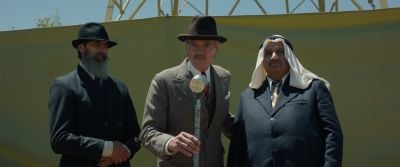
The story of Nino and Yasmina, from childhood to marriage, mirrors that of Lebanon: “Their relationship swings between tenderness and despair, just as the country teeters between prosperity, war, and crises.” The title is taken from the opening line of Jim Jarmusch's "Down by Law" (1986). “The two pillars of sadness and beauty reflect my perception and vision of my country, Lebanon,” Aris emphasizes.
Yasmina's character, written for Mounia Akl
The film’s strength also lies in its casting. Aris envisioned the role of Yasmina for Mounia Akl, director of Costa Brava Lebanon, and recently of the last three episodes of House of Guinness for Netflix and the BBC.
She and Aris fell in love with theater together when they both acted as amateurs in Michèle Malek’s Très-tôt théâtre workshop. With her, then an architecture student, and him working in finance, he decided to change his career path to pursue a master’s in film at Columbia University.
“I started working with Mounia 15 years ago. We made completely amateur films with a tiny camera, no crew, or just a handful of us — sometimes nothing at all — and we acted in our own movies, because we were the only ones willing to work with that much passion and generosity, with no pay.”
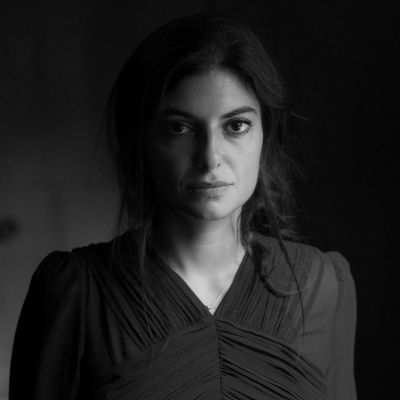
He brings her back in front of the camera after some absence, as Mounia had moved into directing: “I wrote the character with her in mind. I admire her intelligence and elegance on camera. I know how powerfully she can light up the screen. I knew she could embody Yasmina with great authenticity.”
When Akl read the script, she immediately understood the character and connected with her. She felt right away that she could portray her with authenticity and empathy. “I gave her a lot of freedom to reinterpret Yasmina’s character. I thought of her as a person, in her real life. I think that allowed her to identify with the character,” Aris says.
Alongside her, Hassan Akil, Julia Kassar, Tino Karam and Nadyn Chalhoub form a cast where experienced professionals and newcomers interact spontaneously.
Between the horror and the sweetness of life
The film was written in 2019, and after securing the difficult funding, shooting began in 2024 — not without risks. “In the middle of the Hezbollah-Israel escalation,” the team feared the war could stop the project at any moment, and “already, Iranian missiles fired at Israel were passing through the skies above us,” recalls Aris.
Another challenge was working on a long-term project, which was due to the fact that financing arrived in dribs and drabs, requiring adjustments along the way to the country's changes and the director's own growth.
“Lebanon was already a different country between when I wrote the script and when we began shooting,” he notes.
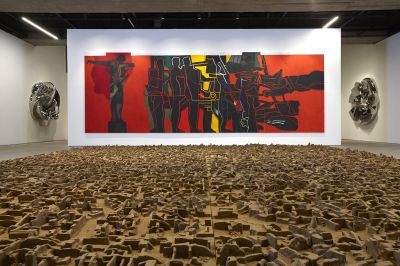
The title itself evokes Lebanon, endlessly teetering between horror and the sweetness of life — a rollercoaster reflected in relationships and characters’ balancing acts between optimism and pessimism, always including humor as the main way to cope with these gaps.
Lebanon’s cinematic history is always close by; the documentarian in Aris creates a connection between archival footage and new shots to capture Beirut's rhythm in each sequence.
Ultimately, love was the winning force: love of cinema, first — achieved with modest means and a collective passion — and intimate love, as Aris finished the film just as his son was born: “We gave birth at the same time, I to the film and my wife to our child, a few weeks early, as we were filming the last shot.”
A blurred line between reality and fiction
Chosen for his directorial debut in Venice — having previously been there as the editor of Mounia Akl's Costa Brava — Aris was overwhelmed: “All the screenings of 'Sad and Beautiful World' were sold out. The audience, eclectic, including Lebanese, Arabs, and mostly foreigners, reacted with great emotion. Winning the Audience Award was an unforgettable moment for the whole team.”
"It’s a Sad and Beautiful World" will continue its journey through prestigious festivals, from the BFI London Film Festival to Valladolid in Spain, before a planned European release in early 2026. As for Arab and Lebanese screenings, they have yet to be scheduled.
At the core of this recognition is Aris's cinematic essence: the blurred line between reality and fiction, already hinted at in his documentaries, dissolving in a gesture, a silence, or a memory that becomes poetry. “Fiction is a poetic way to reveal or reflect real life. Sometimes you don’t know whether you remember things as they really happened or as you dream them. That’s where cinema is born.”
This article was translated from L'Orient-Le Jour.
 2 Israeli soldiers injured in 'operational accident,' as army continues attacks in the South