





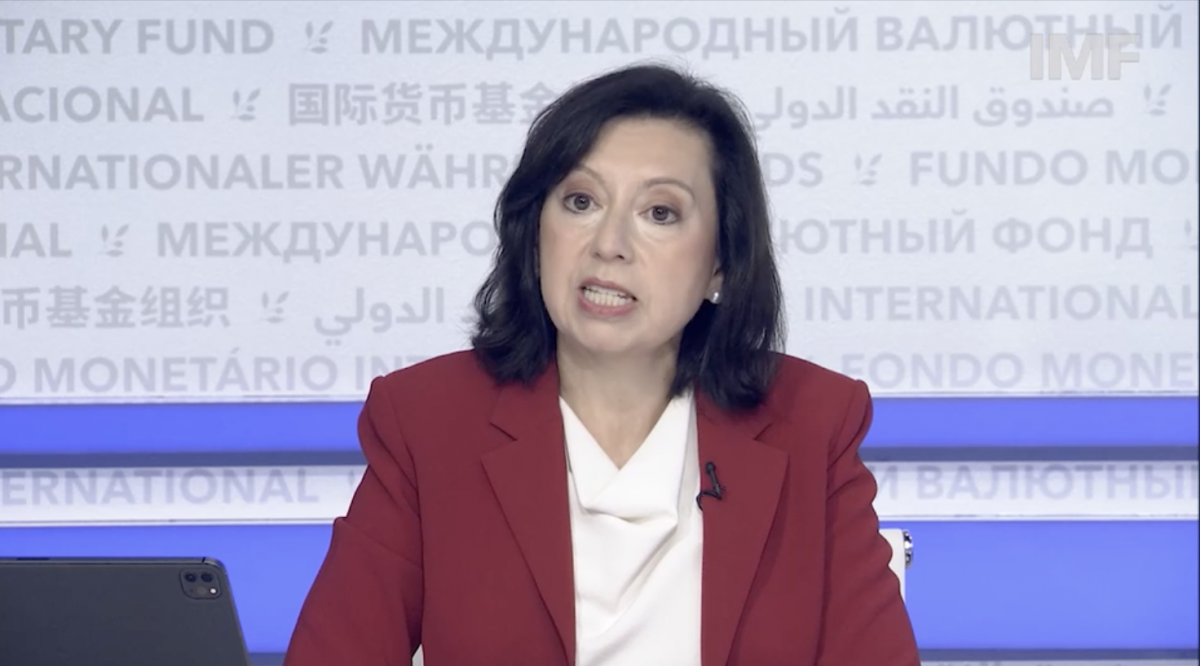
Head of the Communications Department (COM) at the International Monetary Fund Julie Kozack. (Screensht)






The International Monetary Fund (IMF) announced Thursday that a staff team will visit Lebanon at the end of September to continue discussions on a comprehensive reform program aimed at reviving the country’s struggling economy.
Speaking at a press briefing, IMF Communications Director Julie Kozack said Lebanon will need a wide-ranging reform program to restore growth, reduce unemployment and improve social conditions. She added that this will require policy reforms — particularly in fiscal policy — as well as adequate external financing, while also addressing the country’s significant humanitarian and reconstruction needs.
"We have a staff team that will visit Lebanon at the end of September to continue discussions on a comprehensive reform program for Lebanon," Kozack said.
"Lebanon's economy continues to face major challenges," she added. "In 2024, we expect the economy to have contracted by 7.5 percent. This follows a smaller contraction in 2023, meaning the economy will have been in a period of contraction for two consecutive years."
Kozack said, "Humanitarian and reconstruction needs are significant, requiring a consolidated and coordinated international effort and support. Given Lebanon's substantial reconstruction needs, the authorities' reform efforts will also need strong backing from external partners, preferably on highly concessional terms."
"Discussions on formulating a comprehensive reform program are ongoing, with the goal of eventually supporting it through an IMF program," she added.
"Lebanon will need a comprehensive reform program to restore growth, reduce unemployment and, very importantly, improve social conditions for the Lebanese people," Kozack continued. This will require several components, with policy reforms — particularly fiscal policy — playing a key role. "Financing will also be an important part of that," she said.
"The discussions the staff are having with Lebanese authorities focus on identifying the right mix of policies and reforms, as well as determining the scale of external financing needed — not only from the IMF but also from the broader international community," she concluded.
Asked about losses in the banking sector, she said: "The team has been engaging substantively with the Lebanese authorities. Part of those discussions is aimed at obtaining a comprehensive understanding of the situation — not just in the real economy, including firms and consumers, but also in the financial sector. Those discussions are certainly ongoing, and resolving all of those issues will be an important part of this comprehensive reform program that is under discussion."
Plunged into an unprecedented crisis since 2019, Lebanon renewed its request for access to an IMF financial assistance program last February. That step allowed the revival of a process initially started in 2020 but which never materialized, largely because of resistance from a segment of the political and banking class to any solution that did not place the entirety — or the majority — of the accumulated financial losses on the state, and thus on the taxpayer. The dynamics appear to have shifted since the arrivals of President Joseph Aoun and Prime Minister Nawaf Salam, although nothing has yet been finalized.

 Evening recap: Netanyahu announces West Bank offensive; 7 killed in Jordan church shooting; tents burned in south Lebanon
 US strike on Iran this weekend? ‘Absolutely,’ says Barrack; ‘I have no idea,’ says Trump