





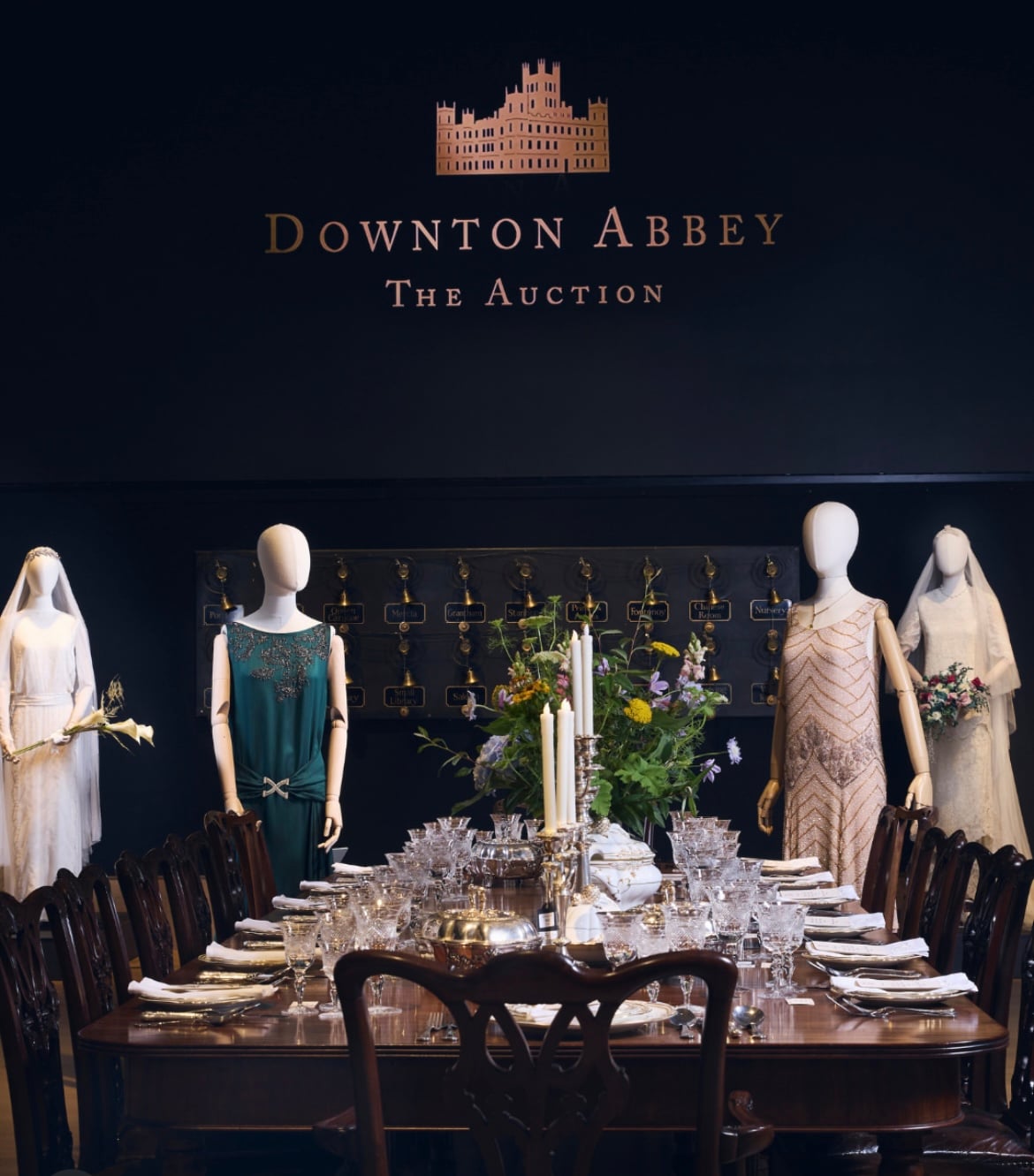
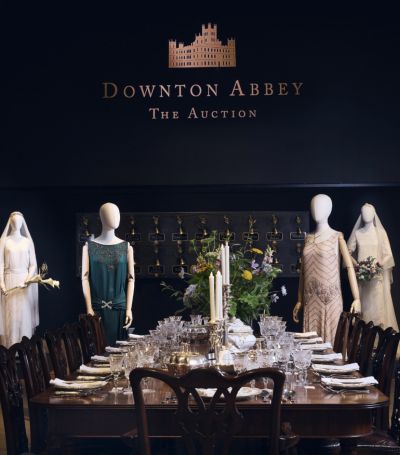
A "farewell exhibition" open to the public before the auction. (Credit: Instagram/@bonhams1793)






With Downton Abbey, millions of viewers stepped into the daily lives of an aristocratic family and their household staff, living the grandeur of the Crawleys through their television screens. Over six seasons and 52 episodes, from September 2010 to December 2015, the very British Crawleys became familiar companions to audiences. And while the series has already inspired three films, fans now get one last farewell.
London’s Bohmans auction house has organized a “farewell exhibition” ahead of an online sale of iconic props, costumes and set pieces. The auction, which closes Sept. 16, offers fans a chance to own pieces from the elegant world that captured turn-of-the-century social upheaval through the lens of a glamorous family and their loyal staff.
From a 1925 Sunbeam to the servants’ bell board
For those drawn to the elegance of 1920s Britain, the items reflect the era’s social contrasts. On the block are a 1925 Sunbeam car, estimated at 29,000 to 40,000 euros, and the servants’ bell board — featured in the very first episode — valued between 5,800 and 8,100 euros. Also for sale are period furniture and wardrobes of the show’s characters, which serve as a kind of archive of early 20th-century fashion.
Anna Mary Scott Robbins, who became costume designer in season five, said her work combined authentic vintage pieces with custom creations that conveyed character through texture, color and silhouette.
“A simple dress falling from the shoulders”
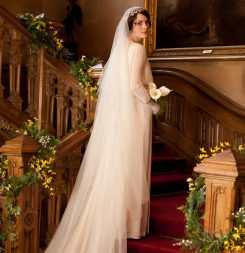
Robbins said she often turned to literature for inspiration, including Oscar Wilde’s 1885 description of a dress “falling from the shoulders, whose shape is inspired by the figure and whose folds by the movements of the one who wears it.” She imagined Lady Mary Crawley shimmering across a grand hall, with her bob haircut, sharp wit and muslin gown embroidered with silk beads. Wilde’s words, which praised simplicity and rejected corsets and heavy ornamentation, stood in contrast to the stiff fashions favored by the family’s dowager countess — a symbol of Edwardian moral rigidity.
From Edwardian restraint to Modernist boldness
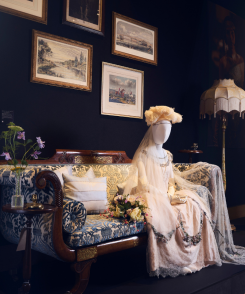
Author and designer Philippa Stockley said the series captured the cultural transformation of the early 20th century: “Downton Abbey embodies this radical and exciting shift from Edwardian rigidity to Modernist audacity, in line with political, social and technological change. At no other time did clothing and textiles reflect advances in architecture and art so perfectly.”
Set between 1912 and 1926, the series depicts a world where women, newly active in public life and fighting for the vote, shed heavy garments for lighter, freer clothing. Men’s fashion also simplified, with wristwatches replacing pocket watches. The Crawleys embraced the era’s modern inventions — the telephone, the gramophone, the automobile and even the sewing machine — against a backdrop of postwar labor reforms and shrinking household staffs.
“The Grand Finale”
When the series ended in 2015, audiences around the globe were left wanting more. That demand brought Downton Abbey to the big screen in 2019 and again in 2022, with A New Era. Now comes Downton Abbey: The Grand Finale, premiering Sept. 12, which promises a final, emotional chapter.
This last installment follows Lady Mary, her family and their devoted staff as they face changing times and inevitable farewells — marked most poignantly by the passing of the estate’s formidable dowager countess, played by Dame Maggie Smith.

 Evening recap: Netanyahu announces West Bank offensive; 7 killed in Jordan church shooting; tents burned in south Lebanon
 US strike on Iran this weekend? ‘Absolutely,’ says Barrack; ‘I have no idea,’ says Trump