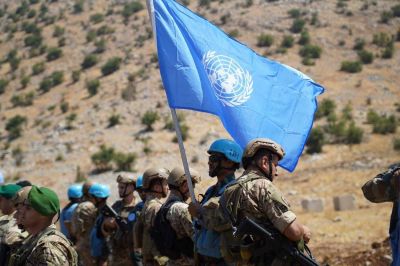
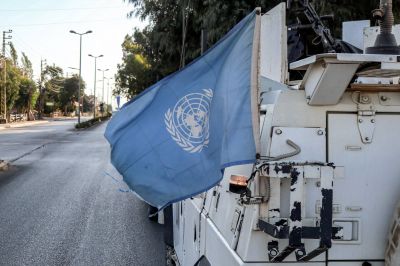
Lebanese soldiers and UNIFIL peacekeepers in Kfar Shuba, southern Lebanon, on Aug. 26, 2025. (Credit: Mohammad Yassin/L'Oreint Today).






As the U.N. Security Council prepares for an Aug. 29 vote on renewing the mandate of the United Nations Interim Force in Lebanon (UNIFIL), the mission’s future hangs in the balance. The United States, Israel’s strategic ally, has questioned UNIFIL’s effectiveness and cost, while France and most Council members argue for its renewal.
The renewal of UNIFIL’s mandate, tied to major diplomatic and security stakes, is set to again expose the deep divisions between Washington, Paris, Tel Aviv and Beirut over the future of southern Lebanon.
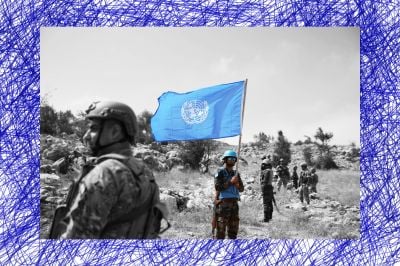
Lebanon, caught between regional pressures and the U.N.’s call for an impartial presence in the south, faces renewed uncertainty over the role of the international force. Defending the mission, the U.N. says UNIFIL remains vital in an increasingly volatile region. A spokesperson for the U.N. peacekeeping operations in New York spoke to L’Orient-Le Jour about the debate.
Funding and sustainability: Who will fund the mission if U.S. support is withdrawn? Can its current scope be maintained?
All peacekeeping operations prepare contingency plans to deal with possible reductions in funding in case member states do not fulfill their contributions. Internal U.N. deliberations on these scenarios are ongoing. Given already tight liquidity, a funding decrease would impact operational continuity, planning and timely delivery of tasks mandated.
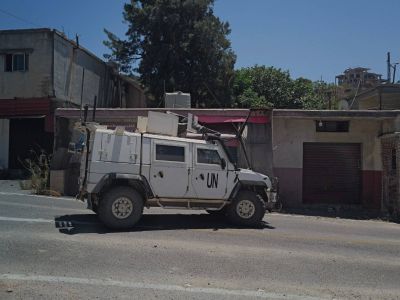
Credibility of the mandate: Does UNIFIL still deter escalation and guarantee freedom of movement, or has it been reduced to a symbolic role?
In accordance with its Security Council mandate, UNIFIL assists the parties in implementing Resolution 1701 (2006), including monitoring the cessation of hostilities, ensuring liaison and coordination, and facilitating the deployment of the Lebanese Army in southern Lebanon.
During hostilities, UNIFIL remained deployed in an extremely challenging environment, supporting de-escalation efforts and humanitarian access. Since the cessation of hostilities in November 2024, UNIFIL has adjusted its presence, posture and profile to the new operational environment to execute its mandate as effectively as possible. Full freedom of movement for the Mission is essential for fulfilling its mandate. UNIFIL’s discovery of 293 arms caches (from November 2024 to July 2025) and its expanded access within the area of operations demonstrate its concrete impact on the ground.
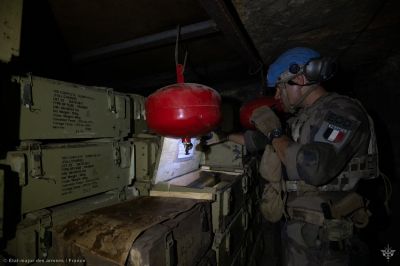
UNIFIL has also facilitated the deployment of 8,300 Lebanese troops, which is crucial for extending state authority and preventing hostile activities in southern Lebanon.
Hezbollah disarmament: How credible is Lebanon’s commitment to disarm Hezbollah by year-end, and what role can UNIFIL or the Lebanese Army play?
The United Nations welcomes the Lebanese government’s efforts to strengthen the state’s monopoly on arms, as required by Security Council Resolution 1701 (2006). The U.N. will continue to work with the Lebanese government, including the army and all relevant stakeholders, to create conditions conducive to greater security and stability in Lebanon.
In line with its mandate, UNIFIL will continue to support the Lebanese army in countering unauthorized weapons in southern Lebanon, including discovering weapons caches and illegal military infrastructure. UNIFIL also continues to support the capacity building of the Lebanese Army, including through training.
Israel’s position: How should Israeli airspace violations and its security expectations be addressed during the mandate renewal?
Full implementation of Resolution 1701 by Lebanon and Israel remains crucial for achieving lasting peace and stability along the Blue Line. The Lebanese government must extend state authority over its territory and enforce the state’s monopoly on arms. The Israeli army must withdraw completely south of the Blue Line and cease its violations of it.
Both sides must fully respect the Blue Line. The U.N. continues to support both parties in fulfilling their obligations under Resolution 1701.
Future direction: Should UNIFIL be reduced to a technical mission or strengthened through increased cooperation with the Lebanese Army?
It is up to the U.N. Security Council to decide on peacekeeping mandates. In the current delicate phase on the ground, the continued presence of an impartial peacekeeping force is essential to work with the parties, help prevent tensions and create a conducive environment for political dialogue toward a permanent ceasefire. UNIFIL continues adapting its operations to support the parties as effectively as possible in implementing Resolution 1701.
This interview was originally published in French in L'Orient-Le Jour.