



Ibrahim Maalouf in the Arthaus garden in Gemmayzeh. (Credit: Aly Baalbaki/L'Orient-Le Jour)






He is recognized and celebrated for his mastery of the trumpet and his distinctive style blending jazz, classical music, world music and oriental influences. In less than 20 years, Ibrahim Maalouf has ascended to the ranks of prominent contemporary musicians.
Beyond his fame, we reveal the artist's personal side: a Franco-Lebanese man in his 40s, proud of his dual culture, dedicated to challenging beliefs through honest discussions on topics ranging from Gaza to diversity in classical music and a teacher at heart, dreaming of artistic education as a fundamental right.
From our archives
A wind of freedom: Ibrahim Maalouf opens first L'Orient-Le Jour festival in Beirut
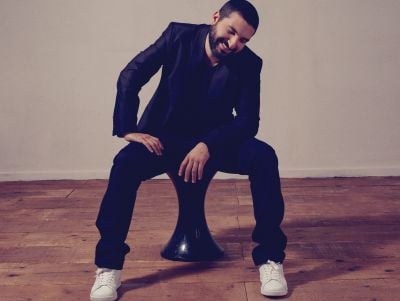
L'Orient-Le Jour: We're just a month away from your concert launching the first edition of the L'Orient-Le Jour Festival, titled 'A Wind of Freedom.' This concert was originally scheduled for September 2024 to mark the centenary of the Lebanese French-language daily, but was postponed for well-known reasons. A year later, you are reaffirming your commitment. What does this event mean to you?
Ibrahim Maalouf: As a French-Lebanese person, it seemed completely natural and logical for me to celebrate the centenary of this newspaper, a flagship in promoting the French language in Lebanon. The French language, in my view, is not just a trend or something 'cool,' but one that carries a deep and meaningful history of connections.
It is a daily paper I feel very connected to because of its 'republican spirit,' its perspective on secular political engagement, away from dogmatic religious positions but respectful of different religions, cultures, convictions and beliefs.
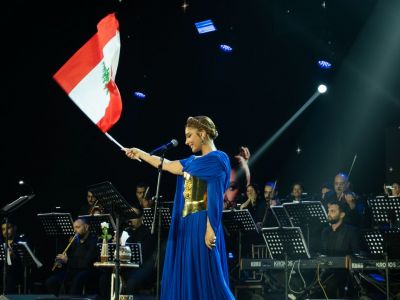
OLJ: You will be presenting your latest album, 'Les trompettes de Michel-Ange.' Described as very festive, can you tell us about the inspiration behind its intriguing title?
IM: My albums often contain many interconnected stories. I would say the main focus of this album is my desire to pay tribute to my father’s journey and his story, as well as to Francophonie in Lebanon, with the idea that these French-style brass bands evoke those brought here during the French mandate, in which my grandfather played in 1925.
These brass bands inspired my father to play the trumpet and cross the Mediterranean to study music in France. Later, they became the starting point of my own journey.
OLJ: But what is the connection with Michelangelo?
IM: When my father arrived in France to chase his dream of learning classical music from Maurice André, the renowned trumpet soloist of his era, he was broke. He took shelter in the sacristy of Saint-Julien-le-Pauvre church in Paris.
It was there, where he lived for six or seven years, that he first drew the prototypes of the quarter-tone trumpet I use today, his invention.
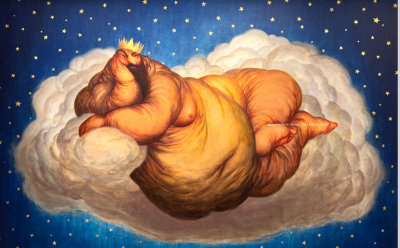
As a child, when my father told me this story, I pictured him bent over his sketches like Michelangelo painting the Sistine Chapel. That image has stayed with me.
OLJ: Reflecting on tributes, what did Ziad Rahbani, who died a month ago and whom you honored at the Baalbeck Festival by performing the song 'Bala Wala Chi' with Hiba Tawaji and Oussama Rahbani, mean to you?
IM: So much: the humor, the melodies, self-deprecation and a certain humanity that, I believe, Lebanon has been missing for a long time. And above all, a deep connection with art, far from any business mindset. Ziad Rahbani is the kind of artist we all dreamt of becoming but could never afford to. Because one has to live, because we have no choice... But he let it all go.
I’ve always been moved by his career. He serves as an example in many ways. I met him once when I was very young; he was playing piano at a club... In my family, we were very connected to his art, his words, and his plays... I even paid tribute to him in my second album, recorded in 2008, by covering 'Saalouni El Nass,' which I consider one of the most beautiful melodies ever created.
OLJ: Why do you make music?
IM: First, because it’s the only thing I know how to do. Mainly, because my father trained me professionally from a very young age to perform at concerts, starting at age eight or nine. By 14, I had already performed around 400 concerts in France, Belgium, Germany and other European countries.
I even remember playing at the wedding of Jean-Paul Belmondo’s son, Paul, when I was a child. Then, because music is where I feel best and where I feel I belong, since empathy is found everywhere in it, and I need empathy so as not to lose hope.
OLJ: You organized, alongside Matthieu Chedid and Hiba Tawaji, the 'Unis pour le Liban' fundraising concert at the Olympia in October 2020 to support the victims of the Aug. 4, 2020, explosion. How much can music contribute to rebuilding this country?
IM: It’s always a bit presumptuous to claim that music will change things, but I believe it can help a little because it speaks directly to the heart and touches everyone’s deep emotions. Maybe I’m naive, but I truly believe in music’s power to teach people empathy again and to inspire love.
Besides, you know, I believe each of us has a true responsibility toward Lebanon, which has been at risk for many years. Not helping it, I often say, is a way of failing to support a country in danger. Some people lose sight of this idea, so it’s good to remind them. Music is one way among others.
OLJ: Born in Beirut, how did that mention on your passport affect you, knowing you grew up and spent your whole life in France?
IM: I’m very proud of being born in Lebanon, but even more so — you might find this odd — of the fact that my parents chose for me to be born there during the country's war in 1980. That made me believe they had a deep attachment to this country, which in turn made me feel that I, too, must never give up on it.
OLJ: So, you're very attached to your 'Origins,' as your uncle Amin Maalouf’s autobiographical family novel is titled.
IM: Indeed, I am very attached to my roots. In fact, as soon as I could, I bought back my great-grandfather’s house in Ain al-Qabu, in the mountains, restored it, and that’s where I go regularly to recharge.
OLJ: Can you share a story, memory or anecdote from your childhood that shows who you truly are today?
IM: The day my mother gave birth to me in a hospital under the bombs in Beirut, my father was in France showcasing his trumpet (with four valves) on the show 'Le Grand Échiquier' with Jacques Chancel. Imagine the mix of joy and pain they felt that day.
That's why I feel a duty to carry on my father’s legacy. To honor the sacrifice he made by giving up his solo trumpet career years later to focus on teaching, ensuring he was home every night for my sister and me.
OLJ: Is that where your dedication to teaching originates, this desire to pass on and provide musical education to everyone?
IM: Absolutely. That passion comes from my parents, both of whom are musicians and teachers. My mother is a pianist. I have always taught and still do, now in my own academies.
I founded the International Academy of Michel-Ange Trumpets three years ago. Through the 'Free Spirit Ensemble,' an orchestra I established six years ago, I train a wide range of classical musicians in improvisation.
OLJ: From your stage debut at the Assembly Hall in Lebanon at age 12 to the prestigious Royal Albert Hall last July 29, from the greatest concert venues in France, Europe and New York, your four Victoires de la Musique, Grammy nominations, César award for best film score, to your Knight of Arts and Letters medal… Your career is incredible. What still makes you dream?
IM: I dream a lot, but not in those terms. I dream of a fairer world, a healthier environment for our children, a more stable and balanced justice... Actually, I never dreamt about things related to what people call career or fame.
Because, in the beginning, I wasn’t meant to be on stage. I was a very introverted, shy person and I dreamed of becoming an architect. However, since I couldn’t draw, I turned to music, thinking I would compose film scores. I would have preferred to stay in the background.
But since I had to defend the album I released in 2006 on my own label because no one wanted to produce me, I was forced to go on stage… It’s been almost 20 years of performing, even though it wasn’t my first choice.
OLJ: 'Mister Ibé' is the name you use for much of your artistic work. We assume it’s also your nickname. Where did it originate?
IM: In school, my friends called me Ibé. Later, someone said, 'Monsieur has grown up,' and it became Mister Ibé.
OLJ: You have had several prestigious collaborations. Which meetings were crucial for your career?
IM: The producer Quincy Jones changed my life. When he discovered my music in 2017 at the Montreux Jazz Festival, he said: “If the Americans don’t like what you do, then they’ve understood nothing.” He pushed me in directions I never expected. It’s been eight incredible years with him.
Sting also gave me a lot of space in his music. He's very generous, just like Matthieu Chedid, who is one of the artists that pave the way for others.
And then there is Hiba [Tawaji, the Lebanese singer and his wife], Sharon Stone [the actress lent her voice to a track on the album 'Capacity to Love'], Gregory Porter and many others… Encounters have shaped my life.
OLJ: Your concerts sometimes overshadow your work as a film composer. However, you won the César for Best Original Score in 2017 for 'Dans les forêts de Sibérie' by Safy Nebbou. You were also nominated for the soundtrack of Jalil Lespert’s biopic on Yves Saint Laurent. In recent years, you composed for 'Reste un peu' by Gad Elmaleh and 'Finalement' by Claude Lelouch. What motivates you to compose for cinema: the script, the director or the actors?
IM: Everything about cinema interests me. I believe it is the most complete art form we have today. It combines image, text, music, emotion and performance. I find this world truly captivating.
Each director has a different approach, but every film is an incredible human journey. Making a film has become such a tough industry today that those who do it, in my view, are real fighters with something powerful to say. And when I contribute, I feel I belong with this group of creators who have a strong desire to tell a story.
OLJ: You teach improvisation in music, promote its benefits and the freedom it offers — you even authored a short treatise on the topic: 'Petite philosophie de l’improvisation' (Éditions des Équateurs/Mister Ibé) for everyone—can you truly improvise in life, considering all your roles as a concert performer, composer, arranger, producer and trumpet teacher?
IM: Yes, as surprising as it may seem. When you’re in a mindset of wonder and enthusiasm, despite life’s difficulties and surrounding tragedies, improvisation always emerges, leaving no room for boredom. For example, two years ago, at the suggestion of director Denise Chalem, I performed in 'Un Homme qui boit rêve toujours d’un homme qui écoute,' a play adapted from a novel by Kamel Daoud.
I stepped out of my comfort zone, improvising as an actor, and as a result, I performed in a theatrical duet with the great actor Thibaut de Montalembert. It was a fantastic experience for me.
OLJ: So if you had to choose another profession, would you become an actor?
IM: If I had to choose something other than music, I would become a journalist because I value the aspect of communication in journalism. I think it’s a great job because you get to give the microphone to others. I try it myself by hosting a monthly show on a major jazz radio station called TSF Jazz, where I interview artists, musicians and personalities. And I love doing it.
OLJ: Your positions have often been controversial. Some have even led to death threats. How do you handle that? Are you more careful about what you say now?
IM: That's true. I’ve received several death threats, including a very serious one when I posted on social media about the lack of diversity in the Vienna Philharmonic Orchestra. People who wrote in articles that I wanted to replace “white” French people with Arabs and black people are the ones responsible for the threats I received.
I still try to keep things philosophical because I know this is a minority, although a dangerous one. I will continue speaking freely. I don’t see why I should censor myself when my positions are especially widely accepted. When I talk about Gaza and say we must stop killing innocent children, I don’t see anyone who could say my opinion is crazy or inciting hatred. The world is becoming more dogmatic and polarized.
OLJ: What are your key qualities and flaws? And what’s something you absolutely can’t tolerate in others?
IM: My main trait is perseverance because I’ve never given up, even during life's toughest moments. However, I tend to be too demanding of the people I love and those close to me. Sometimes, I need to be a little more flexible. What I absolutely cannot tolerate in others is a lack of empathy.
OLJ: If you could instantly change one thing about yourself, what would it be?
IM: I need to learn to be a bit more patient. Or rather, become patient again. Because I used to be when I was younger, before going through some painful crises a few years ago that wore down my calm and patience.
OLJ: In what context and with whom do you speak Arabic?
IM: With Hiba, my wife. She’s the only person I feel comfortable speaking Arabic with.
OLJ: If you could describe the kind of son, husband, father, friend and even nephew you are in one word for each, what would those words be?
IM: I am a very loyal son, a loving husband, a devoted father (because love for children is unconditional), a loyal friend and a very grateful nephew for the work Amin Maalouf has done in expressing our complex identities and history. I greatly admire what he has achieved.
OLJ: Your father played you Umm Kulthum (to whom you paid tribute in one of your albums), and your mother played Chopin. What kind of music do you share with your children the most?
IM: All kinds. The times we live in mean that from our phones, we can access all genres and every piece of music in the world. It’s an immense cultural wealth that we can use to educate our children.
OLJ: What is the best decision you've ever made in your life?
IM: I’d say the key was deciding to believe in myself and my work. Very early on, I knew I would have to rely on myself to produce, compose and do what I needed to do.
OLJ: And the one you sorely regret?
IM: I may have wanted to live in Lebanon for a while when I was 21 or 22, but I didn’t.
OLJ: If you had to send a message in a bottle, what would you say?
IM: Teach your children about music.
OLJ: What object never leaves your side, besides your trumpet?
IM: A ring my cousin gave me when we were children. I keep it to hold onto my childhood.
OLJ: Though it’s more likely to make you cry, what recent news made you laugh?
IM: Honestly, not much. Although, international politics is increasingly turning into a huge farce.
OLJ: What song do you sing in the shower?
IM: Lately, I mainly recite verses from Baudelaire, Hugo, La Fontaine… I’ve rediscovered French poetry, and it fascinates me.
OLJ: Your future projects?
IM: I’m working on several projects — album releases, film music and most importantly, preparing for my 20th career anniversary concert in April 2027. It will be the biggest concert of my life.
OLJ: So you’re not planning to give up the trumpet?
Absolutely not.

This article was translated from L'Orient-Le Jour.
