






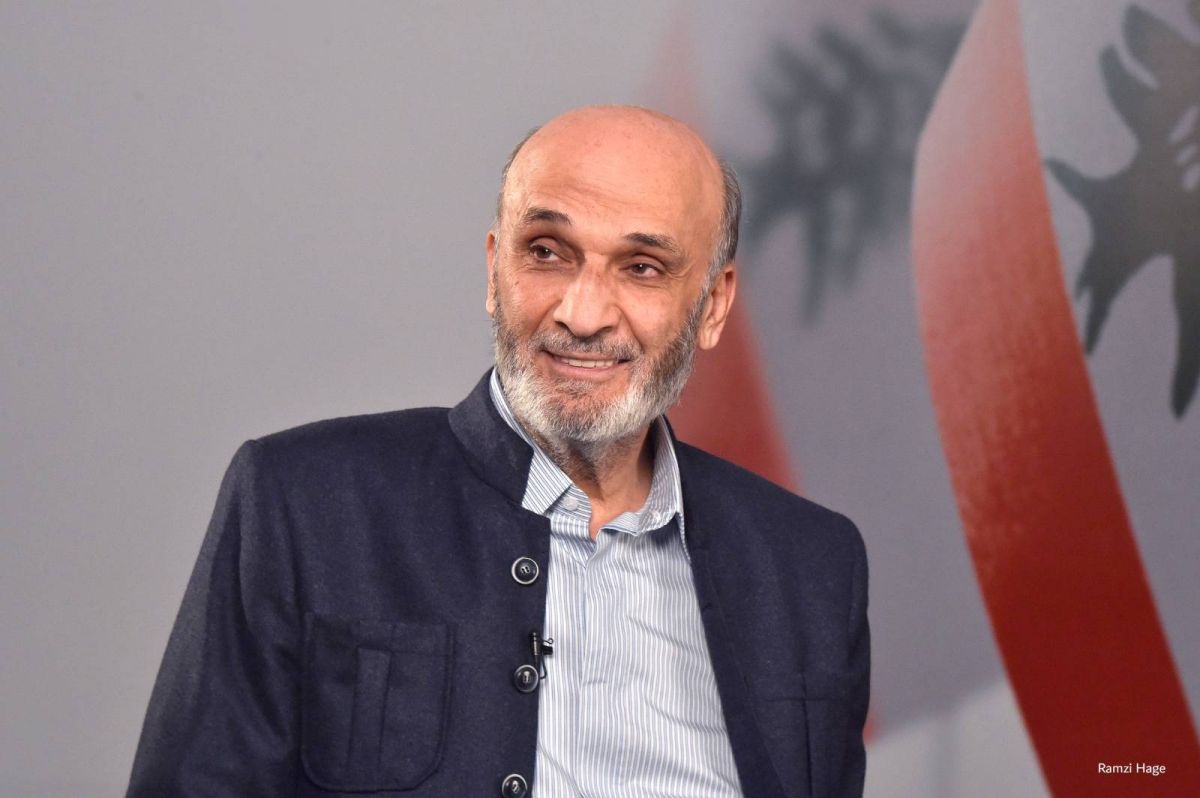
The leader of the Lebanese Forces, Samir Geagea. (Credit: Photo provided by his press office.)






BEIRUT — Lebanese Forces leader Samir Geagea announced that the process of eliminating illegal armed groups in Lebanon has officially begun, marking what he described as "a turning point in the country’s struggle to preserve its sovereignty, dignity, and national identity," the state-run National News Agency reported Sunday.
“There will be no illegal armed groups in Lebanon. Implementation may take several months, but the process is now underway. It is no longer just a vision for the future but has become a present-day reality. We have won the battle for the existence of the state in Lebanon. We have won the battle for our freedom and dignity.
We have won the battle to preserve Lebanon's identity. Lebanon will return to what you know it to be. Let us not forget that the general momentum in the Arab region and the world is moving in this direction, and there’s no indication that events will take a different turn,” Geagea said during a meeting with members of the diaspora community at Maarab.
His comments come after the government announced on Thursday that it had approved the "objectives set out" by a U.S. proposal on how to do so.
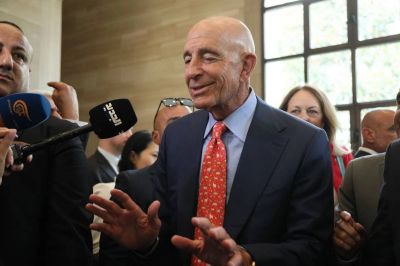
The proposal, often described as a "roadmap" was presented to Lebanon by U.S. envoy Tom Barrack in June, amid increasing domestic and international pressure on the Lebanese government to speed up the process of establishing an arms monopoly, on which sorely needed foreign financial support has been conditioned.
President Joseph Aoun has led discussions with Hezbollah, insisting on a dialogue-based approach that doesn't exacerbate existing tensions amid a shifting political landscape. However, Hezbollah, for its part, insists it will not disarm so long as Israel continues its aggression against the country and its occupation of land in southern Lebanon.
On Friday, in an interview with al-Jadeed, Geagea said: "We are ready to sit down with Hezbollah as soon as it announces that it will implement the government's decision regarding the surrender of its weapons. Our dispute with them is over weapons, and once they are surrendered, the situation will become simply a normal political competition," he said.
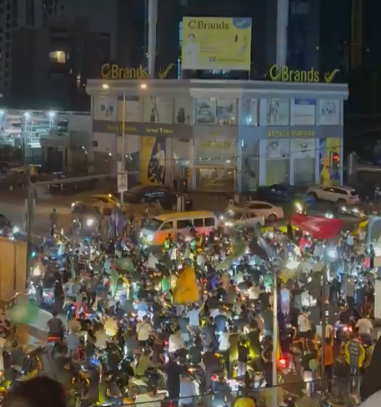
Hezbollah supporters have been staging protests across various parts of the country, forming dozens of motorcycle convoys and waving Hezbollah flags, against the government's decisions.
'Assad left and we remained'
“In these past two years, dreams have come true in multiple ways. Who would have thought that Bashar al-Assad would fall in Syria the way he did? At the height of his power, we were told he would never fall.
After the Syrian revolution began, the whole world said he would survive. And when the revolution seemed to end around 2015 – 2016, everyone said: ‘See? The revolution ended, and Assad is still in power.’ But I kept saying: no, Assad cannot stay. Eventually, after all the twists and turns, everyone else left, Assad left—and we remained. We must learn from this experience to continue forward. The road ahead is open, but we must never forget the hard times,” Geagea said.
On Dec. 8, Hay'at Tahrir al-Sham (HTS) announced it had entered Damascus and taken control of Sednaya prison, run by the Syrian regime. Both HTS and the Syrian Observatory for Human Rights (SOHR) stated that Bashar al-Assad had fled Syria by plane after 24 years in power.
Following his departure, Damascus International Airport was abandoned by government forces.
"The tyrant Bashar al-Assad has fled," proclaimed rebel groups on Syrian public TV, declaring Damascus a "free city." They announced the release of all "unjustly detained" prisoners and called for the preservation of Syrian state property under the "free" nation.
"After 50 years of oppression under the Baath Party and 13 years of crimes, tyranny and displacement since the 2011 uprising, we declare the end of this dark era and the beginning of a new chapter for Syria," they said.

