









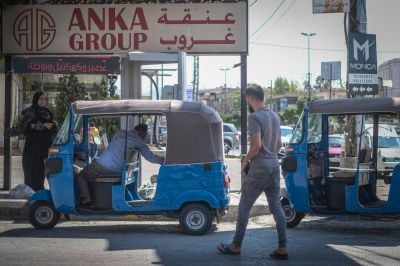
The Parliamentary Committee for Public Works, Energy, Transport and Water dedicated a meeting on Thursday to several subjects, including tuk-tuks — small three-wheeled vehicles, open on the sides and used as cheap taxis for short distances — as well as the issue of Syrian drivers working in Lebanon. It also approved a proposal extending the deadlines for regularizing building permits granted to displaced people.
Regarding the first issue, the committee recommended tightening regulations by prohibiting tuk-tuks from traveling on main roads and highways and limiting their use to villages and rural areas, according to the report presented by its chairman, Sajih Atieh. Over a year ago, the committee recommended "reducing, or even banning, the importation of these vehicles because of the risks they pose to public safety and the lack of registration procedures," the MP recalled. The committee now wants to impose registration fees on tuk-tuk owners.
Several protests by tuk-tuk drivers recently took place in Lebanon, notably in the North and the Bekaa, to protest a decision by the Interior Ministry banning this mode of transport. Interior Minister Ahmad Hajjar argued that these vehicles "operate without proper licenses and represent a significant risk to public safety."
The Public Works Committee also examined the situation of Syrian taxi, bus or truck drivers, who reportedly make up "the majority" of those working in Lebanon. "The majority of drivers are Syrians, while there are about 50,000 registered drivers in Lebanon, including 5,000 truck drivers. This creates a serious imbalance, with Lebanese drivers unemployed, while some companies prefer to hire Syrians, who cost them less," the MP lamented.
The committee therefore called on the Labor Ministry and the General Security Directorate to "set up a clear register or a dedicated office for Lebanese drivers, and to impose a maximum quota on Syrian drivers, given their high number."
Finally, the committee addressed a third issue: the regularization of illegal constructions built by displaced Lebanese. This issue covers homes erected without authorization during various periods of the Lebanese civil war. MPs approved a draft law extending by one or two years the deadline to regularize these constructions, "either by closing the files or by carrying out the necessary reconciliation procedures in the relevant localities, when these have not yet taken place." "Several requests for regularization are still pending," the MP said.
 2 p.m. recap: Flydubai investigation points to 'terrorist act'; calls grow for Hassan Diab’s extradition to France