


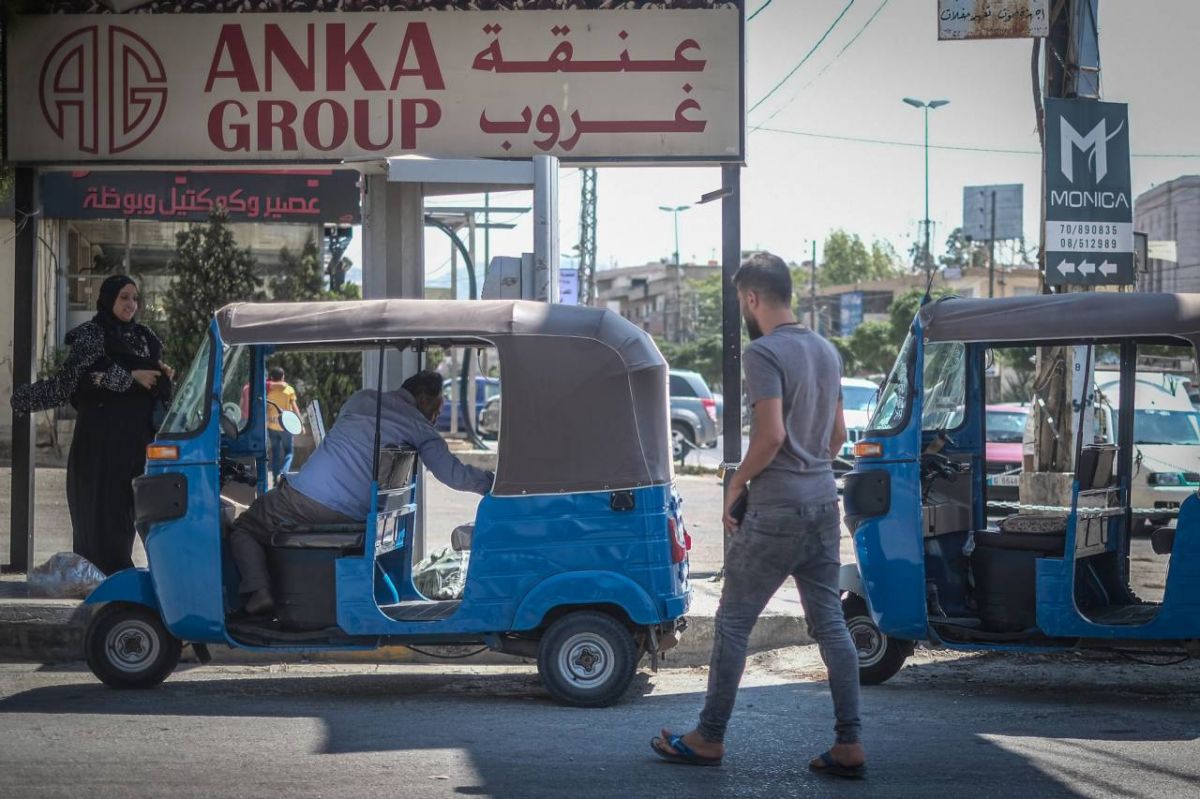
Tuk-tuks parked on a street in Bar Elias, in the Bekaa, in September 2021. (Credit: João Sousa/L’Orient Today)






In the Bekaa, Abou Jean, a Zahle tuk-tuk driver with four years of taxi service under his belt, now sets off for work in his small three-wheeler with a knot of fear in his stomach.
The Interior Ministry banned the use of rickshaws as taxis last week, citing safety and regulatory concerns, and received criticism for disproportionately targeting low-income communities.
"There are checkpoints everywhere to stop us from circulating," Abou Jean says. "We try to avoid them."
Mirvat, a 77-year-old tuk-tuk driver in Batroun, says she now only works at night to avoid inspections. But business is slow after sundown. "Only working in the evening doesn’t let me make a living," she says. "I barely get by."
Tuk-tuks first appeared in Lebanon during the 2019 economic collapse and have been gradually adopted as an informal, practical and affordable mode of transportation in a country where public transit is essentially non-existent; bus lines connecting major cities were only recently introduced.
Tuk-tuks are most popular in the North and in the Bekaa, where poverty rates are highest, with rides priced around LL100,000 (a little over a dollar).
However, the rickshaws were initially intended for private use and there is no system in place for regulating or licensing them as taxis. Using tuk-tuks as taxis is therefor illegal and comes with safety concerns such as when they are driven on Lebanon's notoriously accident-prone and speed-limit-less highways.
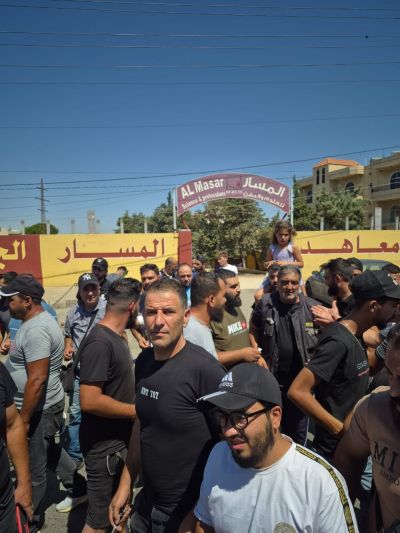
The proliferation of the tuk-tuk taxi business prompted the Interior Ministry to ban the practice, "in accordance with the traffic code," a source from the ministry told L'Orient-Le Jour.
"Tuk-tuks cannot be considered public transport vehicles," the source explained. "They are registered as three-wheelers and cannot obtain the license plate reserved for public transportation." These vehicles are "allowed to transport goods, provided this is done free of charge and only for the benefit of the vehicle's owner, in accordance with articles 184 and 301 of the traffic code."
Asked about the possible legalization of tuk-tuk work, the source said they had no information on the matter. According to the drivers interviewed, fines of two million pounds have recently been issued to tuk-tuk drivers transporting clients.
Regulating tuk-tuk work
Tuk-tuk drivers staged several protests last week following the minstry's announcement of the ban. which critics say should be reconsidered in light of the ongoing economic crisis and hollowed out job market.
"Our clients are mainly students or workers who want to save money on transport," explains Abou Jean. He's in favor of the government officially regulated tuk-tuk work: "I agree that our work should be subject to clear rules, like not driving on the highway or overloading vehicles. I respect the law, and if we were allowed to obtain red [taxi] plates, I would do it, provided the costs are affordable."
Thanks to his tuk-tuk, Abou Jean earns between $400 and $500 a month. "It’s not enough, but it at least allows me to cover my family’s food needs," he says. "My son, who is a barber, helps pay for electricity and phone bills."
"If they seize my tuk-tuk, I’ll set it on fire," he warns. "I couldn’t accept having my vehicle taken."
Mirvat says she's afraid about what the future could bring. "I haven’t even finished paying off my vehicle yet, and I don’t really understand the ministry’s decision." She's had all kinds of jobs in her life, she says. "I just want to live with dignity. I’ve been humiliated for too long," she sighs.
The president of the road transport union, Bassam Tleiss, accuses tuk-tuk drivers of "encroaching on the sector."
"These vehicles are not covered by the law and are a danger to traffic," he tells L'Orient-Le Jour. "The state is responsible for this crisis for having allowed them to go into circulation. It must now find a solution."
The head of the YASA road safety association, Ziad Akl, echoes concerns that "tuk-tuks are not suitable for transporting passengers," adding that "their work must be regulated and the Interior Ministry is right to take measures in this regard."
