


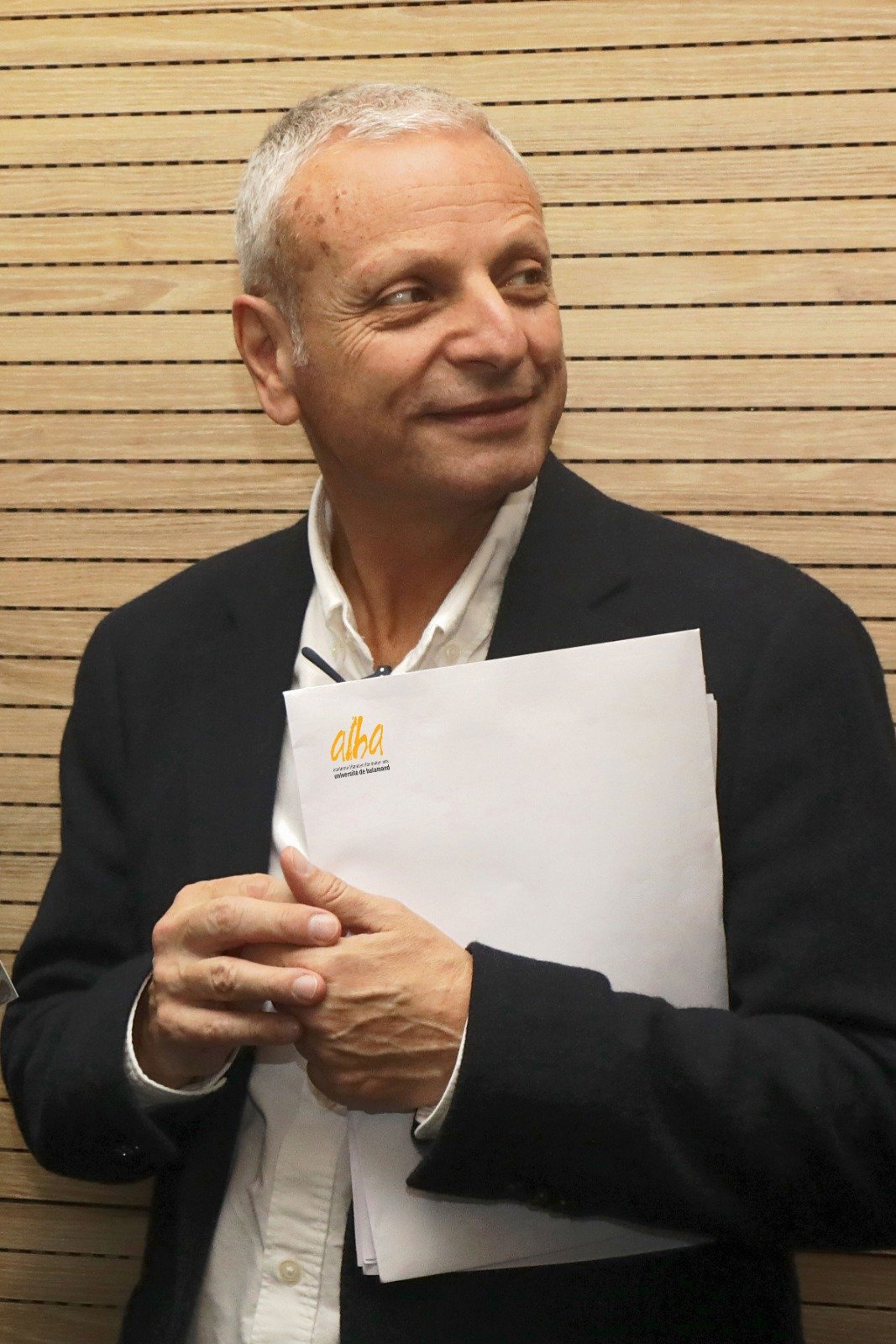
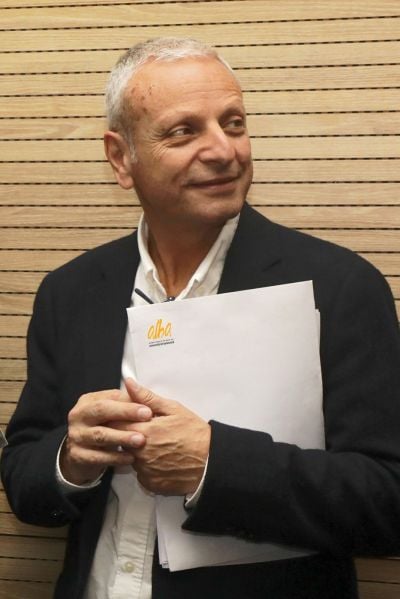
Prof. Fadlallah Dagher. (Credit: ALBA)






Referring to “the oldest art school, from which I graduated and which offers the broadest range of artistic specializations,” Fadlallah Dagher, dean of the Lebanese Academy of Fine Arts (ALBA), is clear about his mission: to further elevate the institution’s standing.
Building on the reforms initiated by his predecessors, he is introducing new creative workshops, strengthening master’s programs and international partnerships, and fostering collaboration between disciplines — both within ALBA and with other universities.
“In today’s world, both education and the professional sphere have become so specialized that people often focus solely on one thing and become disconnected from the rest,” Dagher says. “Yet the arts are intellectually rich and require curiosity and openness. We must cultivate this in our students and encourage them to explore specialties and training outside their core fields.”
To that end, he has launched new workshops that blend artistic and non-artistic disciplines. One of them, the “Earth Hub,” focuses on ecology, energy transition, materials recycling, and environmental sustainability. “Students learn to recycle glass, plastic, plant fibers and cardboard,” Dagher explains, while lamenting Lebanon’s significant delay in the ecological transition.
Other smaller workshops have also taken off, including a lighting design program launched two years ago in collaboration with leading lighting companies and international experts. Targeting architects, interior designers and fashion professionals, it has recently started attracting students from other universities — a development Dagher views as “extremely positive.”
In recent years, ALBA has also expanded its international reach, establishing partnerships with national art and architecture schools in France, Belgium, Italy and Switzerland. These collaborations have led to joint projects that Dagher describes as “an intellectual enrichment,” allowing students to benchmark themselves against international peers. “They realize they are not behind in terms of what’s being taught abroad,” he says.
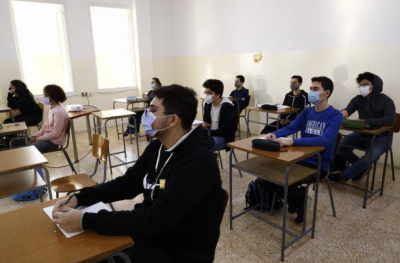
Strengthening Master’s programs
“Today, it’s no longer enough to simply design a well-made object — that’s the work of a bachelor’s student,” Dagher says. “We must train young people to think critically about major global issues and to propose innovative solutions that set them apart in their field. That’s the role of our master’s programs.”
Unfortunately, many students have been unable to pursue graduate studies in recent years due to financial pressure and family responsibilities. “They often stop at a bachelor’s degree and enter the workforce, earning relatively low wages. That’s what we want to change,” he says.
To make graduate study more accessible, ALBA has expanded its financial aid budget, particularly for master’s students. Aid is awarded based on academic performance and GPA.
AI and artistic creation
Addressing the increasingly pressing question of artificial intelligence in the arts, Dagher says ALBA has formed a commission to examine how AI tools can be used “to produce better and more.”
“Artistic creation is not immune to these changes, and we know our students already use these tools,” he says. “Our goal is to regulate their use, set clear guidelines, and reduce dependence on them. We want to stimulate creativity by valuing the students’ own skills — not just the ease offered by AI.”
Toward doctoral programs in Fine Arts
Doctoral studies in the arts remain rare, Dagher acknowledges, since “artworks themselves are often considered a form of research.” However, he argues that for those wishing to teach, it is essential to publish their research.
That’s why the Research and Creation Center (CRC) was established in 2023. Open to all disciplines, it offers academic guidance and resources for students and faculty exploring specific themes selected by teacher-researchers. “The CRC helps faculty publish articles, organizes seminars open to students, and provides research electives that students can take for credit,” he says.
Only three years ago, ALBA had just five faculty members with doctorates. Today, that number has more than doubled to 12 — something Dagher believes will further strengthen the center’s impact.
A stronghold for Lebanese heritage
“ALBA has long supported heritage conservation, particularly through its Institute of Urbanism and School of Architecture,” Dagher says proudly. However, many fields — such as Lebanese cinematic heritage and antique furniture restoration — remain underdeveloped.
The 2020 Beirut port explosion highlighted this gap. “Everything inside buildings — vases, furniture, paintings — was blown out. While some tried to save these items, few were formally trained and certified to restore them,” he explains.
To address this, ALBA plans to launch an undergraduate degree in heritage conservation, in partnership with France’s National Heritage Institute. The program is still awaiting approval from Lebanon’s Ministry of Education. For now, only optional and complementary courses are offered — mainly for architects, urban planners, and interior designers. “They can become conservators, but not restorers,” Dagher clarifies. Specialized training in restoration will be available only at the master’s level.
Dagher concludes with a call for openness and collaboration: “The more we open up to each other, the more the fine arts field in Lebanon can evolve and flourish. That is the legacy I hope to leave behind as dean of ALBA.”
 Israeli army carries out demolition at Jabal Amel School in Houla as strikes continue