






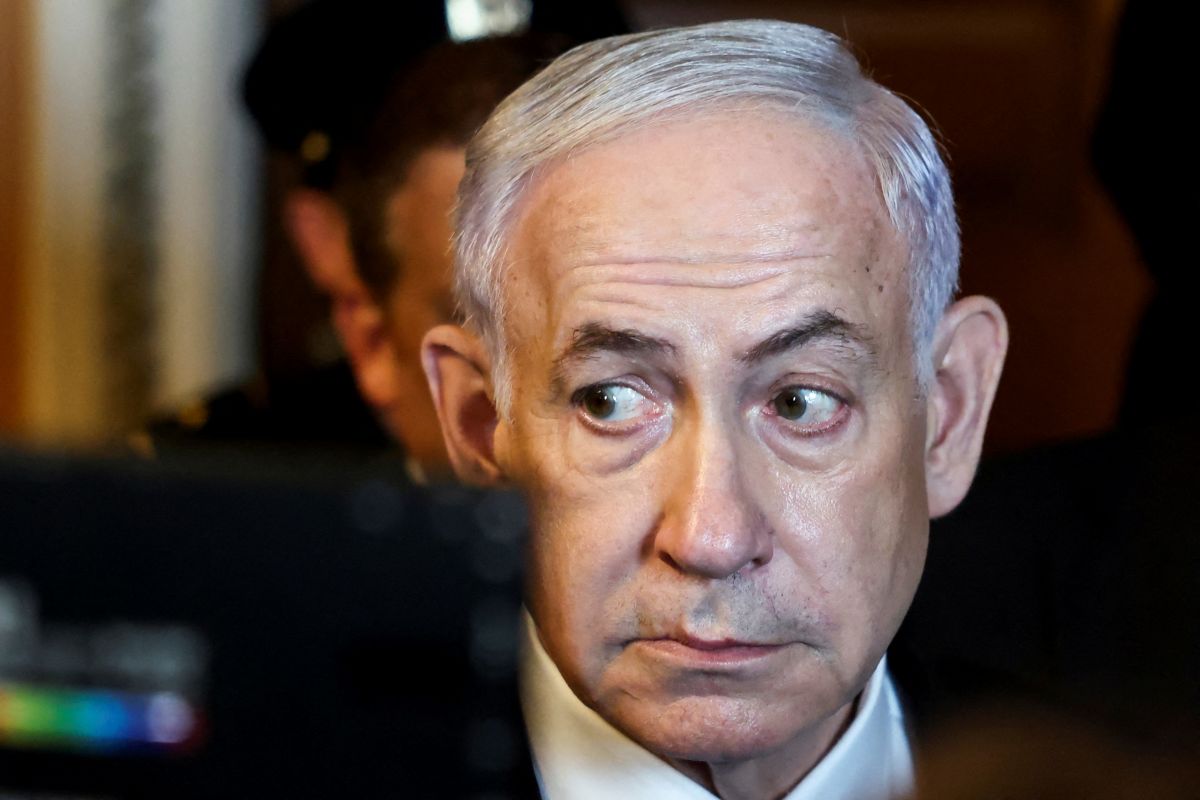
Israeli Prime Minister Benjamin Netanyahu at the White House in Washington, on July 9, 2025. (Credit: Evelyn Hockstein/Reuters)






Israeli Prime Minister Benjamin Netanyahu told his coalition partner Finance Minister Bezalel Smotrich on Tuesday that he would not allow any army presence in southern Syria, alluding to the armed presence of Hezbollah in southern Lebanon, according to comments reported in Israeli media.
"We will not allow the creation of a second Lebanon [in southern] Syria," Netanyahu reportedly said, according to Israel National News. Netanyahu and Smotrich had been visiting the Israeli Hashmonaim Brigade base in the Jordan Valley.
Netanyahu said he had committed to keeping the southwest region of Syria as a demilitarized zone within the State of Israel, a source conveyed to Israel National News, in reference to the Israeli-occupied Golan Heights, internationally recognized to be Syrian territory.

"We are committed to protecting the Druze population ... through intense actions," Netanyahu continued. "I hope we won't have to go any further; that depends largely on what is understood and done — or not done — in Damascus."
Since government forces deployed in Sweida on Monday in an attempt to quell fighting between Druze and Bedouin fighters that had broken out on Sunday, Israel has bombed the troops twice, claiming to be acting in defense of the Druze minority there.
The Syrian Observatory for Human Rights (SOHR), witnesses, and Druze groups have reported that government forces, when they intervened in the clashes, also took part in the fighting themselves, acting alongside Bedouin fighters against the Druze. An NGO accused Syrian government forces on Tuesday of executing 21 Druze civilians in Sweida city.
As of Wednesday morning, at least 203 people had died, including 92 members of the Druze minority, as well as 93 security personnel and 18 Bedouin.
Sweida province is home to the country's largest Druze community, an esoteric minority originating from Islam that numbered about 700,000 members in Syria before the Civil War, and is also present in Lebanon and Israel.
