






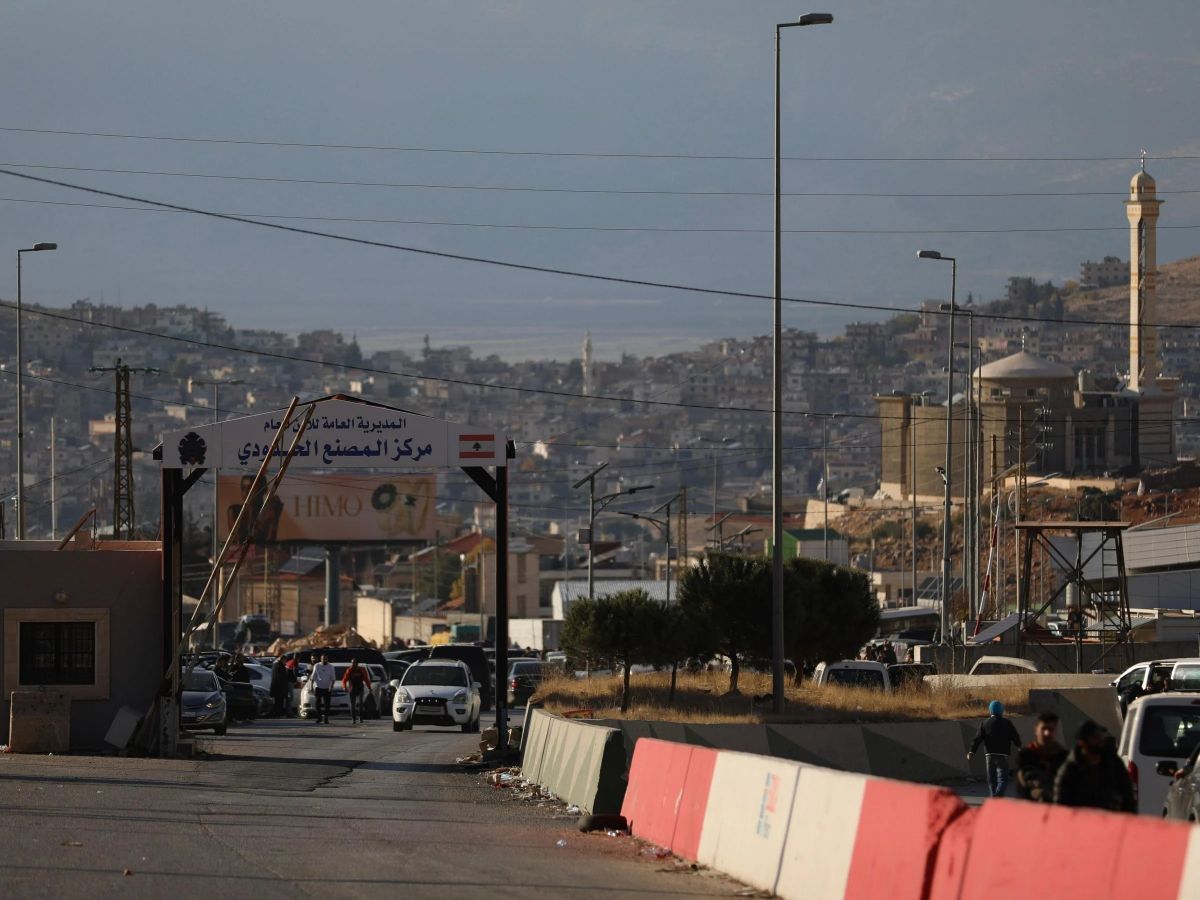
The Masnaa border crossing, December 8, 2024. Photo Matthieu Karam/L'Orient-Le Jour






BEIRUT — Syrian sources on Friday denied reports published by Syria TV, a Syrian television channel close to the government, that Damascus was considering retaliatory measures against Beirut after accusing it of not paying attention to the fate of Syrian detainees in Lebanese prisons. However, one of these sources, close to the Syrian government, acknowledged "pressure exerted by the families of the detainees in Lebanon on the authorities in Damascus."
According to information from the Qatari-owned media channel based in Istanbul, the fate of 2,000 Syrian prisoners and the "procrastination" by Lebanese authorities in processing their cases has irritated Damascus. Syrian authorities are therefore reportedly considering retaliatory measures, including economic actions, against Lebanon.
The channel specified that Damascus is studying "options for gradual escalation, including the freezing of security and economic coordination at certain levels, which could lead to more severe measures such as closing land border crossings or imposing strict restrictions on the transit of Lebanese trucks, or even a questioning of security cooperation at the border."

A source close to the Syrian government told L'Orient-Le Jour that "the circulating information is not official" and that an announcement by the authorities would have been issued if there were any change of policy. A source within the Ministry of Information told the Al Ekhbariya news agency that these were "baseless rumors," emphasizing, however, that Damascus considers the detainees' case a "priority to be addressed as quickly as possible through official channels between the two countries."
Syrian delegation to Lebanon "in the coming days"
In this context, a well-informed Lebanese source stated that a Syrian commission, including the Ministries of Foreign Affairs and Justice, will travel "in the coming days to Lebanon to establish a mechanism to extradite Syrian detainees to Syria, so that they can be tried there."
A plan to extradite Syrian detainees in Lebanese prisons has been discussed over recent months, but has not materialized. Of nearly 1,700 prisoners of Syrian origin in Lebanon, over 350 have been convicted, while the rest are awaiting trial, Michel Moussa, president of the parliamentary human rights committee, told L'Orient-Le Jour in April.
During a visit to Damascus in January, in an attempt to open a new chapter in Lebanese-Syrian relations, former Lebanese Prime Minister Nagib Mikati and Sharaa agreed on the return of Syrian prisoners to their country. However, "since the change of government in Lebanon, there has been no official request in this regard from Damascus," a source in the Serail said in April, shortly before a visit to Syria by Prime Minister Nawaf Salam.
Earlier, in March, a Lebanese judicial official told AFP that Lebanon was ready to hand over more than 700 Syrian detainees to Syria. Among them, hundreds are accused of "terrorism," including attacks on the Lebanese Army, and have been brought before the military tribunal. Others are accused of belonging to jihadist groups or Syrian armed groups that were opposed to the former Assad regime. Some are also accused or tried for common law offenses.
“Gradual Escalation Options”
According to Syria TV, the issue of the detainees was discussed during the meeting between President Sharaa and the delegation of Dar al-Fatwa, the highest Sunni authority in Lebanon, last Sunday. During the meeting with Sunni dignitaries, including the Mufti of the Republic Abdellatif Derian, Sharaa reportedly denounced the Lebanese authorities for "ignoring" this humanitarian issue.
Information obtained by the channel indicates that the Syrian president reportedly announced an upcoming visit by Syrian Foreign Minister Asaad al-Shaibani to Beirut to discuss this matter, which would be the first official Syrian visit to Lebanon since the overthrow of the Assad regime in Dec. 2024.
The suicide, last week, of a Syrian detainee at Roumieh prison is also believed to have strengthened Damascus's resolve to advance the detainee issue.
