


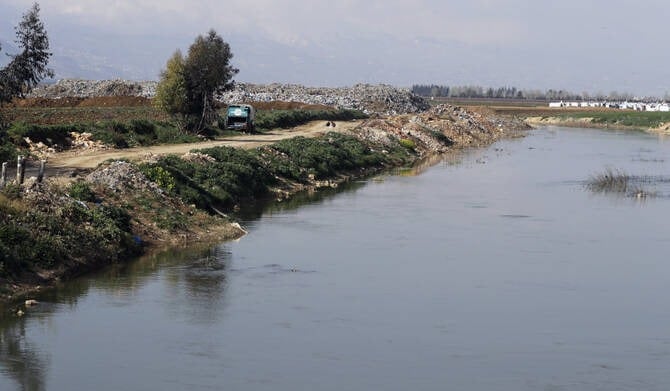
Visible waste on the banks of the Litani River near the village of Jib Jennine, in the south of the Bekaa Valley, on May 4, 2019. (Credit: AFP)






BEKAA — The National Litani Office on Monday accused two factories in the Bekaa of practices that are polluting Lebanon’s largest river.
In a statement, the agency said a joint technical commission with the industry ministry inspected the “Poppins – Snips” factory, operated by Daher International Foods S.A.L. in the west Bekaa. The commission found that the factory had installed a separate pipeline to divert untreated industrial wastewater around 150 meters away from its treatment plant, where it was then discharged into waterways and natural channels.
The factory also allegedly mixed the wastewater sent to its treatment plant with clean water, diluting pollutant levels before treatment, according to the statement shared by Litani Office President Sami Alawieh.
The factory produces around 120,000 liters of industrial wastewater per day and had previously faced prosecution for environmental violations, the statement said.
In a separate statement, the Litani Office reported similar irregularities at Conserves Modernes Chtaura. The factory produces around 7,000 liters of industrial wastewater daily, which is mixed with clean water drawn from a well before being sent to the treatment plant, according to the agency.
The statement said the practice illegally uses groundwater to dilute industrial pollutants and improve the results of wastewater tests.
The commission also found that water samples taken after treatment were of worse quality than those collected before treatment, raising questions about the plant’s effectiveness. It also found a wastewater pipeline leading directly into the river.
Our Bekaa correspondent, contacted representatives of both factories. One said they had not yet read the Litani Office’s statement, while the other declined to comment.
The Litani basin, Lebanon’s largest river system, has suffered from widespread pollution for decades, largely due to untreated wastewater. The Litani Office has filed multiple complaints against factories and other polluters, but no comprehensive plan to clean up and protect the river has been fully implemented despite repeated government pledges.
The Litani runs through much of the Bekaa before turning south toward south Lebanon, where it reaches the Mediterranean.

 7 p.m. recap: Houthis strike Riyadh airport again; Yemeni forces claim Bab al-Mandeb gains; Abbas postpones Palestinian polls