






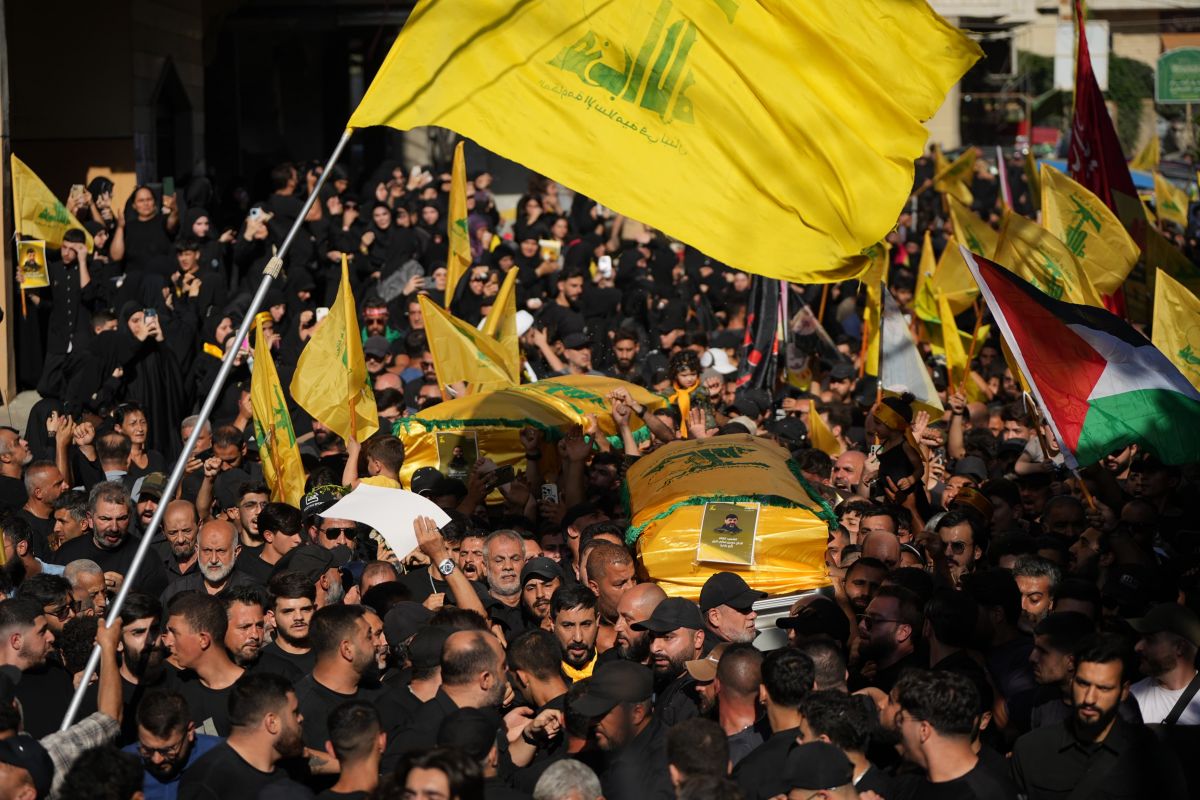
Hezbollah supporters carrying the coffins of Hassan Nasrallah's former bodyguard, Abou Ali Khalil, and his son, who were killed in Iran, during the funeral held in Kafaat, in the southern suburb of Beirut, on July 3, 2025. (Credit: Mohammad Yassin/L'Orient Today)






BEIRUT — Reports published Tuesday morning by the Arabic-language daily Annahar claimed that Hezbollah had called its fighters to redeploy in southern Lebanon and the Bekaa in anticipation of an Israeli operation this week.
However, a UNIFIL spokesperson said the peacekeeping mission had not detected any "suspicious movement" on the part of Hezbollah in southern Lebanon.
According to Annahar, Hezbollah had pulled its fighters from most of the villages in the South and the Bekaa to redeploy them in strategic locations and on the front lines, in anticipation of an Israeli military attack sometime between Tuesday and Wednesday, coinciding with the meeting between Israeli Prime Minister Benjamin Netanyahu and U.S. President Donald Trump, on Monday in Washington.
Parallel reports from al-Hadath claimed that Hezbollah was in a "maximum alert state on various military fronts," anticipating an Israeli attack "within the coming hours or days." Hezbollah is also said to have emptied its operation centers "in the South and other regions," and the families of its senior officials reportedly left the South for Beirut. Numerous party officials have also reportedly stopped using their phones, according to these sources.
The cease-fire Hezbollah agreed to with Israel mandated for the party's military presence to be completely withdrawn to north of the Litani River, leaving the Lebanese Army and UNIFIL as the only armed forces in southern Lebanon. The process, according to Prime Minister Nawaf Salam in late May, was 80 percent complete.
UNIFIL spokesperson Andrea Tenenti refuted the Annahar and al-Hadath reports, saying, "We haven't seen anything on the ground. The situation remains the same. We have not detected any suspicious movements in the areas where we are present."
"There are a lot of rumors circulating at the moment," he added. Neither the head of Hezbollah's press office nor its spokesperson were available in the afternoon and evening to comment on these reports. The Lebanese Army, for its part, assured it had no information on the matter.
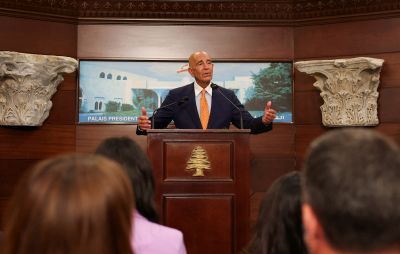
Hezbollah is currently under significant pressure, both locally and internationally, to hand over its weapons to the state. U.S. presidential envoy Tom Barrack met with several Lebanese officials in Beirut on Monday to discuss the government's response to an American 'roadmap' telling Lebanon how it should go about disarming Hezbollah.
Initially, Hezbollah refused any mention of withdrawal or surrender of its arsenal, arguing that this should be achieved through internal dialogue and the adoption of a defense strategy. After discussions on the eve of Barrack's arrival, the Lebanese authorities' response eventually mentioned a commitment to state monopoly over arms.
Israel's attacks on Lebanon, which it claims are targeting Hezbollah members, have increased in recent weeks. On Thursday, an Israeli drone struck a car driving in rush hour just south of Beirut. On Sunday evening, Israel bombed around a dozen sites across the Bekaa and southern Lebanon, hitting mostly areas north of the Litani. On Monday, Israel killed two Hezbollah officials, and on Tuesday, it launched a rare (since the cease-fire) attack Tripoli, in northern Lebanon, killing three people, one of whom Israel said was a "key figure" in Hamas.
Since the cease-fire ostensibly came into effect on Nov. 27, 2024, Israel has killed around 200 people in Lebanon, in near daily strikes.
