






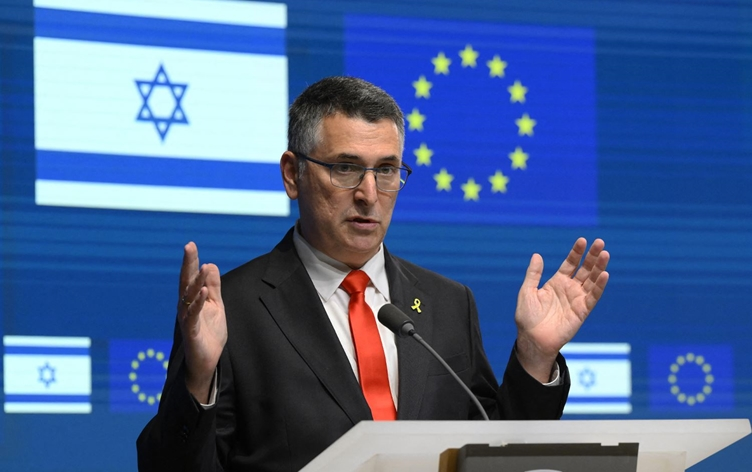
Israeli Foreign Minister Gideon Saar at a press conference at the EU headquarters on the sidelines of the EU's foreign affairs council, in Brussels, Feb. 24, 2025. (Credit: John Thys/AFP)






JERUSALEM — Israel is interested in establishing official diplomatic ties with old foes Syria and Lebanon, but will not negotiate the fate of the Israeli-occupied and annexed Golan Heights in any peace agreement, Israeli Foreign Minister Gideon Saar said in a press conference on Monday.
Relations in the region were thrown into uncertainty by more than a year of fighting between Israel and Lebanon from late 2023, in parallel to the Israeli onslaught in Gaza, and by the overthrow of former Syrian president Bashar al-Assad in December 2024.
"Israel is interested in expanding the Abraham Accords circle of peace and normalization," Saar said of the U.S.-brokered deals that Israel signed in 2020 with the United Arab Emirates, Bahrain and Morocco.
"We have an interest in adding countries — Syria and Lebanon, our neighbors — to the circle of peace and normalization while safeguarding Israel's essential and security interests," Saar told a news conference in Jerusalem alongside his Austrian counterpart Beate Meinl-Reisinger.
Israeli Prime Minister Benjamin Netanyahu said Thursday that Israel's recent "victory" in a 12-day war against Iran "opens the path to dramatically enlarge the peace accords."
Control of the Israeli-occupied Golan Heights has long been a source of tension between Israel and Syria, which are technically still at war.
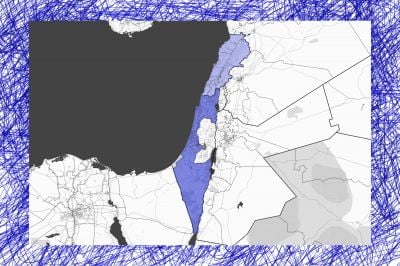
Saar insisted that the strategic plateau, which Israel seized from Syria in the 1967 Six-Day War and later annexed in a move not recognized by the United Nations, "will remain part of the State of Israel" under any future peace agreement.
Following Assad's overthrow in December, Israel moved forces into the U.N.-patrolled demilitarized zone in the Golan and has carried out hundreds of strikes against what it said were military targets in Syria.
In May, Reuters reported that Israel and Syria's new rulers were in direct contact and had held face-to-face meetings aimed at calming tensions and preventing conflict in the border region between the enemies.
U.S. President Donald Trump met Syria's president in Saudi Arabia in the same month and urged him to normalize ties with Israel, making a surprise announcement that the U.S. would lift all sanctions on Syria, allowing new pathways to open up to the fledgling new government as it attempts to bring Syria's economy back to its feet.
In Lebanon, the clout of Hezbollah has diminished after it had emerged bruised from a war with Israel last year, fueled by Israel's war against Hamas in Gaza.
Israel, however, has kept up strikes against Hezbollah despite a November cease-fire.
There was no immediate response from Lebanese or Syrian officials to Saar's remarks.
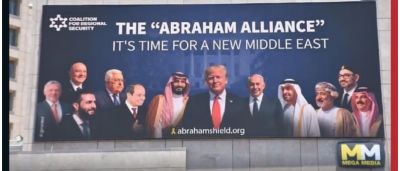
U.S. officials say the end of the 12-day war between Israel and Iran with a cease-fire on June 24 has raised prospects for broader peace efforts in the region.
On Sunday, a senior U.S. diplomat called for peace agreements by Israel with Syria and Lebanon in the wake of the Iran-Israel cease-fire and expected there would be discussions about it.
Tom Barrack, the U.S. ambassador to Turkey who is also a special envoy to Syria, said Sharaa "has indicated that he doesn't hate Israel and that he wants peace on that border," Barrack told Turkish news agency Anadolu.
"I think that will also happen with Lebanon. It's a necessity to have an agreement with Israel," he added.
Pressure has risen on the Israeli government to end its offensive in the Gaza Strip, prompted by Hamas's deadly attack in October 2023.
"Everybody is starting to move back towards the Abraham Accords, especially as the Gaza situation dissipates," Barrack said.
"What just happened between Israel and Iran is an opportunity for all of us to say: 'Time out. Let's create a new road'," he added.
"The Middle East is ready to have a new dialogue, people are tired of the same old story."

