





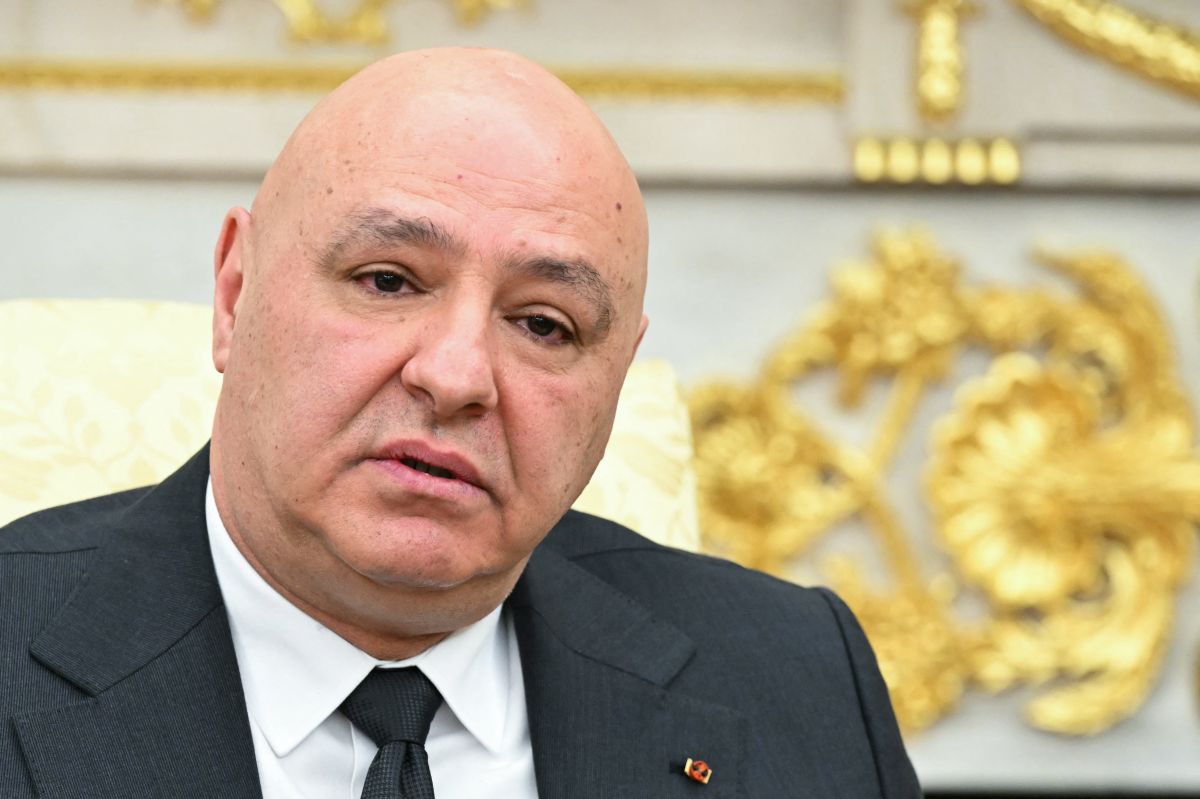
Lebanese President Joseph Aoun speaks during a meeting with U.S. President Donald Trump in the Oval Office of the White House in Washington, on July 21, 2026. (Credit: Saul Loeb /AFP)






BEIRUT — Lebanese President Joseph Aoun will travel to Turkey on Thursday for talks with his Turkish counterpart, Recep Tayyip Erdogan, local media reported Wednesday. The information was confirmed to L’Orient-Le Jour by an official source.
According to available information, the visit is expected to focus on economic and energy issues, as well as certain security matters, including Syrian refugees — a challenge both countries have faced since the outbreak of the Syrian civil war in 2011. Syria borders both Turkey and Lebanon.
'Turkey's role in supporting' implementation of the framework agreement
Ahead of the visit, Aoun gave a lengthy interview to the official Turkish news agency Anadolu, during which he said Turkey holds "a central place on the regional stage" and that, as such, coordination with it is a "strategic necessity, not a temporary option."
"Turkey's membership in NATO and the extent of its regional relations qualify it to play a supporting role in promoting the framework agreement internationally and to encourage the parties concerned to fully comply with its provisions," Aoun said, adding that the agreement "requires extensive regional and international engagement to ensure its implementation on the ground."
Lebanon and Israel signed a framework agreement on June 26, brokered by the United States, which makes the withdrawal of the Israeli army from south Lebanon conditional on the disarmament of Hezbollah and the deployment of the Lebanese Army across Lebanon. However, Israel has repeatedly said it would not withdraw from occupied territories, and that it wished to maintain their freedom of action in southern Lebanon.
"We call on Turkey, considering its regional weight and the diversity of its relations, to support this process on the political and diplomatic levels, in order to enhance its chances of success, to prevent it from becoming an agreement whose implementation would remain incomplete, and to contribute to Lebanon's efforts to secure Israeli withdrawal as well as to strengthen international efforts to prevent any security vacuum in the South, in line with our desire to preserve stability in this sensitive region," Aoun said.
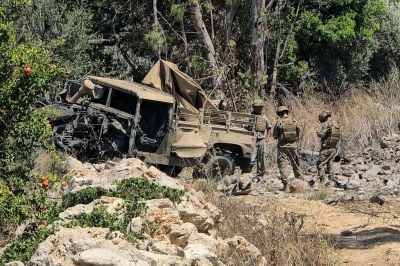
He also reiterated his determination not to allow a "security vacuum to occur after the end of UNIFIL's mandate," the United Nations Interim Force in Lebanon, whose mission officially ends in late 2026. "Any proposal to establish a replacement force, including possible Turkish participation, will be assessed from a single angle: its ability to support the Lebanese army in extending its authority and ensuring stability in the South," he said. "We are not in a mindset of excluding a serious partner in this process, but the final decision will remain tied to a broader international consensus and to what primarily serves Lebanese sovereignty," Aoun added.
The president said that he was not "asking Turkey to play a role substituting for the Lebanese state, but a role of support and complementarity, in line with our effort to ensure that arms remain exclusively in the hands of legitimacy and to stabilize the country after years of war."
Finally, Aoun once again rejected repeated claims by U.S. President Donald Trump that Syria — whose new government is close to Ankara — could intervene militarily in Lebanon. "We always strive to dissipate any confusion that may arise regarding this sensitive issue," he said.
Prime Minister Nawaf Salam already visited Turkey on July 10, where he met with President Erdogan and other officials.
Lebanon began direct talks with Israel in April, reaching a framework agreement in June in the hope of ending the war launched by Hezbollah on March 2. The group opposes both the talks and the prospect of handing over its weapons to the Lebanese state.
Despite an initial deployment of the Lebanese Army in the southern village of Zawtar Gharbieh, the future of Israel's withdrawal from the area defined by the Yellow Line, which encompasses dozens of localities, remains uncertain. The issue remains a point of contention between Lebanon and Israel ahead of the next round of negotiations, scheduled for Aug. 4 in Rome.