






The Prime Minister Nawaf Salam during the Council of Ministers on Friday, June 27, 2025. (Credit: Grand Serail's X account.)






BEIRUT— Prime Minister Nawaf Salam stated Saturday to the Saudi daily al-Sharq al-Awsat that the reestablishment of the Lebanese state's monopoly on weapons represents more of a "need" for Lebanon's sovereignty before even being a demand from abroad.
Reestablishing this monopoly, which involves the disarmament of Palestinian camps as well as Lebanese militias, with Hezbollah at the forefront, is part of the 'themes related to Lebanon's sovereignty and the exclusivity of armaments (that) are an urgent need for the country, before even being an external demand,' argued the head of the government.
"Lebanon deserves to be a normal state, where peace, stability, and the rule of law prevail for all its citizens, and where the state is solely responsible for their protection and the sole decision-maker in defense matters," he added.
'Without debate on the order of priority'
Salam was speaking in the wake of his meeting in Ain al-Tine with the Parliament Speaker, Nabih Berri, to discuss the response Lebanon must formulate to the proposal presented by the American envoy to Syria, Tom Barrack, and relayed by the leader of Druze and former head of the Progressive Socialist Party (PSP), Walid Jumblatt.
On Thursday, Jumblatt announced he had handed over the weapons held by his group to the authorities, in accordance with international community requirements, particularly those of the United States, which demand the disarmament of Hezbollah.
"We approach these ideas based on our own foundations, principles I also recalled during the last Council of Ministers meeting [Friday, Ed.]. What is required today is the application of agreements reached last November through American and French mediation to end hostilities. This implies an Israeli withdrawal from Lebanese territories and the cessation of attacks that threaten stability. In parallel, the Lebanese state must fully exercise its sovereignty over the entire territory and be the only one to hold weapons and decide on peace or war," he further stated, as quoted by al-Sharq al-Awsat.
He added that all these measures should be implemented "without debate on the order of priority" and that "everything must be applied as quickly as possible."
The meeting between Nawaf Salam and Berri did not result in a concrete decision. Nevertheless, according to the Prime Minister, it took place in a 'positive, not negative' atmosphere. A new meeting will occur when the Parliament Speaker receives a response from Hezbollah.
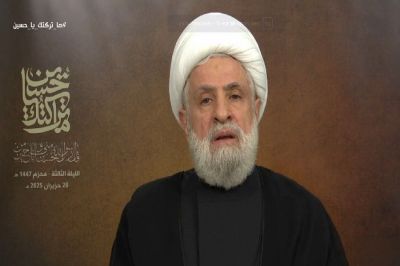
On the same day, the Secretary-General of the Shiite party, Naim Qassem, did not seem willing to relent on this issue, remaining in a position that subordinates disarmament to the end of Israeli violations of the ceasefire concluded on Nov. 27, 2024.
