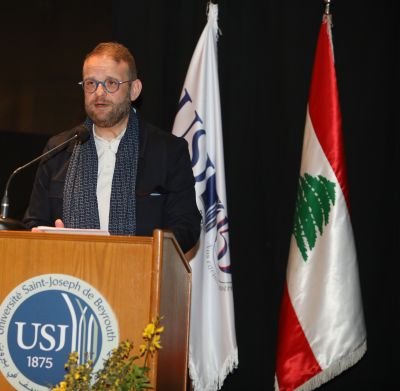
Dr. Rock El Achy, Director of the ILE. (Credit: USJ)






In a Lebanon plagued by chronic instability, the educational role is seeing its recognition diminish while being more solicited and weakened than ever. Yet the role of the educator, in full transformation, remains a bearer of hope.
In the face of these major challenges, the Lebanese Institute of Educators (ILE) at Saint Joseph University (USJ) is adapting its programs to current needs. Among the many initiatives carried out in this context is “a reconstruction project for its competency framework, both at the undergraduate and master's level, in preschool, primary and orthopedagogical education,” explained Dr. Rock El Achy, director of the ILE.
“This work has strengthened fundamental and didactic skills while integrating new dimensions such as psychosocial skills, critical thinking, educational coaching, mindfulness in education and orthopedagogical evaluation,” he added.
Furthermore, the ILE has launched a campaign to highlight the profession of educator and training, through videos and visuals shared on its social media, as well as those of USJ and partner schools.
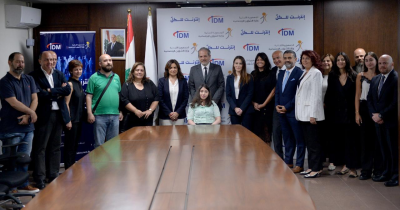
Additionally, an event was organized in April, bringing together school principals, teachers and orthopedagogue unions, educational offices, the General Secretariat of Catholic Schools and the relevant ministries. This meeting “highlighted the need to enhance the value of the profession of educator and to hold all stakeholders accountable,” said El Achy.
He also emphasized the importance of training educators “not only in academic knowledge but also in psychosocial skills and critical thinking, to prepare engaged and positive citizens.”
A profession struggling to attract new generations
The profession of educator is attracting fewer young people, noted the director of the ILE. “Firstly, society primarily values professions associated with a strong social image or a high financial return, leading many young people to move away from education-related professions, often perceived as less profitable or prestigious," said El Achy.
"Additionally, the working conditions for teachers, marked by daily challenges, a lack of resources and sometimes limited recognition, do not offer a favorable image of this profession, and this is certainly perceived by the students themselves,” he estimated.
He also highlighted the “key role” of university institutions in the “social enhancement” of the teaching profession. “They must not only adapt their training to current realities and societal needs but also serve as models by valuing the commitment of students and teachers.”
Educators are 'modern Sisyphuses'
In this context, El Achy emphasized that the profession of educator “quickly managed to reinvent itself, especially during the COVID-19 pandemic, while many state services and other sectors stagnated or disappeared in the face of the health and economic crisis.”
Faced with the impossibility of ensuring classroom presence, teachers quickly acquired new skills, particularly in the digital field, to ensure educational continuity. “This responsiveness shows the commitment and dedication of educators, who have demonstrated great resilience and a profound sense of mission,” he added.
This adaptability, revealed during the pandemic, has not diminished. On the contrary, despite the various crises the country is facing, “these modern Sisyphuses continue to support their students with exceptional resilience, relentlessly leading them to success. Their commitment goes beyond academic results, aiming to contribute to the emotional, social and civic development of children,” said the director of the ILE.
“Being an educator means creating opportunities for a fairer future. This is where it all begins,” he concluded.
This article was translated from L'Orient-Le Jour.