


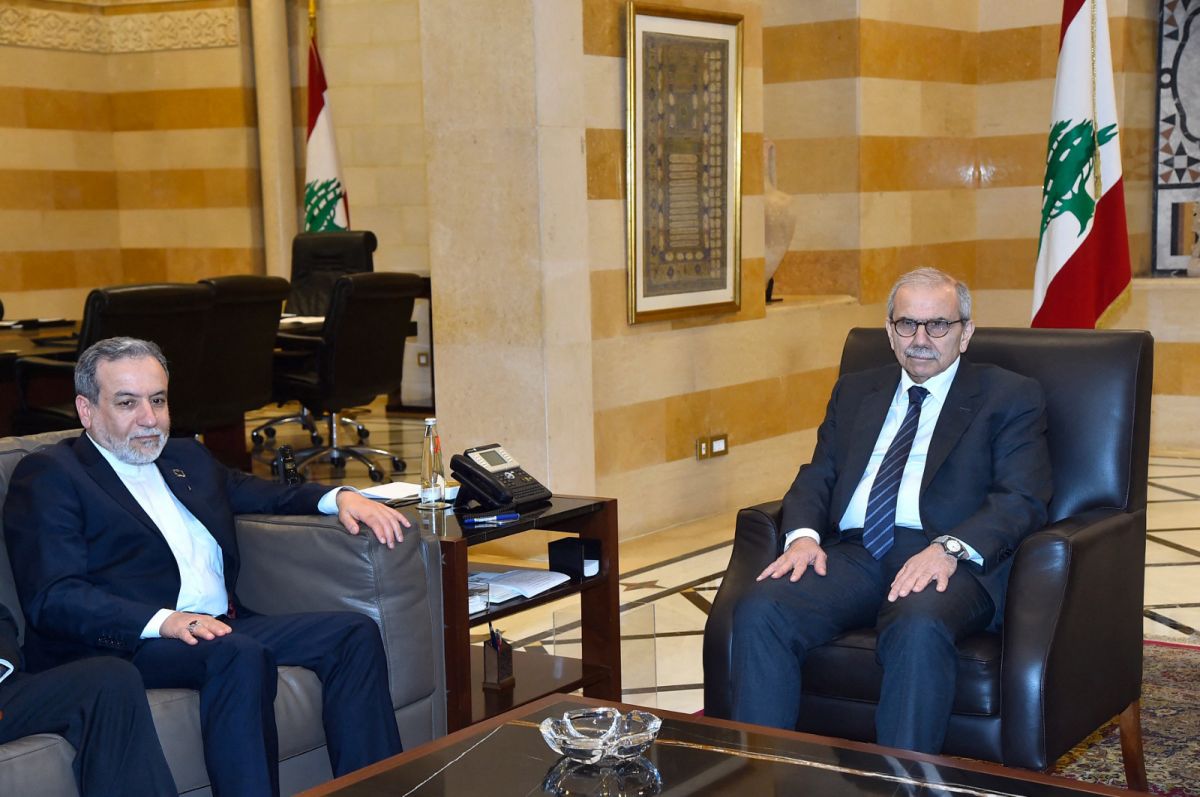
A photo released by the Lebanese government press service on June 3, 2025, showing Lebanese Prime Minister Nawaf Salam (right) meeting with Iranian Foreign Minister Abbas Araghchi in Beirut. (Credit: Lebanese government/AFP)






Between hosting the Iranian Foreign Minister Abbas Araghchi and meeting with a delegation from Hezbollah led by Mohammad Raad, Prime Minister Nawaf Salam had time on Wednesday to "chat" with journalists. The newspaper Nidaa al-Watan reported some of his remarks concerning his rocky relationship with Hezbollah in recent weeks, suggesting that the party's campaign against him was an attempt to "distract" from the woes of its supporters.
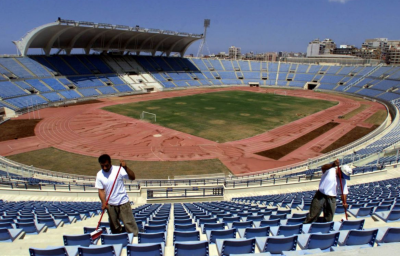
The prime minister said that "he was informed, two days before" his appearance at the Camille Chamoun Sports Stadium, a large stadium located in the southern suburbs of Beirut, of the hostile slogans that were going to be chanted against him by Hezbollah supporters, "but he went anyway." His interpretation of this incident and what he called "Hezbollah's campaign against him" was that the party "seeks to create an imaginary enemy to divert its supporters' attention from their suffering" after the massive destruction and human loss caused by the latest war with Israel. The conflict destroyed neighborhoods, even entire villages in southern Lebanon, the Bekaa Valley and the southern suburbs of Beirut, areas of Hezbollah and its ally Amal's influence, killing more than 4,000. It notably killed, in a massive bombing, the party's iconic leader, Hassan Nasrallah, on Sept. 27, 2024, which dealt a major blow to the morale of the party's base.
With its criticisms, Hezbollah "misfired," Salam stated.
On May 23, the prime minister attended the newly reopened stadium to watch the first match of the Lebanese Premier League. Several videos circulating on social media showed spectators shouting "Nawaf, listen carefully, in the name of God and Sayyed Hassan" and "Labaik ya Nasrallah (At your orders, Nasrallah)," referring to the former secretary-general of Hezbollah, whose funeral was held in that same stadium. Some also chanted: "Zionist, Zionist, Nawaf Salam is a Zionist." In a statement quickly released after the incident, Hezbollah distanced itself from these chants and was "outraged" by this behavior "that goes against national unity."
This incident was part of a sustained campaign against Salam, which escalated to exchanges of barbs and invectives through speeches, interviews, and press conferences, with the underlying issue being the monopoly of arms in the hands of the state, on which the prime minister remains firm.
Tensions have eased in recent days, thanks to mediation by Parliamentary Speaker Nabih Berri, leading to a meeting on Wednesday at the Serail between Salam and a delegation of Hezbollah MPs.
According to Nidaa' al-Watan, this meeting was "frank and positive." Nawaf outlined all his government's efforts to restart the reconstruction of the destroyed areas in southern Lebanon and the Bekaa Valley but highlighted that the delay in investments was due to repeated Israeli attacks, even after the ceasefire on Nov. 27, 2024, which are themselves linked to the issue of "Hezbollah's weapons."
Since the weakening of Hezbollah and its setback against Israel in 2023-2024, the question of its disarmament and the monopoly of arms in the hands of the state has been put on the table, responding to a request from several Lebanese parties and the international community. So far, the party has been dragging its feet, and the controversy was growing. The prime minister did not miss an opportunity to reiterate the need for a monopoly of arms in the hands of the state, one of the essential points of his cabinet's ministerial declaration and the inaugural address delivered on Jan. 9 by President Joseph Aoun.
 2 p.m. recap: Flydubai investigation points to 'terrorist act'; calls grow for Hassan Diab’s extradition to France