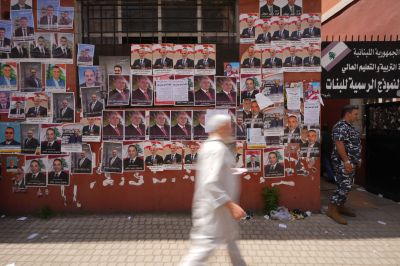
Electoral posters pasted on walls in North Lebanon during the municipal elections on May 12, 2025. (Credit: Mohammad Yassine/L'Orient-Le Jour)






In northern Lebanon, the electoral rivalry between Zgharta MPs Tony Frangieh, head of the Marada Movement, and Michel Moawad, former leader of the Renewal Bloc, led to heated exchanges on television and social media.
While the Frangieh clan retained control of the municipal council in Zgharta — the party's political stronghold — the competition for the presidency of the Federation of Municipalities, which the Marada has held since 1998, was less competitive than expected. Moawad was forced to settle for a handful of victories in Ashash, Aito, Mazraat al-Tuffah and Seraal.
Vote buying vs. symbol of corruption
Before the local leadership vote concluded, the two rivals exchanged sharp accusations throughout the week, each accusing the other of corruption.
“Eighty-five million dollars were spent by the Zgharta municipality and the federation between 1998 and 2019. Where was that money spent, and what happened to it?” Moawad asked during an appearance Friday on MTV’s Sarelwa2et talk show hosted by Marcel Ghanem.
That same day, Frangieh accused Moawad of buying votes. “Michel Moawad paid $15,000 yesterday to secure four votes from the same family for the list he supports,” he alleged. Moawad responded, “Enough insults, or things will go badly.”
The battle also produced some colorful metaphors. “We saw an elephant try to fly without ever taking off. We heard grand speeches, but saw no development,” Frangieh posted on X, in a jab at Moawad’s record. He accused his rival of failing to deliver on electoral promises.
“I have no problem holding a press conference to prove Tony Frangieh is a symbol of corruption and a son of submission to the Syrian regime and Hezbollah,” Moawad shot back, also speaking on MTV.
15 suspected fraud cases under review
The tensions were compounded by the broader political climate. MP Frangieh’s father, Sleiman Frangieh — long considered close to the Syrian regime and a personal friend of former Syrian President Bashar al-Assad — had been backed for the Lebanese presidency by Hezbollah and Amal. His presidential bid collapsed in December following Assad’s downfall and Hezbollah’s weakening amid the ongoing conflict with Israel.
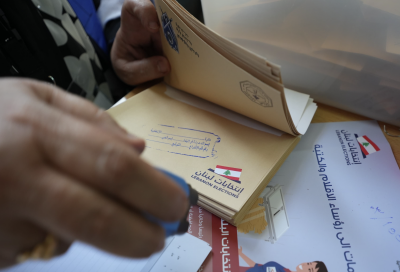
Against this backdrop, Interior Minister Ahmad al-Hajjar said seven people were arrested in connection with security incidents during the vote. He also reported that 15 cases of suspected electoral fraud were under review, along with a potential case of document falsification. One suspect has been arrested. Authorities also recorded several vote-buying attempts during the second phase of municipal elections.
Voter turnout reached 43.29 percent across the North and Akkar governorates, with 37.25 percent in the North and 49.33 percent in Akkar, the minister said.