






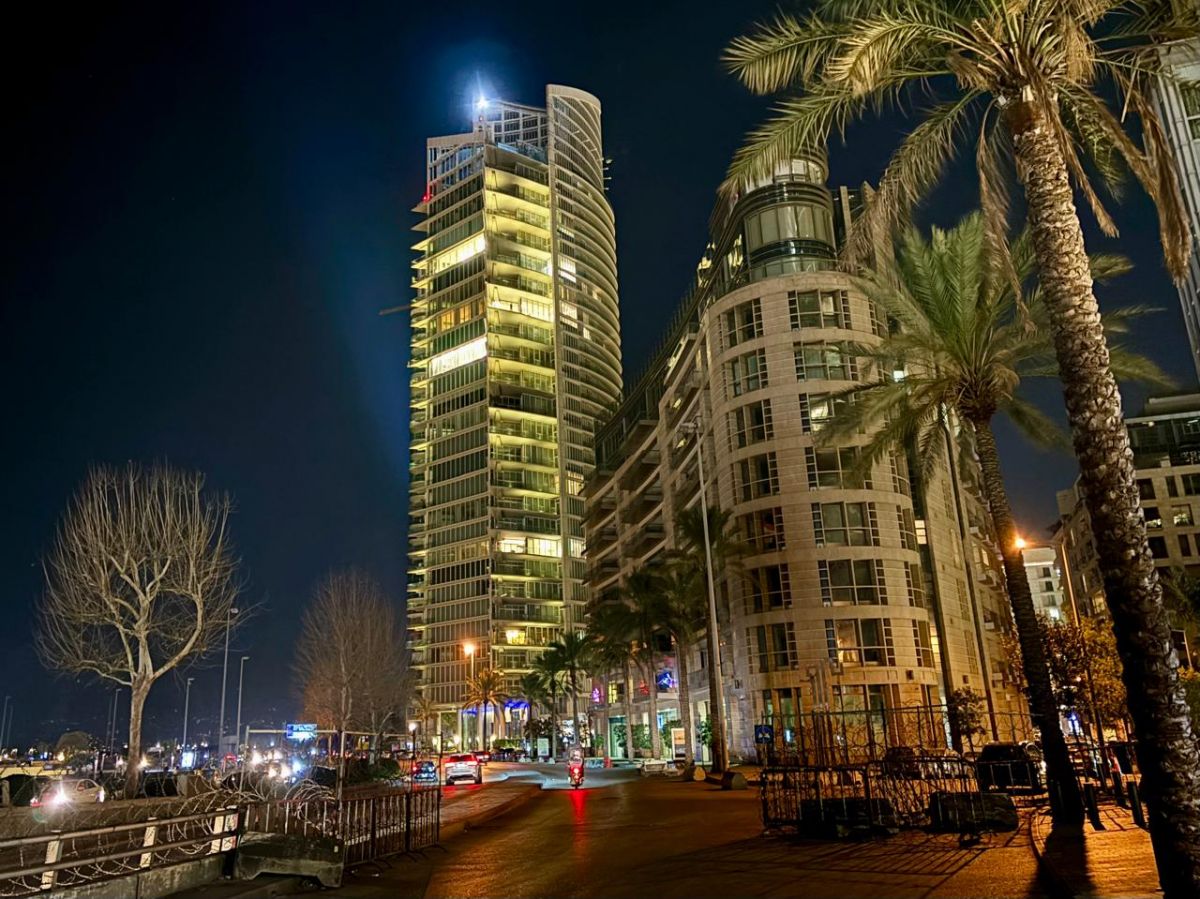
The Four Seasons building in Beirut (on the left), March 3, 2025. (Credit: Philippe Hage Boutros/L'Orient-Le Jour)






The president of the hoteliers' union, Pierre Achkar, stated on Monday that "the influx of Qataris and Kuwaitis to Lebanon during Eid al-Fitr was significant," despite the still volatile security situation as illustrated by recent Israeli strikes in southern Lebanon and the southern suburbs of Beirut.
He also noted that many Lebanese living in the Gulf, Africa and some European countries have been numerous in Lebanon for longer or shorter periods. "Eid al-Fitr vacations are long, especially in Arab countries, allowing expatriates to stay in Lebanon longer," he added.
Saudis are awaited
The number of tourists from Kuwait and Qatar remains smaller than that of Iraqi, Jordanian, Egyptian and Syrian tourists. They were very few before this Eid al-Fitr, even though their government did not prohibit them from coming to Lebanon, unlike the Saudis or Emiratis.
Achkar expressed in his statement relayed by the state-run National News Agency (NNA) his hope that "the positive atmosphere created by the arrival of Qataris and Kuwaitis will lead to the lifting of the entry ban on our Saudi and Emirati brothers into Lebanon," stating that it would have a significant positive impact on tourism in Lebanon, especially due to their number and their "ties" with Lebanon.

However, he acknowledged to L'Orient-Le Jour that this will only happen when the country "has made significant progress in Hezbollah's disarmament and the implementation of United Nations Resolution 1701, as stipulated by the truce agreement." This resolution was voted in 2006 by the Security Council to end the previous war between Hezbollah and Israel but has never been implemented.
According to two sources within travel agencies in Lebanon – including Raymond Wehbeh, who heads We Reach the World – some visitors who came to Lebanon for Eid were currently departing, but the recent security events have not led to massive cancellations of flight reservations to Beirut for the coming months. However, some tourists who had not yet arrived in Lebanon at the time of the Israeli strikes on the southern suburbs of Beirut on March 28 and 31, the first since the start of the truce between Israel and Hezbollah in effect since Nov. 27, 2024, have canceled their trip.
Beirut main beneficiary
The influx of tourists mainly benefited hotels in Beirut – there are 120, with half comprised of 4 and 5-star hotels, according to Achkar. He said that several major hotels in the capital closed due to the economic crisis the country has been experiencing since 2019 or the double explosion at the Beirut port on Aug. 4, 2020, have not yet reopened, such as the Four Seasons or the Grey.
In terms of numbers, Achkar reports an "occupancy rate ranging from 70 to 80 percent in a small number of hotels located in safe areas and central Beirut."
In other areas, this average oscillates between "50 and 60 percent." He said that the occupancy rates in hotels "close to the southern suburbs or the airport highway (areas where Hezbollah is firmly established and were heavily bombed during the war) have recorded lower occupancy rates." There was no database to cross-reference these figures, which only concern hotels and not accommodations rented by individuals – which have also seen a notable increase in occupancy rates in recent days – according to a well-established source in the sector in Beirut. The Lebanese hotel sector has 40,000 rooms throughout the country, according to union data.
Achkar stated that the hotel sector and tourism, in general, will only truly breathe once the security situation has stabilized permanently.
The number of foreign tourists visiting Lebanon – which includes a majority of dual-national Lebanese traveling with their foreign passports – totaled 1,131,100 in 2024, a decrease of 32.1 percent compared to 2023, against the backdrop of the war between Israel and Hezbollah.
This article was originally published in French in L'Orient-Le Jour.