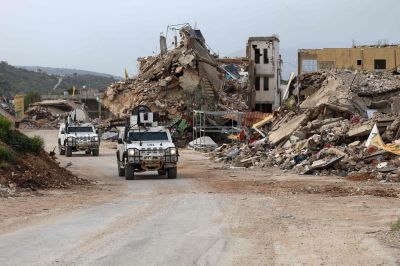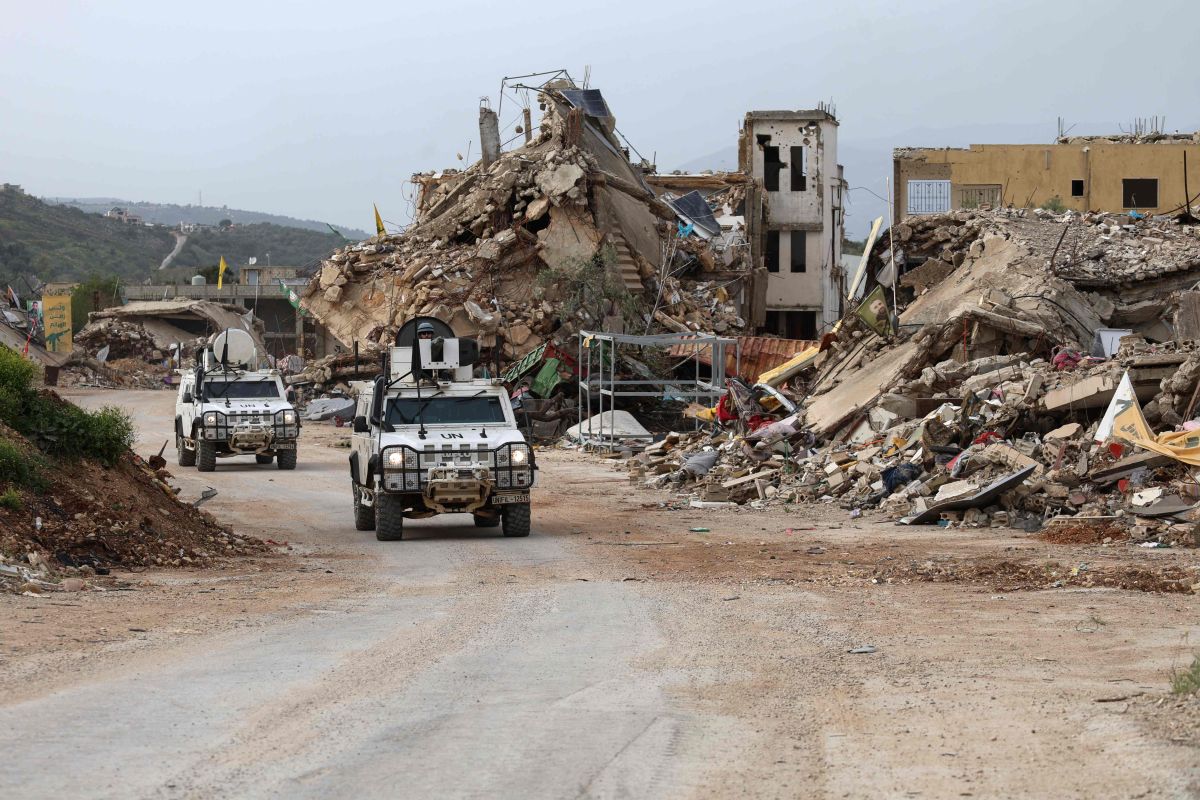
Vehicles from UNIFIL patrol in Kfar Kila, south Lebanon, on April 6, 2025. (Credit: Rabih Daher/AFP)






As soon as the American envoy Morgan Ortagus left, Israel resumed targeted strikes in southern Lebanon, while the Lebanese troops intensified their deployment south of the Litani River.
On Monday morning, a Hezbollah commander was assassinated in a raid on the village of Taybeh, in the Marjayoun district. Hezbollah announced shortly after in a statement that the man killed was part of its ranks and was named Mohammad Adnane Mansour, from Taybeh. Avichay Adraee, the Arabic-speaking spokesperson of the Israeli army, claimed on his X account that Mansour was "the artillery commander of Hezbollah."
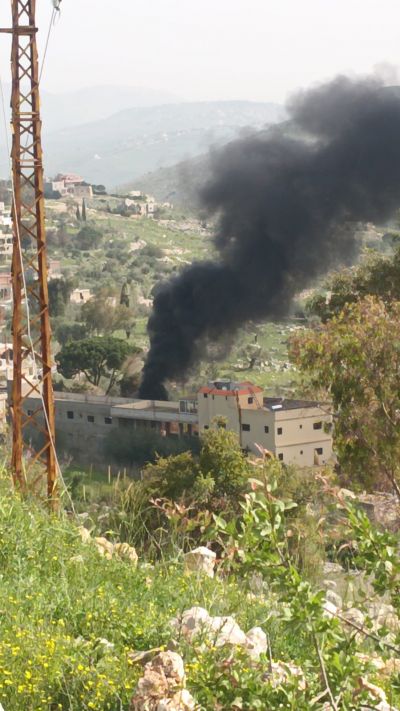
Another Israeli strike in the plains of Khiam killed two people of Syrian nationality and injured a Lebanese person, according to our correspondent, Mountasser Abdallah. The strike targeted the road near Nabaa al-Dardara while a vehicle and a motorcycle were passing. A third strike, also carried out by drone, targeted a car in Beit Lif in the Bint Jbeil district, injuring two people according to residents. The targeted car caught fire. In the evening, a new strike on a vehicle in Taybeh wounded two people, according to a preliminary assessment.
On the night from Sunday to Monday, Israeli helicopters flew over the sea off Naqoura, as the sirens of the headquarters of the United Nations Interim Force in Lebanon (UNIFIL), located in this area, sounded. Shortly after, one of these helicopters fired a missile at a prefabricated structure near a Lebanese Army center in Naqoura, completely destroying it. Another strike, also carried out by a helicopter, hit the same village an hour later. In Aita al-Shaab, Israeli helicopters also successively fired a stun grenade and several missiles, notably on the surroundings of a gas station and on the outskirts of the village.
197 sites out of 263
In this context, the Lebanese Army is intensifying its efforts to extend its total control in the south and accelerate the dismantling of Hezbollah sites. According to our information, the troop sent more reinforcements to the region on Monday, deploying new military units in areas south of the Litani. Again, according to our information, the army increased its presence on the main axes in the south, while expanding its deployment points within the framework of the military plan developed by the Lebanese state. UNIFIL has also intensified its activity in the South, multiplying motorized movements without coordination with the Lebanese Army, thus visibly expanding the scope of its prerogatives, in addition to conducting foot patrols. In this context, a well-informed source told L'Orient-Le Jour that the dismantling of Hezbollah's military sites is ongoing, even if the operations are not publicized as Ortagus had clearly wished; Hezbollah categorically refuses any publicity.
According to our information, the Lebanese Army has successfully raided and dismantled a large number of sites south of the Litani. To date, it has conducted operations on about 197 sites out of the 263 requested by the cease-fire monitoring committee, which is a relatively high rate. On the other hand, a major problem remains concerning the raids to be carried out along the Litani River or north of it. Hezbollah continues to oppose any raid, dismantling, or handing over of weapons in this area, arguing that the cease-fire agreement only applies to the south of the river.
Contacts are underway to try to resolve this deadlock, as Israel threatens to intensify its strikes on areas north of the Litani if these sites are not dismantled by the Lebanese authorities. Additionally, as part of a broader military and security plan adopted by the government, the Lebanese Army has sent significant reinforcements in recent days to the Bekaa and along the Lebanese-Syrian border in the northeast of the country. The objective is to completely secure the border, fight against smuggling, set up mobile checkpoints and conduct raids in areas housing many arms or drug traffickers between the two countries.
'Delighted to be back'
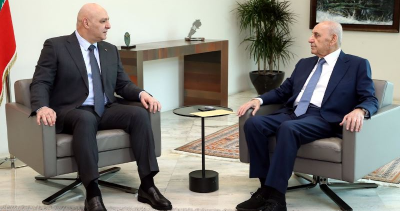
On the political level, Lebanese President Joseph Aoun discussed with Parliament Speaker Nabih Berri the results of Morgan Ortagus's visit. This topic was also discussed during a meeting between the president and a delegation from the American Task Force for Lebanon (ATFL). The head of state affirmed to this lobbying group that Lebanon is continuing its efforts to "concentrate weapons in the hands of the state" while "extending" its authority over the entire territory. Similarly, Prime Minister Nawaf Salam stated after a meeting with the ATFL the cabinet’s commitment to "limit weapons solely to the hands of the state," in line with the ministerial declaration, and insisted on the necessity to "strengthen national sovereignty," per the Taif Agreement and the implementation of U.N. Resolution 1701.
For its part, the U.S. embassy in Lebanon said that Morgan Ortagus was "delighted to be back in Lebanon" and to have met with the President, Prime Minister, Parliament Speaker and Foreign Minister Joe Rajji. "[Ortagus] said she was encouraged by the frankness of discussions about the way forward to usher Lebanon into a new era – which means quickly disarming Hezbollah, adopting reforms to end corruption and establishing an open and transparent government so that all Lebanese have faith and confidence in their state," said the embassy on its X account.
Meanwhile, Israeli Foreign Minister Gideon Saar stated in an interview with Sky News Arabia that "peace with Lebanon is possible if the Lebanese Army imposes its control over the entire Lebanese territory." Lebanese officials have unanimously rejected the prospect of normalizing relations with Israel. Even Ortagus stated on Sunday that this was not a priority, assuring not to have raised the issue during her visit to Beirut.
This article was translated from L'Orient-Le Jour.