


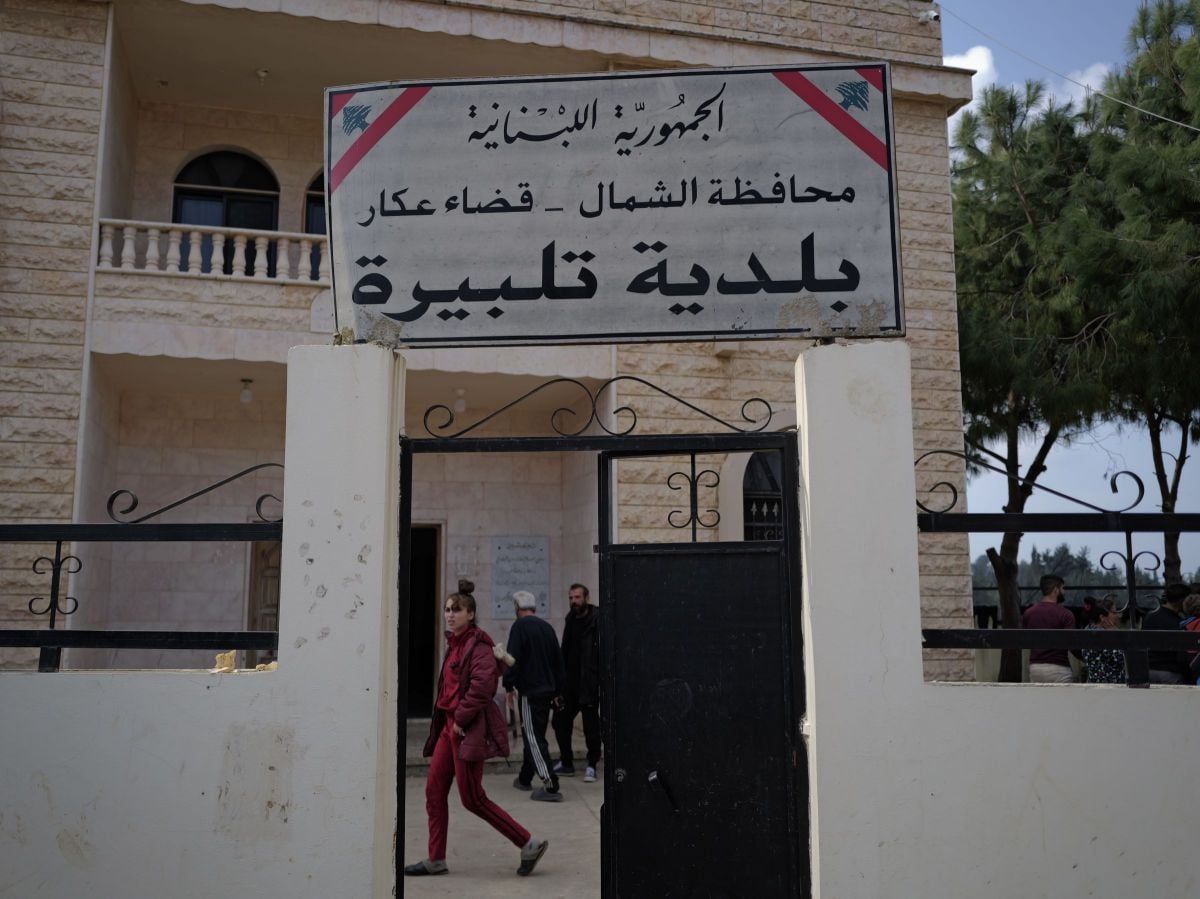
Syrian refugees sought shelter at the Tal Bireh municipality headquarters in Akkar on March 10, 2025. (Credit: Matthieu Karam/L'Orient-Le Jour)






Lebanese Ministers of Social Affairs and Displaced Persons, Haneen Sayed and Kamal Shehadeh, respectively, argued on Saturday in separate interviews for the return of Syrian refugees to their country, as this issue is at the heart of discussions between Beirut and Damascus.
In an interview with the pan-Arab media outlet al-Mashhad, Shehadeh stated that "it is the responsibility of the international community to assist in the return of Syrians to their country and help rebuild the Syrian economy, which is in the interest of the entire region and the Arab countries." He continued, "If there is instability in certain Syrian areas, it means there is instability in the region, and this does not justify the lack of serious consideration for the return of Syrians to their homeland."
Existential threat
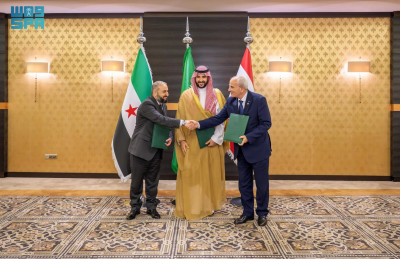
For the Minister of Displaced Persons, this issue "should be discussed between the two countries, as was the case in the agreement on border demarcation sponsored by Saudi Arabia." He also called for continued discussions "on all the thorny issues between the two countries." "The official Lebanese position is that the large presence of Syrians constitutes an economic burden and an existential threat to Lebanon, and that it creates instability for all Arab countries, and that it is in their interest to repatriate the Syrians," he reminded. Regarding the expression "existential threat," Shehadeh explained that "the government adopted this term in its ministerial statement, and Parliament ratified it." Finally, he called on Arab and Western countries to cooperate with Lebanon on this matter.
The Minister of Social Affairs echoed similar sentiments. In an interview published on Saturday in Al-Akhbar newspaper, Hanine Sayed stated that 24% of Syrian refugees in Lebanon – around 400,000 people out of more than 1.5 million total, according to estimates from the UN High Commissioner for Refugees (UNHCR) – would be ready to return to Syria, provided they receive assistance for their resettlement.
Return plan
"I have asked the UNHCR to develop a return plan and implement it using the budget allocated for humanitarian assistance to Syrian refugees in Lebanon. [...] I estimate that the cost of the first phase of this plan will be about 200 million dollars," emphasized Sayed, adding that part of this sum could be funded by the aid received by some refugees through assistance programs in Lebanon. "Refugees currently receive aid, part of which we can use to facilitate their voluntary return," she said.
Sayed specified that this "voluntary return" should be to "reception areas" suitable for resettling the refugees. "We need to identify reception areas in Syria, cover transportation costs, and provide financial support to families during the first four to five months after their return," she explained, while noting that the implementation of this project is supervised by an interministerial committee comprising the Ministries of Foreign Affairs, Justice, Social Affairs, Labor, Interior and Defense, in cooperation with the UNHCR. "The UNHCR often says that the timing is not right for their return, but its president Filippo Grandi assured me that we are on the same page on this matter," she expressed with satisfaction.
New wave of refugees in Akkar
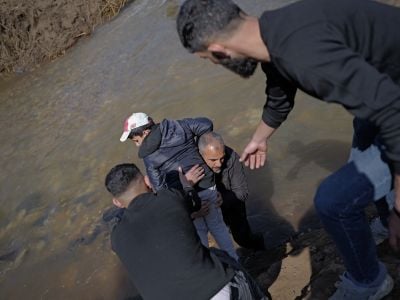
The minister also addressed the issue of the new wave of Syrian refugees caused by massacres carried out in early March in the Alawite region on the Syrian coast, which claimed the lives of more than 1,500 civilians, mostly Alawites, according to the Syrian Observatory for Human Rights (SOHR). These atrocities led to the arrival of at least 15,479 Syrians in Lebanon, spread across 24 predominantly Alawite towns in Akkar, in the north of the country, where they are staying with families or in warehouses, according to the latest report from the Disaster Management Chamber.
"Lebanon is not a country of permanent asylum, but a transit country, and this rule must apply to all groups," commented the minister. She added, "We welcomed refugees fleeing the former Syrian regime, but after fourteen years without a return plan, we must learn from this experience. The situation in Syria is still uncertain, but it is possible that the new regime will manage to include all factions."
Rehabilitation of war-damaged infrastructure
Regarding the reconstruction of areas destroyed by Israeli bombings during the 2023/2024 war between Hezbollah and Israel, Hanine Sayed stated that Lebanon will receive an initial tranche of 250 million dollars from the World Bank in April to "rehabilitate the infrastructure," while also relying on new donor conferences to secure additional funding.
The minister also aims to reduce Lebanese families' dependence on social assistance by promoting their economic empowerment. Her goal is to "create job opportunities and enhance the skills of beneficiaries," particularly through training programs and access to micro-credit. She announced a plan to overhaul the "Aman" program, Lebanon's main aid initiative for poor families, by strengthening controls to prevent fraud and prioritizing the most vulnerable households.

 1 p.m. recap: Salam in Nabatieh; up to 10,000 more US troops heading to Middle East