






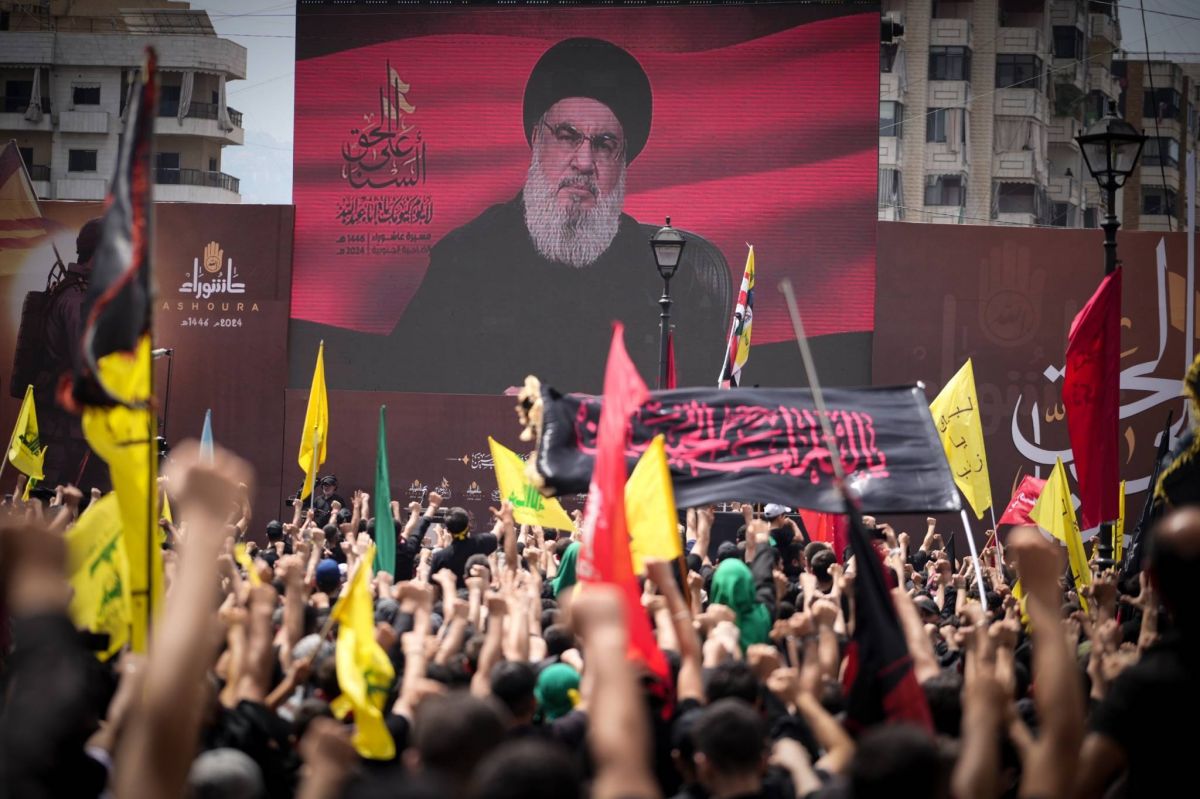
Hezbollah Secretary General Hassan Nasrallah delivering a speech broadcast live in the southern suburbs of Beirut, on the occasion of the Ashura commemorations, July 17, 2024. (Credit: Mohammad Yassine/OLJ)






Zeinab Nasrallah, the daughter of former Hezbollah Secretary General Hassan Nasrallah, disputed claims that her father lived in underground bunkers, calling them "completely false" in an interview with the Iranian channel Press TV.
On Sept. 27, the Hezbollah leader was killed by Israeli bombings targeting a complex of six buildings in Haret Hreik, in the southern suburbs of Beirut, while he was in an underground room about 20 meters below the surface, according to revelations from the Wall Street Journal.
"Sayyed Hassan never used these underground spaces in his daily life. They were built for wartime use, and until the start of the last Israeli aggression against Lebanon in September, he resided in apartments located at least on the 5th, 6th, or 8th floor," his daughter told the Iranian media.
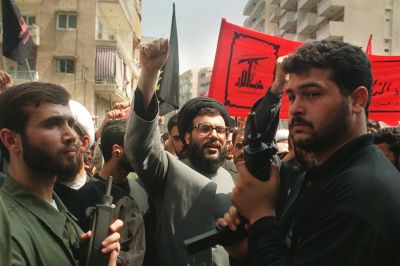
She added, "My father lived like anyone else, in regular apartments... However, after he was killed in the underground headquarters, some may have believed he lived underground — a false narrative that the Israeli enemy has constantly tried to spread." Hassan Nasrallah's last public appearance was on Oct. 12, 2016, during the Ashura commemoration that year.
According to Zeinab Nasrallah, her father's lifestyle was ordinary despite Israeli threats. "He drove his car with his companions to observe the situation outside. He was never hidden. He made rounds around the southern suburbs of Beirut to check on the people, hospitals, mosques, and stores, ensuring everything was fine," she explained.
‘We saw him only a few times a year’
However, Zeinab Nasrallah revealed that the "immense responsibilities and security concerns" weighing on her father limited their family meetings. "We saw him only a few times a year... But these moments were precious," she said. She continued, "We gathered as a family — children and grandchildren — and spent wonderful moments together. He would inquire about each of us and make sure we were well... The grandchildren sometimes fought over who would sit next to him, and they sometimes became noisy. When we tried to calm them down or ask them to stop playing for a while, he would say, 'It's okay, they are children, they need to play, release energy, and make noise.'"
According to the former Hezbollah leader's daughter, family discussions mainly focused on religious matters, leaving little room for politics, unless urgent issues arose and the family "sought to better understand" certain events.
‘A loving father’
When describing him, Zeinab Nasrallah referred to her father as "a loving father, a well-educated man, and a deeply affectionate human being, filled with true empathy for those around him." She added that when her father was appointed Hezbollah secretary general after the assassination of his predecessor, Abbas al-Moussawi, in February 1992, the family felt a "heightened sense of responsibility" because he was now "a transnational leader followed by millions of people around the world." When he assumed this role, "We understood that we would see him less frequently and prayed for his safety, as he was not only our father but the father of an entire nation," she said.
Zeinab Nasrallah expressed pride in her father's sacrifices, including for "his personal life, the martyrdom of his young son Hadi, and his life for the good of the people." Hadi, Hassan Nasrallah’s eldest son, was killed by the Israeli army in 1997 in southern Lebanon. At the time, the Israeli army had abducted his body, which was later recovered during a prisoner exchange in 1998 with Israel.
Nasrallah's daughter finally stated that her father's assassination by Israel only strengthened the resistance. "The martyrdom of Hassan Nasrallah fueled the fight against Israeli occupation and its Western hegemonic supporters," she concluded.
Over 4,000 people were killed in Lebanon during the war between Hezbollah and Israel, which began on Oct. 8, 2023. Less than a year after predominantly cross-border fighting, the Israeli state launched an operation extending to all strongholds of the party across Lebanon on Sept. 23. After more than two months of open war, a cease-fire was negotiated under the auspices of the United States and France and came into effect on Nov. 27.

 7 p.m. recap: Saudi Arabia warns Houthis as Israeli strikes hit south Lebanon