



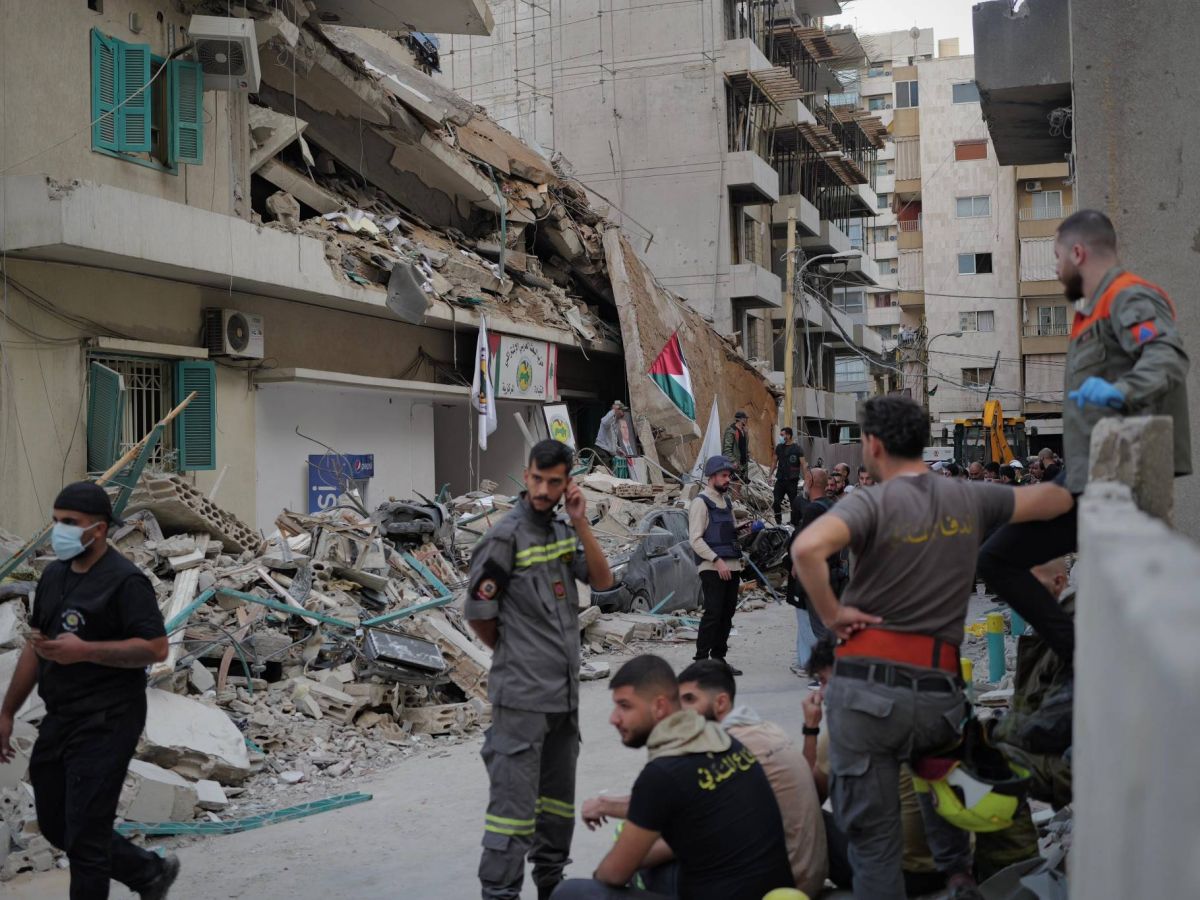
Civil Defense first responders at the site of an Israeli strike on the central Beirut neighborhood of Ras al-Nabaa on Nov. 17, 2024. (Credit: Matthieu Karam/L'Orient Today)






BEIRUT — Several waves of Israeli bombings targeted Beirut's southern suburbs on Sunday, as well as two strikes against the capital itself and ongoing bombardment throughout the South.
The morning started with three evacuation warnings issued at 6:44 a.m. on the Israeli army's Arabic-language spokesperson's X account. Church bells rang out throughout the neighborhoods threatened by the Israeli army to alert residences of the looming attack.
The first bomb was dropped an hour later and all three sites were hit within approximately 15 minutes, with heavy explosions heard throughout the capital. The targeted buildings were in Hadath, facing Saint Georges Hospital and Notre-Dame de Bon Secours Church; Burj al-Barajneh, between Burj Hidaya School and Imam Reza School; and Chiyah, opposite Mar Mikhael Church. At least one of the buildings, the multi-story apartment building in Chiyah, was completely leveled.
'Prohibited from heading South'
At 9:01 a.m. the Israeli army told all the residents of 15 villages in southern Lebanon to evacuate and move north of the Awali River, 60 kilometers from the border with Israel. As is the case with all the army's warnings, which have been condemned as inaccurate and inadequate by international rights groups, there were no safe routes indicated.
"You are prohibited from heading South," the warning reads. "Any movement South could be dangerous to your life. We will inform you of the appropriate time to return to your homes as soon as the conditions are suitable for this."
The villages named were: Kfar Hamam, Kfar Shuba, Burj al-Moulouk, Khiam, Blat, Arnoun, Yohmor, Deir Seriane, Taybeh, Qseibeh, Kawthariyet al-Rez, Hmeireh, Mattarieh al-Shoumar and Kfar Tebnin. Many of these villages had already been subjected to intense Israeli bombardment since the escalation on Sept. 23.
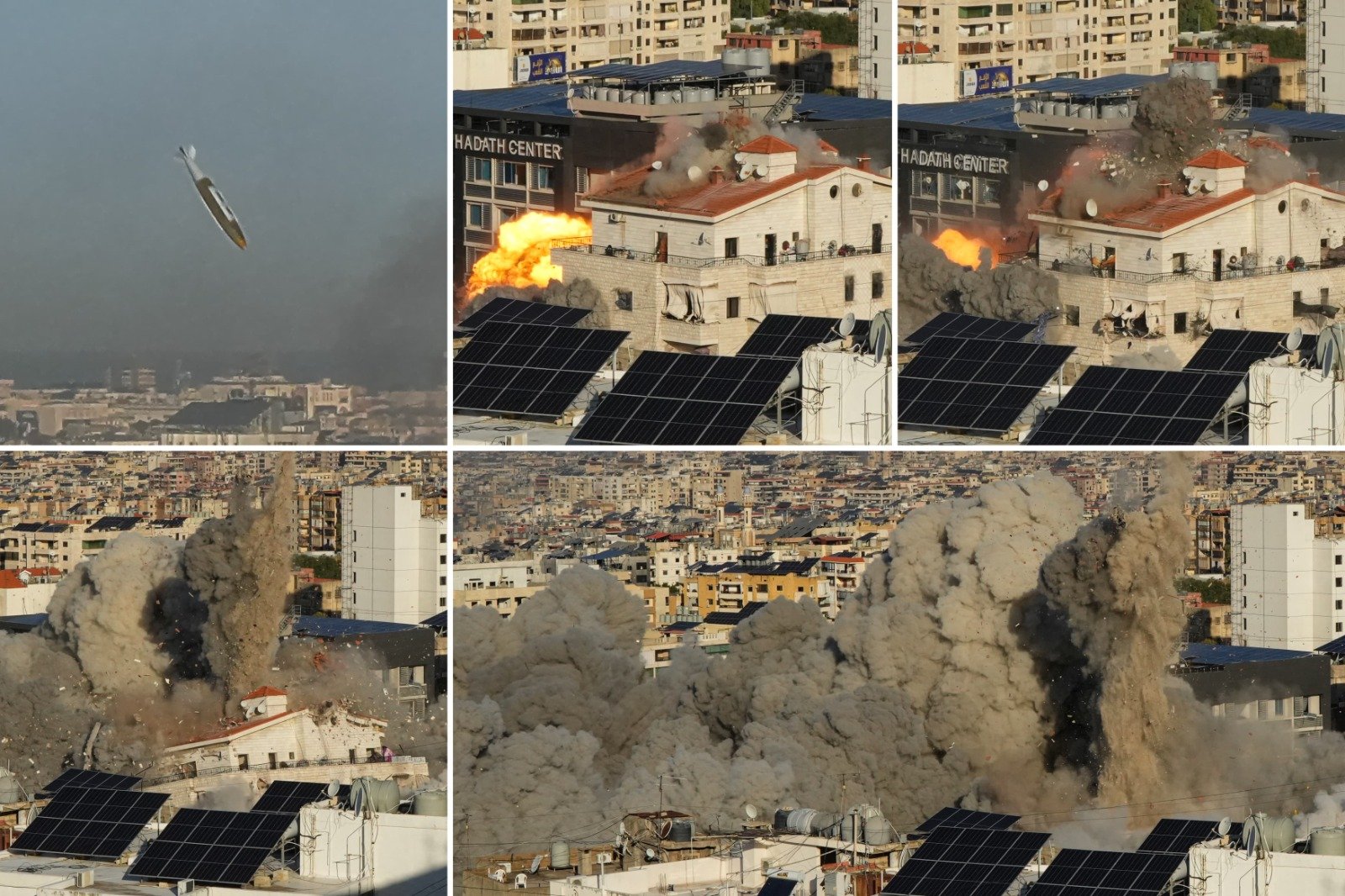 A series of photos showing the impact, explosion and destruction of a building in Hadath, by an Israeli bomb, in the southern suburbs of Beirut, at 7:40 a.m. on Nov. 17, 2024. (Credit: Mohammad Yassin/L'Orient Today)
This was followed by another round of evacuation warnings issued at 9:41 a.m. for four buildings in Haret Hreik, in the southern suburbs. The army spokesperson, Avichay Adraee, posted maps highlighting a building facing al-Bayan High School Hadat, another near al-Hassanayn Mosque, a third close to Ala Fak Institue, and a fourth facing St. Joseph Church. Around an hour later, Haret Hreik came under fire.
Baath Party office
Again at 1:11 p.m. Adraee's X account showed evacuation warnings for three more buildings in Haret Hreik and Burj al-Barajneh. Shortly afterward however, Israeli jets bombed a building in central Beirut's Ras al-Nabaa neighborhood as well.
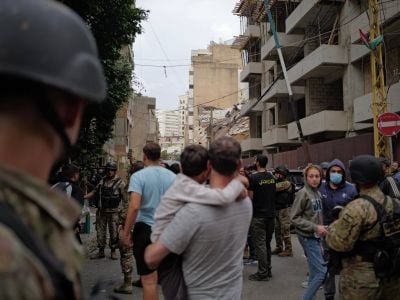
The top two floors of the Syrian Baath Party's Lebanese office were crushed, killing at least three people, including a woman who had been standing on the street below and a man whose store was right across the street, witnesses said. Civil Defense rescue teams were eager not to stay too long on the site, fearing a second strike. This week, 15 Civil Defense volunteer first-responders were killed when the Israeli army bombed their center in Douris, near Baalbeck.
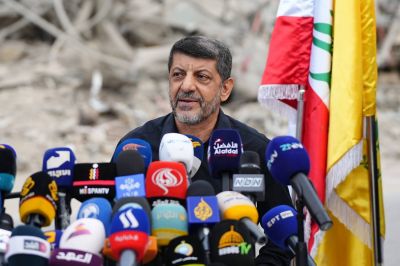
The target of the attack in Ras al-Nabaa was Mohammad Afif Nabulsi, head of Hezbollah's media office. His deputy, Mahmoud al-Sharkawi was also killed. Later Sunday evening, Hezbollah confirmed his death, "along with a number of his brothers, in a treacherous Zionist aggression on the Lebanese capital, Beirut, on Sunday afternoon."
The Baath Party's secretary-general, Ali Hijazi, told al-Mayadeen that Nabulsi was at the party's office "by coincidence."
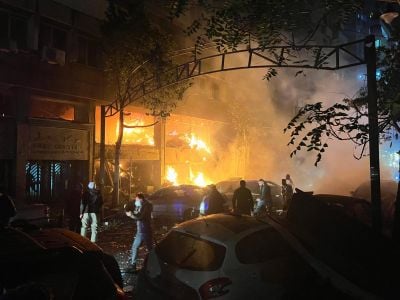
Then, in the early evening, Beirut was struck again. Shortly before 8 p.m., the Israeli army attacked the neighborhood of Mar Elias, south of Hamra and west of Tariq al-Jdideh. Witnesses reported that an electronics store and a car outside of it were hit with several missiles. The building was engulfed by flames, fueled by the batteries and devices from the shop.
The Health Ministry announced at least two people had been killed and 13 others wounded, with two of the injured in critical condition. Initial reports speculated that the target had been the secretary-general of al-Jamaa al-Islamiya, a theory which an MP from the party denied.
Later reports suggested Hezbollal official Mahmoud Madi had been targeted. The party had yet to comment on either attacks.
'A series of steps'
After the strike on Mar Elias, the Israeli army announced that its air force had bombed six "military targets" in the southern suburbs of Beirut on Sunday, including "weapons storage facilities, command centers and other military infrastructure" used by Hezbollah.
"Prior to the raids, a series of steps were taken to reduce the likelihood of civilian casualties, including advance intelligence gathering, the use of aerial photographs, and advance warnings to evacuate the area," the statement, posted on Adraee's X account.
According to International Humanitarian Law, evacuation warnings do not absolve a military from being guilty of carrying out operations that disproportionately affect civilians.
The statement also did not mention the strikes carried out against Ras al-Nabaa and Mar Elias, which were done without warning.