






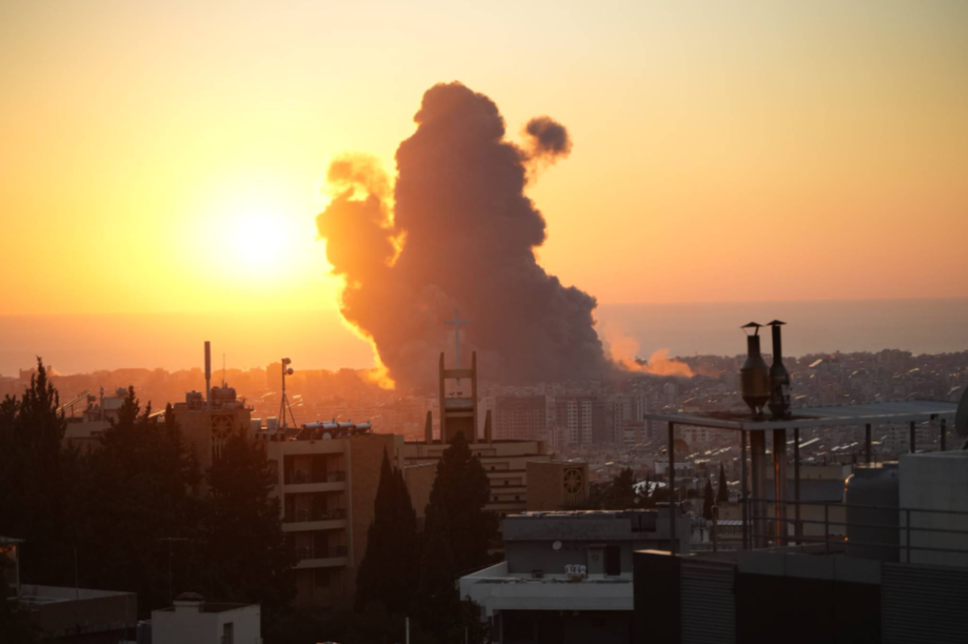
(Credit: L'Orient Today)






BEIRUT — At around 6:20 p.m. local time on Friday evening, the Israeli army bombed Beirut's southern suburbs in a series of airstrikes that shook the capital and the surrounding area, sending up a massive plume of smoke and causing fissures to appear in the ground around the site of the attack.
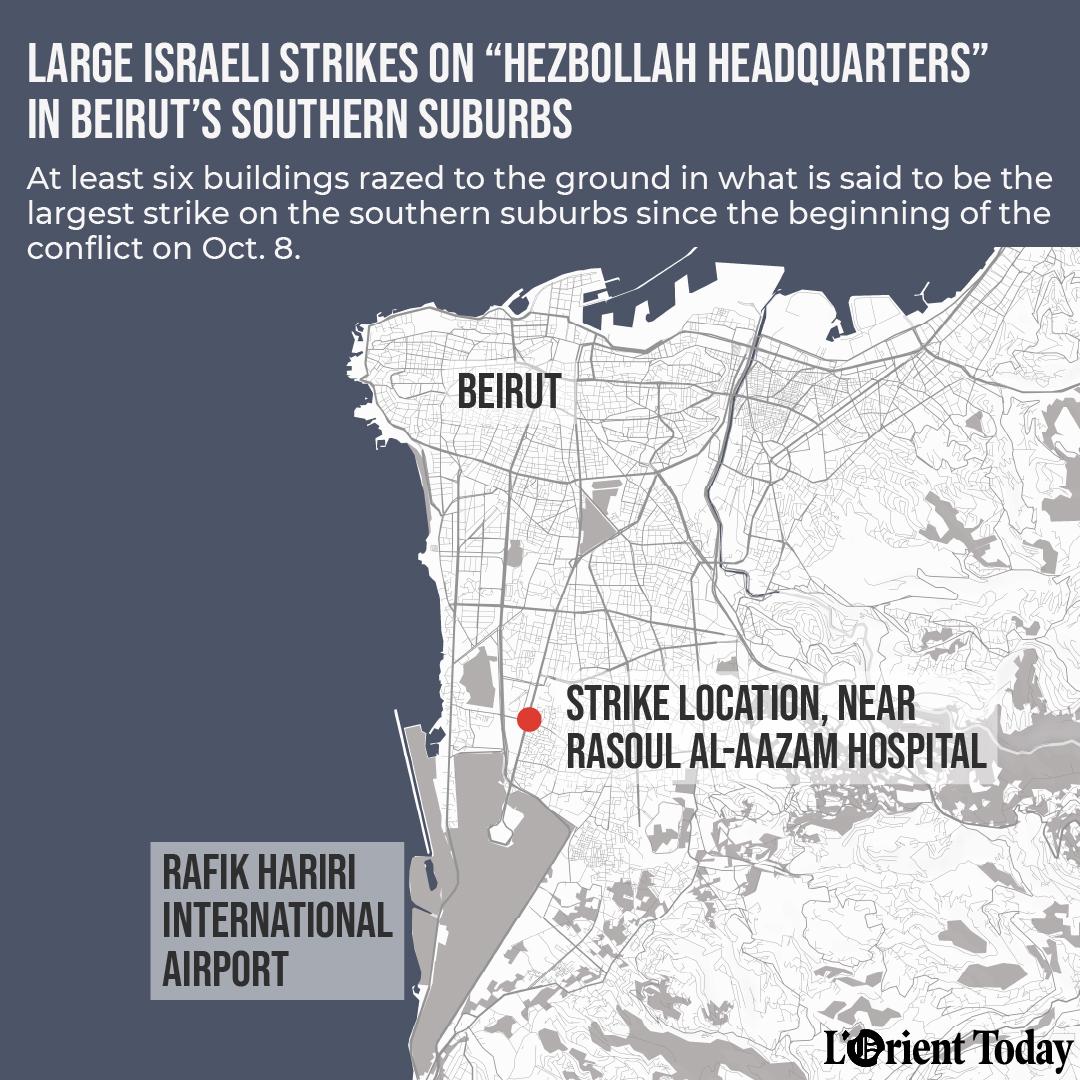
It is said to be the largest airstrike in the southern suburbs since the beginning of the conflict on Oct. 8. At least six buildings were completely destroyed by numerous missiles in an area near Rasoul al-Aazam Hospital, which is located along the main road leading to Beirut International Airport, in the southeastern area of Haret Hreik.
It was the fifth strike in seven days to target this diverse and densely populated neighborhood, and the eighth strike since fighting began, in what has been mostly successful assassinations of several high-ranking Hezbollah officials. The southern suburbs are home to many Hezbollah members, meaning much of the party’s administration is run from there and it often hosts key political meetings.
Search and rescue operations are underway and with people likely buried under the rubble of six buildings, the official death toll remains unknown.
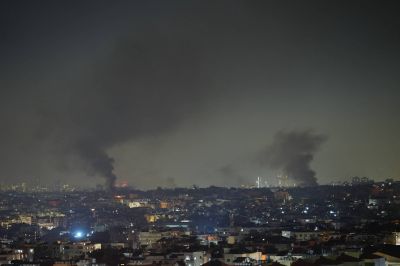
Bombing continued throughout the night. By 3 a.m. Saturday morning, Israeli jets had bombed the suburbs at least 11 times, after having sent out warnings that several areas of the neighborhood could be targeted, the state-run National News Agency reported. Israeli jets continued to fly low overhead, and an Israeli army spokesperson released a statement saying that its air force was patrolling the airport and that Israel would "under no circumstances allow the transfer of weapons" to Hezbollah. "We are aware of Iranian arms transfers to Hezbollah and we are thwarting them,” the statement reads.
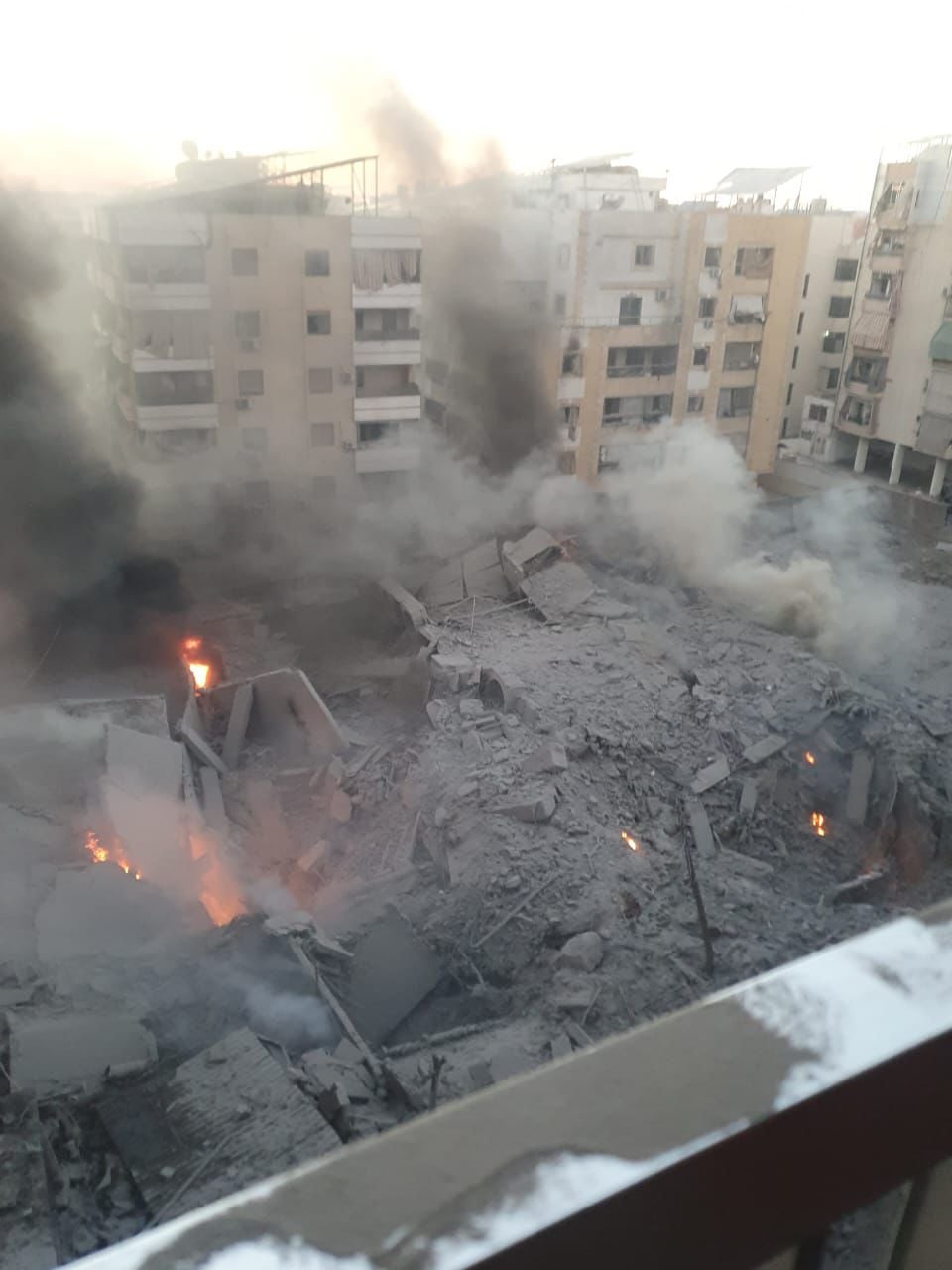 Photo to our correspondent Muntasser Abdallah.
As for the initial strike of the evening, the Israeli army claimed it almost immediately, writing in a statement posted on X that it had targeted "the central command headquarters of Hezbollah located under residential buildings in the heart of the southern suburbs of Beirut."
"Hassan Nasrallah was the target of the attack," Axios reporter Barak Ravid wrote in a post on X. "The Israeli army is verifying if he was injured," he said, citing an Israeli source.
Around 7:30 p.m., AFP reported that Hassan Nasrallah had "survived" the attack, citing a source close to Hezbollah, but by Wednesday morning there had still been no official confirmation one way or the other from the party.
The Israeli army radio said the airforce had, in its attempt to assassinate the party leader, "dropped bombs that penetrated the bunkers."
According to a witness on the ground, Haret Hreik "was almost normal," in the moments leading up to the strike. "A supermarket was open," Bashar Harake recalled. "I saw people eating at a restaurant, I saw people driving by on their motorcycles and in cars and I saw people standing on the balcony."
Harake said that an Israeli jet could be heard flying low in the sky over their heads. “Then the first rocket fell, then the next and then another one. I think 10 rockets hit the area."
Around 10:30 p.m. Beirut time, reports came in that Iran’s supreme leader, Ayatollah Ali Khamenei, had called an emergency meeting of the Supreme National Security Council at his home compound in response to the strike targeting Nasrallah, according to two Iranian officials with knowledge of the meeting.
The bombing came a few hours after Israeli Prime Minister Benjamin Netanyahu’s speech to the United Nations General Assembly in New York.
 (Credit: Jaimee Lee Haddad/L'Orient Today)

