






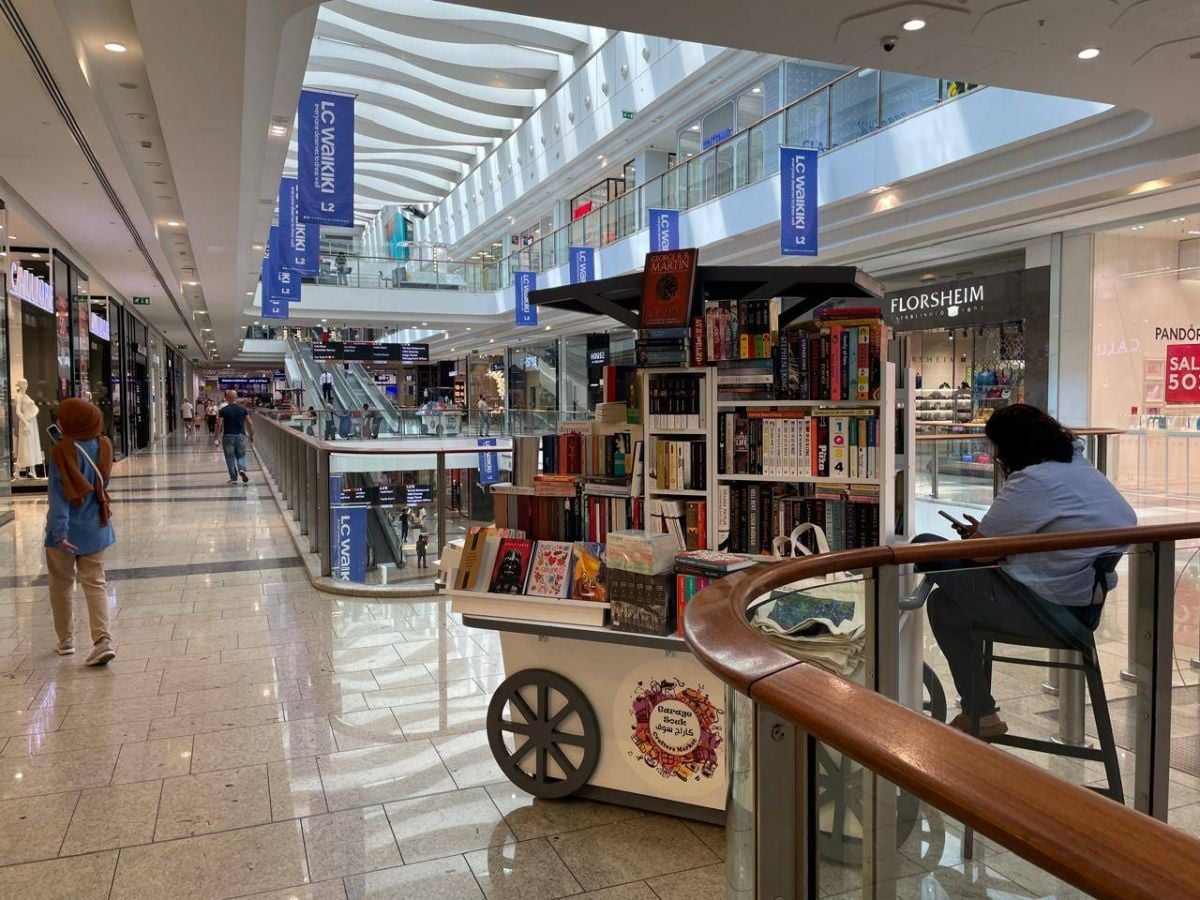
One of the aisles of the City Center shopping center, in Hazmieh (Baabda), on Aug. 21. (Credit: PHB)






The Consumer Price Index (CPI), which calculates the evolution of prices in Lebanese Lira in Lebanon, showed an increase of 0.64 percent on a monthly basis and 35 percent on an annual basis. Prices therefore changed little between July and August, and the deceleration of the index on an annual basis slowed down considerably in one month, this rate being 35.37 percent at the end of last July.
This is partly due to the fact that the exchange rate between the lira and the dollar had reached almost its current level in August 2023, after several years of fluctuations that caused it to lose more than 90 percent of its value, against the backdrop of the economic and financial crisis. If the rate of change in the CPI reaches 35 percent despite the fact that the exchange rates used over the periods compared are the same, this therefore means that the real cost of living, measured by its various components, has increased by a third in one year, which is considerable. and now confirmed by an official statistic published in the midst of massive Israeli bombings in several regions of the country.
Education expenditure
This is therefore a real blow to household purchasing power, which is not attributable to exchange rate fluctuations, which is more evident in the changes in the CPI sub-components. Education expenditure contributes significantly to this, showing an increase of 587.67 percent on an annual basis, a jump that dates back to the October 2023 CPI. They are ahead of the prices of various goods and services (+42.84 percent) and those of leisure (+37.41 percent). Many categories show growth rates of more than 20 percent on an annual basis, whether telecommunications (+28.72 percent), clothing and footwear (+26.59 percent) or food and non-alcoholic beverages (+21.34 percent). The prices of alcohol and tobacco increased by slightly lesser amounts in one year (+16.21 percent).
On a monthly basis, most of the percentage changes are less than one percent in absolute value, with the exception of furniture prices (+3.30 percent) and food and non-alcoholic beverages (+2.01 percent). Also every month, the increase in the CPI was slightly higher in Beirut than elsewhere (+1.13 percent). Next came North Lebanon (+1 percent), South Lebanon (+0.81 percent), Mount Lebanon (+0.5 percent), Nabatiyeh (+0.46 percent) and finally Bekaa (+0.1 percent).
This price increase cannot be attributed to a surge in energy prices, given that oil prices are generally falling over the period from August 2023 to August 2024. Nor is it linked to changes in global food prices: The World Food Program index that measures them fell from 122 points in 2023 to 120.7 points a year later. Part of the increase may be due to adjustments that followed the adoption of the 2024 budget, which came into force in mid-February of the same year and which formalized the late alignment of the majority of compulsory levies with the new exchange rate.
This article originally appeared in French in L'Orient-Le Jour.
