






Debris on a destroyed street in Gaza City's Jabalia refugee camp, Oct. 11, 2023 .(Credit: AFP)






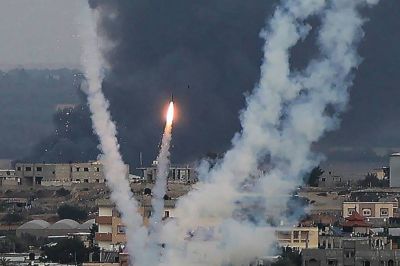
THE HAGUE — Since militant group Hamas' weekend assault, conflict between Israel and Palestinian forces has created a huge and rising death toll on both sides.
The war falls under a complex international system of justice that has emerged since World War Two.
What laws govern the conflict?
Internationally accepted rules of armed conflict emerged out of the 1949 Geneva Conventions, which were ratified by all UN member states and supplemented by rulings at international war crimes tribunals.
A series of treaties governs the treatment of civilians, combatants and prisoners of war in a system collectively known as the "Law of Armed Conflict" or "International Humanitarian Law." It applies to state forces and organized armed groups, including Hamas militants.
If perpetrators of alleged Palestinian atrocities in Israel and all alleged perpetrators of crimes on the occupied Palestinian territories are not brought to justice at home, the International Criminal Court (ICC) in The Hague is the only international legal organ mandated to bring charges.
Domestic courts can apply so-called "universal jurisdiction" in war crimes cases, but it is of limited scope.
The Rome Statute that founded the ICC gives it legal authority to investigate alleged crimes on the territory of its member states or by their nationals, when domestic authorities are "unwilling or unable" to do so.
The office of the prosecutor of the ICC confirmed Tuesday that its mandate applies to potential crimes committed in the current conflict and said it continues to gather information.
What is the role of the ICC?
The International Criminal Court (ICC), the world's permanent war crimes tribunals, opened in The Hague in 2002. It has jurisdiction over war crimes, crimes against humanity and genocide within — or committed by the nationals of — its 123 member states.
Many of the world's major powers are not ICC members, including China, the United States, Russia, India and Egypt. The ICC recognises Palestine as a member state, while Israel rejects the court's jurisdiction and does not formally engage with it.
With a limited budget and staff, ICC prosecutors are already investigating 17 cases ranging from Ukraine and Afghanistan to Sudan and Myanmar. With a 2023 budget of just under a million euros ($1.06 million) for investigations in the Palestinian territories, the ICC is seeking additional resources.
The ICC has had an ongoing investigation into allegations of war crimes and crimes against humanity committed in the occupied Palestinian territories since 2021.
It has not issued any arrest warrants.
Prosecutors said in 2021 there was a reasonable basis to believe that violations had been committed on all sides, including by Israeli troops, Hamas militants and other armed Palestinian groups.
What acts constitute war crimes?
The deliberate targeting of civilians, indiscriminate rocket attacks, and civilian hostage-taking by Palestinian armed groups, and Israeli counter-strikes in Gaza that killed hundreds of Palestinians are cited as possible war crimes by New York-based Human Rights Watch.
"Deliberate killings of civilians, hostage-taking, and collective punishment are heinous crimes that have no justification," said Omar Shakir, the group's Israel and Palestine director.
Hostage- taking, murder and torture are explicitly banned under the Geneva Conventions, while Israel's response could also be subject to a war crimes investigation.
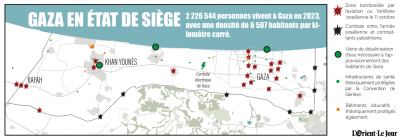
Israeli Defense Minister Yoav Gallant drew criticism from UN officials and human rights groups by announcing a tightened blockade to prevent food and fuel from reaching the Gaza Strip, home to 2.3 million people.
Gallant also vowed to wipe Hamas "off the face of the earth" amid growing expectations Israel will launch a ground invasion to destroy the Palestinian militant group.
Do the Geneva conventions apply?
Israel has a right and duty to respond, US President Joe Biden said Tuesday, adding that he and Israeli Prime Minister Benjamin Netanyahu had discussed “how democracies like Israel and the United States are stronger and more secure when we act according to the rule of law.”
A siege can be considered a war crime if it targets civilians, rather than a legitimate means to undermine Hamas' military capabilities, or if found to be disproportionate.
Attacks on military objectives have to be proportional under international law, which means they must not lead to excessive loss of civilian life or damage to civilian property relative to the direct and concrete military advantage expected.
Nick Kaufman, a British-born Israeli defense lawyer at the ICC, cited Hamas militants' gruesome killing of hundreds of revelers at a rave and civilians in several Kibbutz settlements near the Gaza border as an obvious focus for a war crimes case.
($1 = 0.9424 euros) ($1 = 0.9406 euros)
and Palestinian forces has created a huge and rising death toll on both sides.
The war falls under a complex international system of
justice that has emerged since World War Two.What laws govern the conflict?
Internationally accepted rules of armed conflict emerged out
of the 1949 Geneva Conventions, which were ratified by all
UN member states and supplemented by rulings at international
war crimes tribunals.
A series of treaties governs the treatment of civilians, combatants and prisoners of war in a system collectively known as
the "Law of Armed Conflict" or "International Humanitarian Law."
It applies to state forces and organized armed groups,
including Hamas militants. Follow our...
