







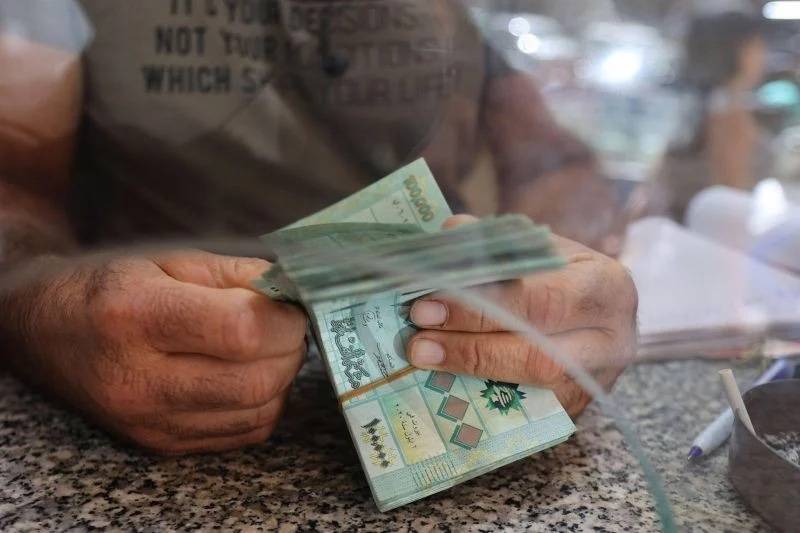
A money changer counts notes at his shop in Beirut. (Credit: Anwar Amro/AFP)






Want to get the Morning Brief by email? Click here to sign up.
The Lebanese lira has again plummeted to a new nadir on the parallel market, trading at over LL45,000 to the dollar. The continued depreciation of the lira comes despite government measures aimed at stabilizing the exchange rate, including a planned tenfold increase to the longstanding LL1,500 official exchange rate and allowing depositors to purchase dollars at the stronger central bank exchange platform, Sayrafa, rate. While the new official exchange rate will apply to certain levies, including customs tariffs on imported products, other payments to the state must be made at the Sayrafa rate, notably electricity tariffs which as of February will be billed in dollars to be paid at the central bank rate in lira. As of yesterday, the Sayrafa rate fell around LL14,000 below the parallel market rate. The unification of exchange rates is among the reforms expected by the International Monetary Fund to unlock a multibillion dollar aid package first agreed upon in April.
Lebanon received a multimillion-dollar World Bank grant intended to increase sustainability in solid waste management. “Lebanon is making progress and establishing a legal and stable basis for waste management,” World Bank official Jean-Christophe Carret said, explaining that the $8.86 million allotment’s goals include reducing pollutant emissions and making waste recycling viable. Caretaker Environment Minister Nasser Yassin, for his part, said the ministry will implement projects to counteract “illegal dumping in specific regions of the north and south.” A lack of planning in waste management has repeatedly caused garbage pileups across Lebanon. The onset of the economic crisis occasionally leaves streets flooded with trash amid claims of unpaid dues by waste management companies.
A Beirut bank security officer allegedly wounded a depositors' rights activist during a holdup by a bank customer attempting to retrieve their blocked funds. A member of the security staff at the Corniche al-Nahr, Beirut, branch of Crédit Libanais reportedly attacked Cry of the Depositors head Alaa Khorshid while he was assisting unarmed depositor Simon Barrad's holdup. “Legal action will be taken” against the bank, depositors' rights group founder and lawyer Rami Ollaik said after Khorshid was hospitalized. Ollaik warned of escalations during future actions against banks after a series of holdups led the financial institutions to ramp up their security measures, serving customers only on appointment and deploying armed guards. Private banks implemented illegal restrictions on depositors' foreign currency accounts at the onset of the economic crisis in 2019. While this year depositors have repeatedly barged into banks in an attempt to reclaim their money, others have had recourse to overseas courts.
Caretaker Interior Minister Bassam Mawlawi called on security forces to impose a ban on celebratory gunfire during New Year's Eve celebrations. Mawlawi recently announced a security plan for the end of year period, emphasizing restrictive gun control measures. The latest call against loose weapon security follows a series of deadly shootings. Celebratory gunfire and stray bullets repeatedly cause injuries and occasionally jeopardize air traffic at Beirut’s international airport.
In case you missed it, here's our must-read story from yesterday: “Five Lebanese Christmas traditions — and a very cute Syrian one”
Compiled by Abbas Mahfouz