







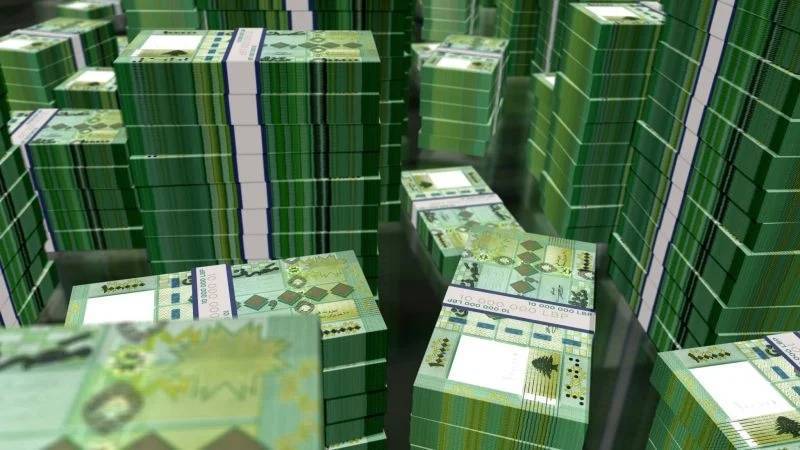
The lira depreciated Tuesday night to LL40,000 to the US dollar. (Credit: Skorzewiak/Bigstock)






Want to get the Morning Brief by email? Click here to sign up.
The lira depreciated to LL40,000 to the dollar on the parallel market last night amid stalled plans to modify the official exchange rate. The parallel market exchange rate was around LL9,700 higher than Banque du Liban’s Sayrafa rate, which as of last night stood at LL30,300 to the dollar. The lira rose in value to around LL35,000 to the dollar late last month after reaching an all-time low of LL40,500. In an attempt to unify the lira-to-dollar exchange rate, the Finance Ministry announced a new official rate of LL15,000 — a tenfold increase from the previous official rate, matching the conversion adopted in the 2022 budget — to be phased in gradually as of Nov. 1. Well after the deadline, no official implementation details have been released by the Finance Ministry or other authorities — a delay attributed to “political disagreements,” a ministry source told Reuters.
Caretaker Prime Minister Najib Mikati gave a gloomy forecast of climate change’s impact on Lebanon over the next 80 years in a speech yesterday at the COP27 UN climate conference in Sharm el-Sheikh, Egypt. "Climate change will cause a 14 percent decrease in Lebanon’s GDP by 2040, and a further decrease of 32 percent by 2080," Mikati said, citing Environment Ministry estimates. Facing the looming ecological catastrophe, the caretaker premier vowed to continue implementing sustainable measures in Lebanon — which include developing farmers’ resilience and prioritizing renewable energy — and called for international support for “the Lebanon Green Investment Facility.”
“We are not witnessing an increase in the crime rate,” caretaker Interior Minister Bassam Mawlawi claimed yesterday, offering assurances of security forces’ continued performance amid the country’s compounded crises. Mawlawi cited an overall crackdown on crime, zero-tolerance for corruption, the dismantling of eight terrorist cells and improvements to the “security situation” in Tripoli, where an emergency intervention plan was implemented in September after a spate of deadly incidents. The caretaker interior minister added that authorities are ensuring the proper functioning of prisons. Lebanon’s convicted criminals face increasingly inhumane detention conditions including dilapidated, overcrowded dwellings. Caretaker Health Minister Firass Abiad announced earlier this week that cholera vaccines had been distributed in prisons to inmates and officers amid an outbreak of the disease that began in early October.
A US official arrived in Beirut yesterday ahead of a series of meetings with the goal of assisting Lebanon through its “economic and humanitarian crisis.” Samantha Power, administrator of the United States Agency for International Development (USAID), is in Lebanon for a three-day visit focused on “providing support to the Lebanese people.” According to a press release, the administrator will press politicians to implement reforms then visit USAID recipients and projects.
A wall collapsed and killed a man in the al-Maloulah neighborhood of Tripoli yesterday, less than a week after a similar deadly incident in the area. L’Orient Today’s correspondent in the area reported that security forces have opened an investigation into the incident. In a separate incident yesterday, a man was killed after he was seemingly electrocuted by a high voltage electricity pole on the Mina highway in Tripoli. Last week, a ceiling collapse in a Tripoli public school killed 16-year-old Maguy Mahmoud, sparking outrage from the area’s residents who called on authorities to survey the structural soundness of properties in the area. Some “4,000 buildings are at risk” of collapse in Tripoli due to lack of maintenance or cut corners during construction, according to a June claim by chairwoman of the Lebanese Association of Properties Andera Zouheiry. The property expert’s comments came after a building collapse killed a young girl.
In case you missed it, here's our must-read story from yesterday: “Why are children particularly at risk for cholera?”
Compiled by Abbas Mahfouz