






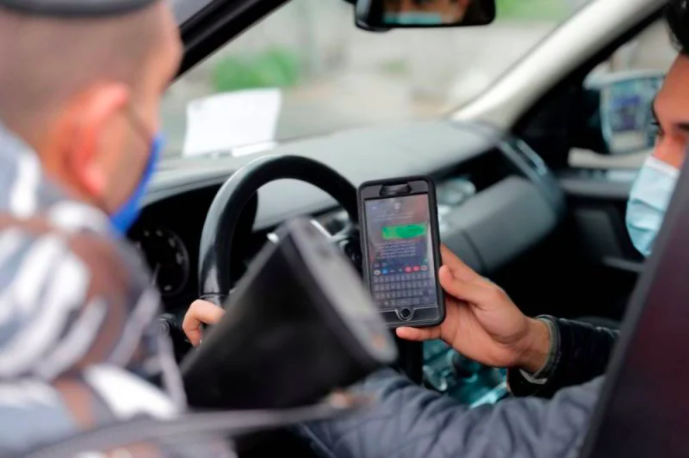
A member of the Lebanese security forces checks a citizen's documents at a COVID-19 checkpoint during the country's lockdown in January 2021. (Credit: Joseph Eid/AFP)






Want to get the Morning Brief by email? Click here to sign up.
Coronavirus prevention measures will be strictly enforced over the upcoming New Year’s weekend, Interior Minister Bassam Mawlawi said. Officers of the Internal Security Forces will be deployed within private establishments such as hotels to monitor adherence to the precautions. Businesses that blow off the restrictions on New Year’s Eve will have clients evacuated and will be referred to the courts, Mawlawi vowed. Earlier this month, the Health Ministry issued new measures aimed at curbing the virus’s spread over the holidays. Since Dec. 10, bars and restaurants have been prohibited from admitting customers without at least a single vaccine dose or a negative PCR result from the last 48 hours. On Monday the Tourism Ministry announced that its officers had issued fines to 62 establishments to date for violating COVID-19 precautions. Last year, the holiday season, which brings large numbers of travelers to Lebanon, was blamed for a COVID-19 outbreak that continued for months afterward.
President Michel Aoun has added his signature to the decree setting elections for May 15, making the date official. Prime Minister Najib Mikati and Interior Minister Bassam Mawlawi signed the decree earlier in the week. The decree also schedules the voting date for Lebanese expatriates for Friday, May 6, or Sunday, May 8 in countries where May 6 is a holiday. Additionally, employees who are managing the elections are scheduled to vote on May 12. It remains conceivable that establishment parties could postpone the election by extending their own term in Parliament, which ends next May. Some observers suspect that they have no interest in holding a vote, despite heavy international pressure to go forward with the election. Between 2009 and 2017, Parliament voted to extend its own term three times.
Customs at the Port of Beirut intercepted a shipment of oranges concealing 9 million captagon pills yesterday. The shipment was destined for the Gulf, according to the Interior Ministry, which did not specify the origin of the drugs. Last April, Saudi Arabia implemented a ban on Lebanese fruits and vegetables after finding 5.3 million captagon pills in a shipment of pomegranates. Later Saudi Arabia banned all imports from Lebanon. Mawlawi has since vowed to take a harder line on smuggling, saying that this latest bust intends to send a message “about our seriousness and work to prevent evil from our Arab brothers.” On Dec. 11, security forces announced the bust of another large captagon shipment destined for Saudi Arabia.
Corrections to the voter list for the upcoming elections must be submitted before Jan. 1. You may check your voter registration information here. If your name is missing or there are errors in your registration information, you may contact your mukhtar, municipality or the Directorate General of Civil Status for assistance. A hotline is available at 1766. Voters registered overseas should contact their consulate or embassy for assistance.
The morning brief will go on hiatus as we at L’Orient Today reduce operations and take a small New Year’s weekend break — news permitting. We will be back with everything you need to know on the first Monday of 2022.
