





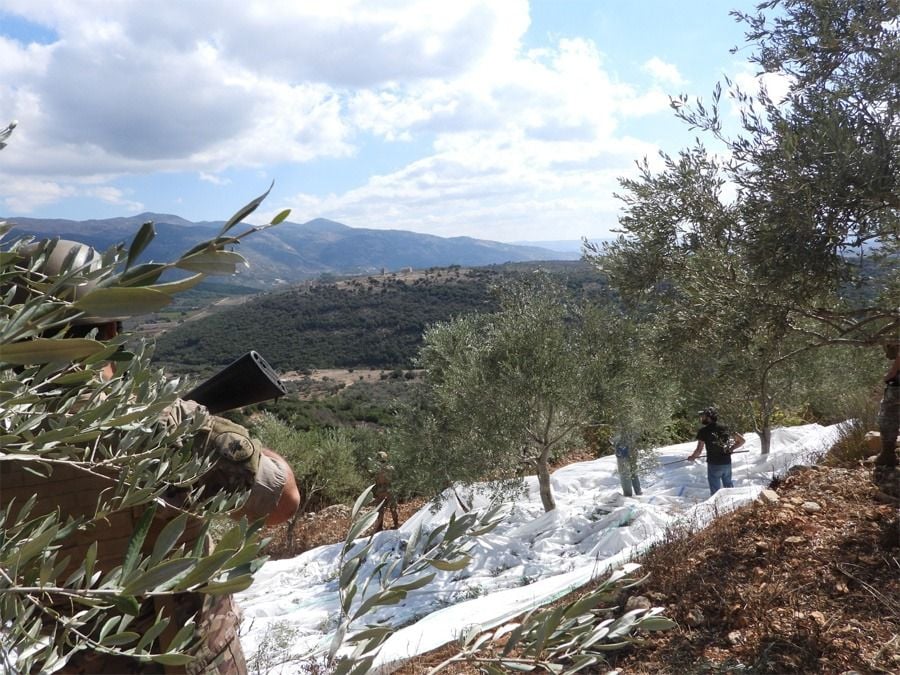
A Lebanese soldier during the olive harvest in Rashaya al-Foukhar, south Lebanon. Photo taken from the Lebanese Army website.






BEIRUT — Israel claimed Tuesday it had “evidence” that Hezbollah continues to move freely through military sites that the Lebanese Army was supposed to have neutralized under the November 2024 cease-fire agreement.
The accusations come as Israel and the United States pressure the Lebanese and Israeli armies to coordinate directly on the ground, a prerequisite for resuming negotiations, with the next round scheduled for later Tuesday in Florida.
The Israeli army’s Arabic-language spokesperson, Ella Waweya, wrote on X: “Although the Lebanese Army announced that it had addressed Hezbollah’s military infrastructure in southern Lebanon, photographic evidence shows that fighters continue to use it to move weapons."
She attached a video showing a vehicle entering a hangar before an airstrike. Waweya claimed the footage was filmed in Kafra (Bint Jbeil), but it was not immediately possible to verify the location or date.
She accused the Lebanese Army of failing to fulfill its mandate under the November 2024 cease-fire agreement, claiming “a wide gap” between its statements.
The army had said in 2025 that it disarmed most of the area south of the Litani River. According to Waweya, the Lebanese Army continued operations to dismantle Hezbollah infrastructure until the latest war broke out on March 2.
“This allowed Hezbollah to rearm, consolidate its presence and establish an underground network,” Waweya wrote. She went further, alleging that “Israeli military intelligence even observed cases where some Lebanese soldiers coordinated with Hezbollah militants, giving the group the opportunity to withdraw its weapons in time.”
#عاجل_وخطير 🔴 كشف النقاب: رغم إعلان الجيش اللبناني معالجة منشأة عسكرية تابعة لحزب الله الإرهابي في جنوب لبنان، يكشف توثيق مصوّر استمرار نشاط عناصر التنظيم داخلها، ومحاولتهم نقل وسائل قتالية منها بعد أشهر من الإعلان 🔸 بموجب التفاهمات التي تم التوصل إليها عام 2024، والتي استندت إليها إسرائيل ولبنان حتى انطلاق عملية "زئير الأسد"، تولّى الجيش اللبناني مسؤولية إزالة الوسائل القتالية والبنى التحتية العسكرية التابعة لتنظيم حزب الله الإرهابي من جنوب لبنان. إلا أنه فشل في تنفيذ هذه المهمة على النحو المطلوب، مما أتاح للتنظيم مواصلة ترسيخ وجوده العسكري، وتعزيز تسليحه، وإنشاء بنى تحتية عسكرية في المنطقة. 🔸 وحتى خلال عملية "درع الوطن" التي نفّذها الجيش اللبناني عام 2025، استمرّت الفجوة الكبيرة بين التصريحات والواقع الميداني، إذ لم تحقق العملية إلى تفكيك القدرات العسكرية للتنظيم، ولم تمنع استمرار أنشطته وتعاظم قوته العسكرية. 🔸 في كانون الأول (ديسمبر) 2025، طُلب من الجيش اللبناني، عبر الآلية الأمريكية، التعامل مع منشأة عسكرية في منطقة كفرا بجنوب لبنان، كان تنظيم حزب الله الإرهابي يستخدمها لتخزين وسائل قتالية. وفي وقت لاحق، أعلن الجيش اللبناني أنه اتخذ الإجراءات اللازمة بشأن هذه المنشأة. 🔸 إلا أنه بعد مرور عدة أشهر على هذا الإعلان، تبيّن أن حزب الله واصل نشاطه داخل المنشأة، وأن عناصره عمدوا إلى نقل وسائل قتالية ومعدات عسكرية منها بهدف الاحتفاظ بها والحفاظ على قدرات التنظيم العسكرية. وبذلك، ظلّت المنشأة متاحة لاستخدام حزب الله لأغراضه العسكرية، رغم مرور عدة أشهر على إعلان الجيش اللبناني اتخاذ الإجراءات اللازمة بشأنها. 🔸 وتكشف المشاهد المرفقة عناصر من حزب الله وهم يحمّلون وسائل قتالية كانت مخزّنة داخل المنشأة على متن شاحنة، في محاولة لنقلها من الموقع والاحتفاظ بها ضمن ترسانة التنظيم العسكرية. 🔸 وعقب رصد هذا النشاط، أغارت قوات جيش الدفاع الإسرائيلي على الشاحنة ودمّرتها، بما في ذلك الوسائل القتالية التي أُخرجت من المنشأة وحُمّلت على متنها. 🔸 ويُظهر المشهد أنه رغم إعلان الجيش اللبناني معالجة المنشأة، استمرّ نشاط عناصر حزب الله فيها، حيث حاولوا نقل وسائل قتالية ومعدات عسكرية منها للاحتفاظ بها. 🔸 وترصد شعبة الاستخبارات العسكرية في جيش الدفاع الإسرائيلي حالات قامت فيها جهات من داخل الجيش اللبناني بالتنسيق مع حزب الله بشأن أنشطة إنفاذ الترتيبات الأمنية، على نحو ساهم في محاولات منع هذه الأنشطة أو تأخيرها أو إحباطها، وأتاح لحزب الله الاستعداد مسبقًا لإخلاء الوسائل القتالية ونقلها من المنطقة. 🔸 يتحمّل الجيش اللبناني مسؤولية ضمان التنفيذ الكامل والدقيق لجميع المهام الموكلة إليه. 🔸 ويؤكد جيش الدفاع الإسرائيلي أنه يتوقع من الجيش اللبناني اتخاذ إجراءات أكثر حزمًا وفعالية للوفاء بمسؤولياته، ومنع وجود الوسائل القتالية والبنى التحتية العسكرية التابعة لتنظيم حزب الله الإرهابي في جنوب لبنان. 🔸 ويواصل جيش الدفاع الإسرائيلي رصد محاولات تنظيم حزب الله الإرهابي إعادة بناء قدراته العسكرية وتعزيز تسليحه، ولن يسمح بأي خرق يشكّل تهديدًا لأمن دولة إسرائيل ومواطنيها. 🔸 لقد جرّ تنظيم حزب الله الإرهابي لبنان وسكانه إلى الحرب خدمةً لإيران خلال عملية "زئير الأسد"، وأطلق آلاف القذائف الصاروخية، بما في ذلك من مناطق تقع جنوب نهر الليطاني، حيث يُحظر وجود أي عناصر مسلحة أو منشآت عسكرية أو وسائل قتالية لا تتبع للحكومة اللبنانية أو لقوات الأمم المتحدة المؤقتة في لبنان (اليونيفيل).
— Lieutenant Colonel Ella Waweya | إيلا واوية (@CaptainElla1) October 20, 2026
Tampa and Fahmy's visit to southern Lebanon
An American official said the Lebanon-Israel talks in Tampa would “be conducted only between working teams on the security aspect of the framework agreement.”
Direct negotiations between Lebanon and Israel began in April, during the war, and produced a framework agreement in June. The agreement was intended to pave the way for Israel’s gradual withdrawal from occupied areas of southern Lebanon. But its implementation remains frozen, as the two sides have had no further contact since August.
Israeli legislative elections, during which Prime Minister Benjamin Netanyahu could be reelected, are scheduled for Oct. 27.
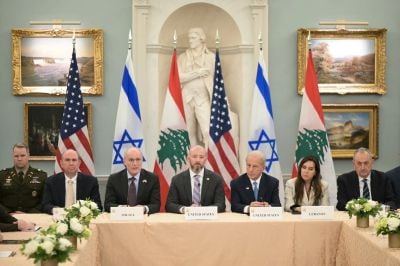
Meanwhile, Arab League Secretary-General Nabil Fahmy traveled Tuesday morning to Zawtar Gharbieh (Nabatieh), the first and only “pilot zone,” a few hundred meters from Israeli-occupied territory. Fahmy arrived by helicopter at the Zahrani base before heading to the village, our correspondent reported.
The Egyptian diplomat is touring southern Lebanon to assess conditions on the ground as part of the Arab League’s efforts to pursue a diplomatic solution and mobilize aid. He was accompanied by Lebanese Social Development Minister Haneen Sayed.
During a visit to the Church of the Annunciation, Fahmy said that “what is happening in southern Lebanon is unacceptable.”
“Arab efforts are underway to pressure Israel, which continues its illegal practices,” he added.
Lebanese Army accompanies farmers in the eastern sector
On the ground Tuesday morning, Israel launched a stun grenade and automatic weapons fire on Kfar Shuba (Hasbaya).
The incident came as the Lebanese Army said it had accompanied farmers from Rashaya al-Foukhar (Hasbaya) to their fields to secure the olive harvest. The Israeli army had prevented farmers in Kfar Shuba from reaching their olive fields, with orders and fire.
Israeli vehicles were also seen heading toward Zawtar Sharqieh in the Nabatieh district.
Two Israeli robotic tanks move north of Mansouri
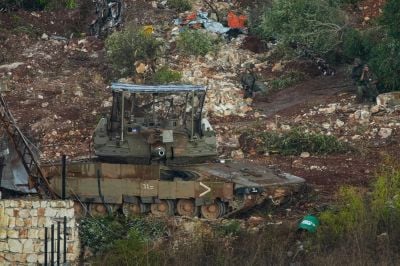
Israel continued its attacks on south Lebanon overnight. Before midnight, two Israeli remote-controlled tanks reportedly left Mansouri (Sour) and headed north toward Aamrieh, south of a nearby Lebanese Army checkpoint. Mansouri marks the northernmost point of Israel's occupation along the coast.
The vehicles later withdrew to Bayada, in the occupied “buffer zone.” Israeli forces also fired artillery shells at Mansouri and the neighboring Zebqine Valley farther east.
Our correspondent also reported Israeli artillery fire on the outskirts of Mayfadoun and Kfar Tibnit (Nabatieh), as well as Beit Yahoun and Haddatha (Bint Jbeil) and Wadi Slouqi (Marjayoun).
In Khiam (Marjayoun), Israeli forces blew up several houses and fired medium-caliber automatic weapons at the town.
Additional reporting by Mountasser Abdallah.

 2 p.m. recap: Israel accuses Lebanese Army, Israel-Lebanon negotiations in Tampa, Palestinians fleeing Lebanon shipwreck near Greece
